

Dhaka’s air is ‘very unhealthy’ today.

Bangla Press
Published: 18 November 2026, 10:46 PM
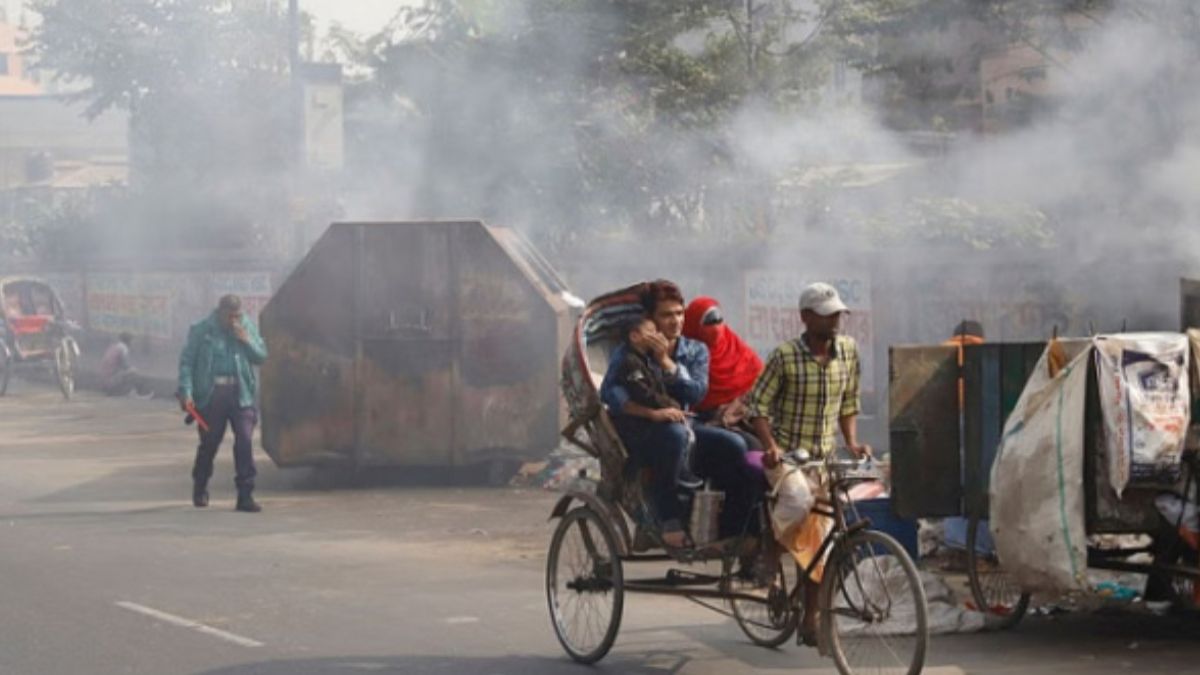
Bangla Press Desk :With the onset of winter, the air quality in Dhaka has become dire, with pollution levels surging significantly. Typically, as winter approaches, humidity in the air decreases while pollution levels rise, rendering the air unhealthy.
On Thursday morning (November 19), data from IQAir—a Swiss-based air quality monitoring organization—indicated that Dhaka ranked second among the world’s most polluted cities. Records from the organization for the period between 7:00 AM and 8:00 AM showed Dhaka with an Air Quality Index (AQI) score of 231.
Real-time AQI station rankings reveal that in several parts of Dhaka, pollution levels range from "unhealthy" to even more severe categories. Among these, the air in the Pragati Sarani area of Badda is the most polluted, with an IQAir score of 272—a level classified as "very unhealthy."
Other locations featured in the ranking include Baridhara Park Road, Becharam Deuri in Old Dhaka, Bashundhara Residential Area, Gulshan Lake Park, the Bangladesh Institute of Development Studies (BIDS), the area near Edgewater Outdoor in Gulshan, Grace International School, Baridhara Lakeside, and Eastern Housing.
Other cities in the top five on IQAir’s list include Lahore, Pakistan (269, "very unhealthy"); Kabul, Afghanistan (190, "unhealthy"); Delhi, India (187, "unhealthy"); and Baghdad, Iraq (182, "unhealthy").
According to global standards, an AQI score below 50 indicates clean air, while a score between 51 and 100 is considered acceptable. A score between 101 and 150 is categorized as unhealthy for sensitive groups (such as children and the elderly). A range of 151 to 200 is considered unhealthy for everyone, and a score between 201 and 300 is classified as "very unhealthy." And when the index exceeds 300, the air is considered hazardous.
Many people die every year due to health problems caused by air pollution. According to the World Health Organization, 6.7 million people die annually as a result of the combined effects of household and ambient air pollution.
[Bangla Press is a global platform for free thought. It provides impartial news, analysis, and commentary for independent-minded individuals. Our goal is to bring about positive change, which is more important today than ever before.]
YOU MAY ALSO LIKE

Bangladesh
Temperature drops to 17 degrees in the north; winter sets in firmly.
22 hours ago
by Bangla Press


Sangeet Academy