Footwear exports increased by 9.37 percent in four months.

Bangla Press
Published: 16 November 2026, 06:25 AM
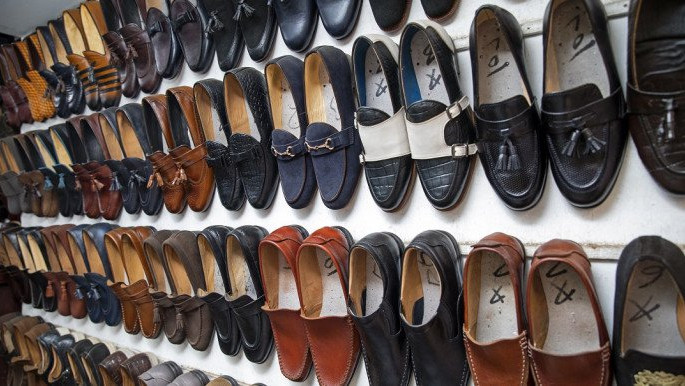
BanglaPress Desk: Bangladesh’s footwear exports continue to show positive growth in the international market. In the first four months (July–October) of the current 2026–27 fiscal year, total export earnings from leather and non-leather footwear reached $457.01 million—an increase of 9.37% compared to the same period in the previous fiscal year, when earnings stood at $417.85 million.
According to the Export Promotion Bureau (EPB), earnings from leather footwear exports in the first four months of the current fiscal year amounted to $262.15 million, up 9.29% from the $239.86 million recorded during the same period last year. Meanwhile, exports of non-leather footwear generated $194.86 million, compared to $177.99 million in the corresponding period of the previous year—reflecting a growth of 9.48%. Combined, export earnings from both categories have increased by $39.16 million over the year.
Commerce Minister Khandaker Abdul Muktadir told BSS that the government is placing special emphasis on diversifying Bangladesh’s export basket and expanding into new markets. Initiatives are underway to enhance production capacity in the leather and footwear sector, increase value addition, streamline business processes, and attract foreign investment. The government will continue to provide policy support to ensure that entrepreneurs in this sector can manufacture products that meet the demands and quality standards of the international market.
Sources from the Ministry of Commerce indicated that work is currently underway to develop an effective roadmap—aimed at identifying existing challenges within the leather and footwear industry—to boost both production capacity and exports. A high-level committee, led by the Commerce Minister, has been formed for this purpose. Furthermore, steps are being taken to assist entrepreneurs in meeting the environmental and social standards required by international buyers, as well as to establish a national traceability framework to track the origins of product manufacturing and supply chains. Furthermore, the budget for the 2026-27 fiscal year proposes extending the duration of general bonds for export-oriented footwear and leather goods manufacturers from one year to three years. Initiatives to bring other export-oriented industries under the purview of these bond facilities are expected to simplify raw material imports and production processes for entrepreneurs in this sector.
Industry insiders note that while there is price competition with China in the European Union market, orders for Bangladeshi footwear are on the rise in the United States and India. Additionally, footwear exports to Mexico commenced for the first time this fiscal year. Consequently, Bangladeshi footwear is gaining access to new markets alongside its traditional ones.
According to 'Invest Bangladesh,' major export markets for Bangladeshi leather footwear include the United States, the United Kingdom, Germany, France, Italy, Japan, China, South Korea, and Canada. Meanwhile, key markets for non-leather footwear include Spain, France, the Netherlands, South Korea, India, Italy, and Germany. The expansion into new destinations, such as Mexico, presents further opportunities for the growth of the Bangladeshi footwear industry.
'Npoly Footwear,' an exporter of non-leather footwear, exported $38 million worth of products in the last fiscal year—an increase of approximately 12% compared to the previous year.
The company’s factory currently produces 14,000 pairs of shoes daily. Due to an increase in orders, there are plans to introduce a new shift and hire an additional 1,500 workers starting next month.
Separately, 'Five-R Footwear' began exporting footwear to the Mexican market this fiscal year. With the global demand for non-leather footwear on the rise, the company's owner believes that by capitalizing on this trend, it is possible to achieve even higher growth in the export of such products in the coming years. However, they emphasize the need to resolve existing complexities in business operations—including those related to bond facilities—to facilitate this growth. According to the World Footwear Yearbook 2026, Bangladesh produced approximately 554 million pairs of shoes in 2025, placing the country seventh globally in terms of footwear production. There is significant potential to further expand the nation's footwear exports by leveraging production capacity, new investments, product diversification, and the interest of international buyers.
[Bangla Press is a global platform for free thought. It provides impartial news, analysis, and commentary for independent-minded individuals. Our goal is to bring about positive change, which is more important today than ever before.]
YOU MAY ALSO LIKE
Business
At what price is a 'vori' (tola) of gold being sold following the price drop?
1 week ago
by Bangla Press
Business
Applications open for collateral-free loans of up to 2 million taka for young people
1 week ago
by Bangla Press

Business
Cryptocurrency platform ‘Binance’ falls victim to the largest hack in history
2 weeks ago
by Bangla Press

Sangeet Academy