

Governor’s business-friendly initiatives win praise

Bangla Press
Published: 02 January 2026, 12:07 AM

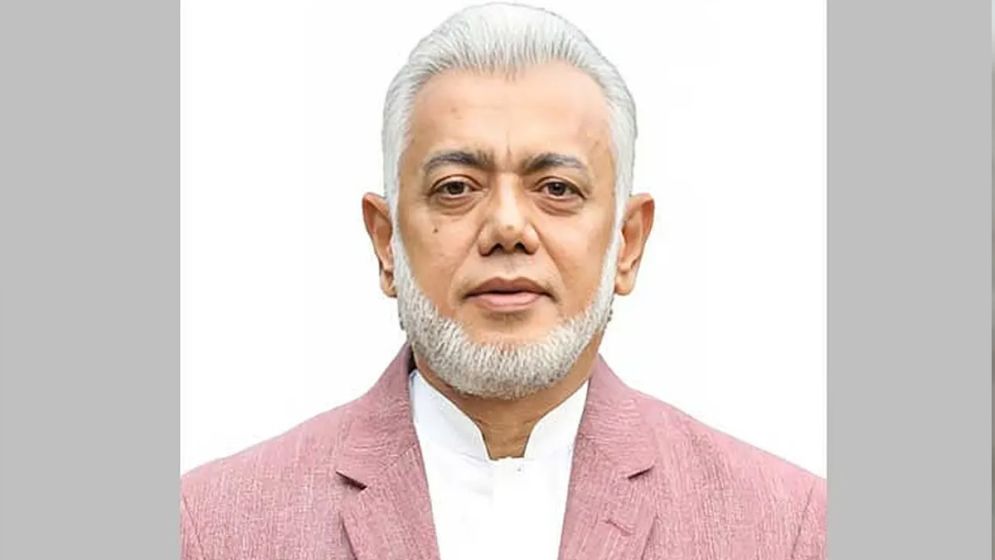
Bangla Press Desk: After nearly 17 months, a renewed sense of optimism has returned to the country’s business community, following a series of policy support measures introduced by Bangladesh Bank Governor Ahsan H Mansur.
By formulating appropriate regulations and providing structured policy assistance, the central bank has taken what many describe as commendable, business-friendly initiatives.
Under the new measures, businesses are being offered opportunities for loan rescheduling, restructuring, grace periods, and partial write-offs with low down payments and extended repayment tenures.
Economist Ahsan H Mansur was appointed governor of Bangladesh Bank after the fall of the previous Awami League government. Since assuming office, he has prioritised banking sector reforms alongside efforts to reduce non-performing loans (NPLs).
To ease the unprecedented pressure of defaulted loans and to help genuinely distressed borrowers recover, the governor announced a comprehensive policy support package. Borrowers are now allowed to regularize defaulted loans with a down payment as low as 2% for a maximum period of 10 years. This facility also includes a grace period of up to two years. The rescheduled loan interest rate may be set at 1% lower than the lowest prevailing rate in the relevant sector.
The central bank has made it clear that loans obtained through forgery, fraud, or deception, as well as those classified as willful defaults by banks, will not be eligible for these benefits. Only genuinely affected borrowers will qualify, and the duration of rescheduling, restructuring, or exit plans must be determined based on the extent of losses and the borrower’s ability to sustain operations.
The policy further states that for loans of Tk300 crore or more, no prior “no-objection” approval from Bangladesh Bank will be required.
In such cases, banks’ boards of directors will be able to resolve applications based on existing regulations and the bank–client relationship.
Bangladesh Bank has also said that borrowers who fail to repay loans on time will be allowed up to four opportunities for rescheduling or restructuring. In such cases, repayment periods may be extended to a maximum of 21 years.
In addition, to revive business activity amid slowing economic growth, special rescheduling facilities are being offered to around 250 institutions, including large corporate defaulters. For these entities, the governor has directed that loan repayment periods be extended by an additional five to 15 years, with a minimum down payment of 1% and a grace period of up to three years.
According to Bangladesh Bank data, as of September this year, defaulted loans in the country stood at Tk6.44 trillion, accounting for 35.73% of total outstanding loans—the highest level in Bangladesh’s history. Before the change in government, defaulted loans amounted to Tk2.11 trillion in June, and Tk3.45 trillion in December last year.
Against this backdrop, Mansur instructed commercial bank managing directors to take stronger measures to recover defaulted loans during a bankers’ meeting on 7 December last year. He advised bank CEOs to make effective use of loan restructuring and partial write-off facilities.
On 4 December, Bangladesh Bank formally approved partial write-offs for classified bad and loss-category loans with low recovery prospects. The decision was taken primarily to ease the burden of non-performing loans on banks’ balance sheets.
Bangladesh Bank Executive Director and spokesperson Arif Hossain said the governor has instructed strict compliance with the policy support circulars issued to help restructure the financial positions of borrowers and businesses.
At a recent bankers’ meeting, the governor also highlighted disparities in agricultural credit. He noted that while agriculture contributes 14.15% to the country’s GDP, it receives only 2% of total bank credit. He suggested increasing agricultural lending to more than 10%.
At the same time, he directed banks to boost credit growth in the SME and CMSME sectors, calling for CMSME loan growth to be raised to 20%. To encourage lending in this segment, the governor also assured banks that provisioning requirements would be reduced from 1% to 0.5%.
Bangladesh Bank’s new policy support and restructuring initiatives are not only providing genuinely affected businesses with an opportunity to recover, but are also exposing the true scale of the banking sector’s long-standing default loan problem and paving the way for its gradual reduction.
BP/SP
[Bangla Press is a global platform for free thought. It provides impartial news, analysis, and commentary for independent-minded individuals. Our goal is to bring about positive change, which is more important today than ever before.]
YOU MAY ALSO LIKE


Business
Government rolls out AVS for safer savings certificate transactions
3 days ago
by Bangla Press


Sangeet Academy