

CNN analysis
Houthi attack on the airport—what will be Saudi Arabia's counter-move?

Bangla Press
Published: 12 October 2026, 12:00 AM
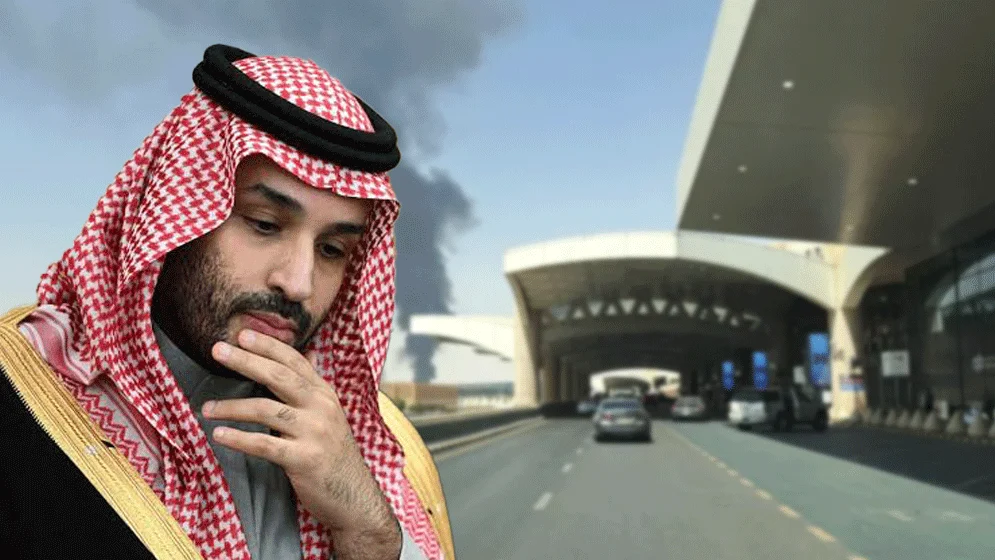
Saudi Crown Prince Mohammed bin Salman has sought assistance from allies to counter Houthi attacks.
Bangla Press Desk: As Saudi Arabia struggles to cope with the deadliest attack on its soil in over a decade, questions are arising regarding how Riyadh will respond, given that Iran-backed Houthi rebels from Yemen continue to wreak havoc.
Last week, Saudi Arabia launched a major military offensive to support Yemeni government forces fighting the Houthis; however, the rebels have so far managed to hold their ground.
In fact, they have intensified their attacks against Saudi Arabia. The missile strike on Riyadh’s King Khalid International Airport last Saturday was the latest and most devastating incident in this campaign, leaving at least 12 people dead. Just a day later, on Sunday, the Houthis launched another lethal attack on the same airport.
Drawing lessons from Iran's strategies in its conflict with the United States, the Houthis are threatening even more severe attacks. They plan not only to target critical Saudi infrastructure but also to exert significant pressure on the global economy. The Houthis harbor long-standing grievances against Saudi Arabia; Riyadh’s decade-long war against the group has precipitated one of the world's worst humanitarian crises in Yemen. However, the recent escalation in Houthi attacks is also being viewed as an extension of the conflict between Iran and Washington. Saudi Arabia has spent eleven years attempting to halt the Houthi advance through a combination of military operations and negotiations. Yet, Crown Prince Mohammed bin Salman and his brother, Defense Minister Khalid bin Salman, now face limited options. The Houthis have grown stronger across the border; alongside consolidating control over major cities, they are attempting to seize new areas, such as the densely populated city of Taiz.
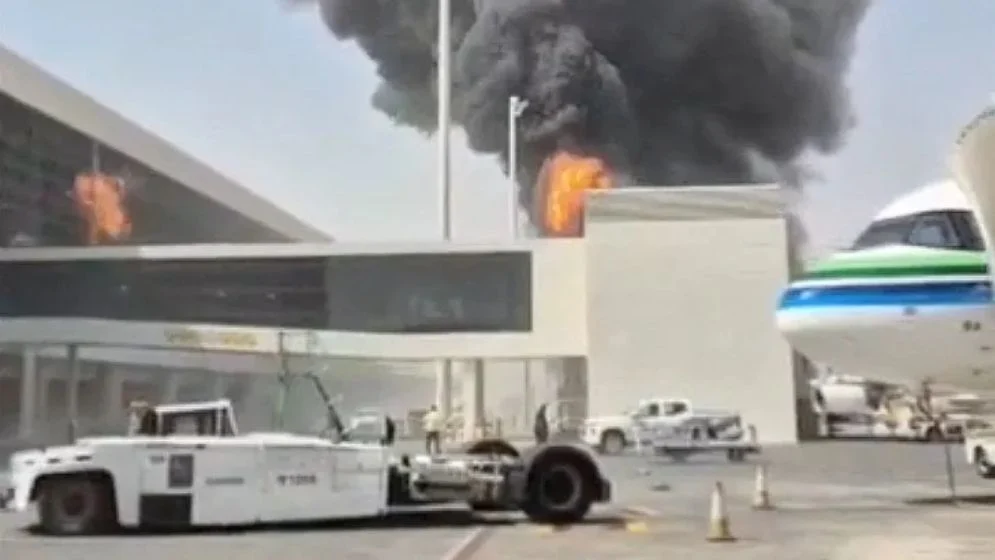
Ali Shihabi, a writer and analyst specializing in Saudi politics, told CNN, "This threat must be confronted decisively. Much will depend on the success of Yemeni government forces on the ground." Saudi Arabia is providing them with extensive air support.
So far, Saudi Arabia has limited its role to providing air cover for the anti-Houthi Yemeni coalition. The country has refrained from deploying large numbers of troops for direct ground combat. However, questions have arisen as to whether this restraint will continue following the attack on Riyadh last Saturday.
Deploying a large number of troops to Yemen could drag Saudi Arabia into a protracted and costly ground war across rugged terrain. At the same time, it could damage the image Crown Prince Mohammed bin Salman is cultivating—that of a stable, investment-friendly nation and a global tourism hub.
Advanced Missile Capabilities
Just two decades ago, the Houthis were a small religious revivalist movement. With Iranian support, they have evolved into a formidable armed force over time. They now possess ballistic missiles capable of striking distant targets, such as Tel Aviv in Israel.
A South Yemeni official who has fought against the Houthis for years told CNN, "They have improved their combat tactics. Their attacks have become more sophisticated and complex. They are launching sustained attacks and have also enhanced their intelligence capabilities."
The Yemeni government has alleged that Houthi rebels have worked with experts from Iran's Islamic Revolutionary Guard Corps to improve the effectiveness of their missiles.
Majed Al-Najili, a spokesperson for the Yemeni armed forces, stated that the new missiles fly faster than previous models. They are equipped with heat-seeking systems that allow them to track heat sources and strike targets. However, it has not yet been confirmed whether such missiles were used in the attack on Riyadh airport last Saturday.
Houthi efforts to develop more advanced weaponry may now extend to artificial intelligence (AI) technology. AI company Anthropic has reported that a group based in northern Yemen utilized its Claude AI technology to assist in developing guidance software for rockets and missiles. This software is used to control the trajectory and maintain the stability of the weapons during flight. While the report did not disclose the identities of the individuals involved, their location in Houthi-controlled northern Yemen suggests a potential link to the rebels.
Saudi Arabia Seeks International Support
Saudi Arabia has sought assistance from global partners to counter the Houthis. France, the United Kingdom, and Pakistan have pledged support, while allies like Turkey are also considering cooperation.
According to reports, Saudi Crown Prince Mohammed bin Salman has also reached out to Syria for assistance. President Ahmed al-Shara led the armed groups that ousted Iran-backed factions from Syria following nearly a decade of civil war. However, the United States—Saudi Arabia's primary ally—has not yet supported conducting airstrikes against the Houthis. Instead, Washington has deployed over 100 military advisors under a newly formed joint command to provide intelligence support.
Last year, the United States reached a ceasefire agreement with the Iran-backed Houthis. This move allowed for the resumption of U.S. shipping through the Bab al-Mandab Strait, a vital maritime route for global trade between Asia and Europe.A previous CNN report stated that the Saudi Crown Prince spoke with US President Donald Trump twice last month, urging him to launch attacks against the Houthis; however, the US President did not agree to the proposal. Ali Shihabi remarked, "If the US were to participate directly in airstrikes, it would undoubtedly be helpful, as US aircraft can act more swiftly based on satellite intelligence. Saudi aircraft operate with a slight lag in that process; therefore, US involvement would benefit Saudi Arabia." Saudi Arabia is one of the largest nations in the Middle East. Despite purchasing state-of-the-art US-made air defense systems, the country remains vulnerable to attacks. Saudi Arabia's critical infrastructure and transport networks—spread across vast desert expanses—could easily become targets for low-cost, one-way attack drones.
On Sunday, the Saudi General Authority of Civil Aviation announced that a US citizen was among those killed in a Houthi attack on Riyadh airport. This incident could push Trump to become more deeply involved in the conflict. Speaking to reporters after the attack, Trump said, "The Saudis are good fighters. But I think the attack was terrible."
When asked whether the US would join the offensive against the Houthis, the US President replied, "We might." Source: jugantor
BP/TD
[Bangla Press is a global platform for free thought. It provides impartial news, analysis, and commentary for independent-minded individuals. Our goal is to bring about positive change, which is more important today than ever before.]
YOU MAY ALSO LIKE

International
Saudi Crown Prince shifts location to a bunker-equipped palace!
5 hours ago
by Bangla Press

International
Robert E. Hall and Michael Woodford awarded Nobel Prize in Economics.
5 hours ago
by Bangla Press


International
Mother Gifts Son a Car for His Birthday; He Kills Three in Road Crash
5 hours ago
by Bangla Press
.jpg)
International
Rahul Gandhi has now presented a 10-point list of demands.
5 hours ago
by Bangla Press
Sangeet Academy