
.jpg)
How is Minni faring in the condemned cell?

Bangla Press
Published: 09 October 2026, 02:26 AM
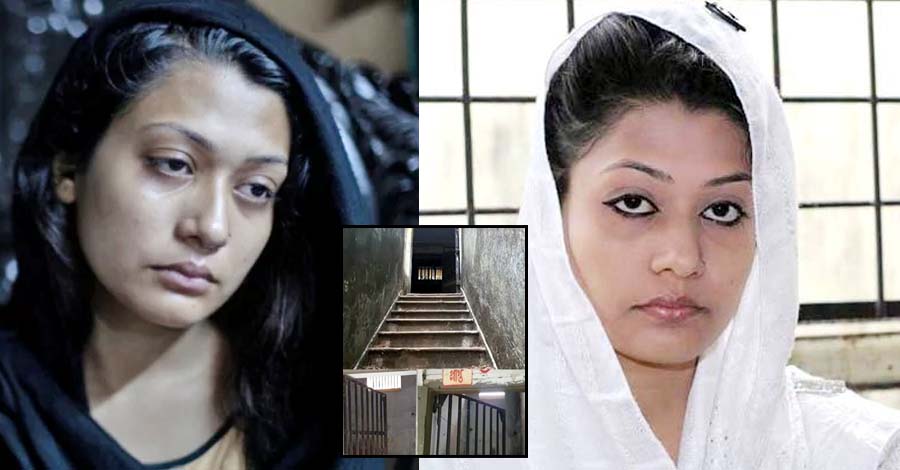
Ayesha Siddika Minni.
Bangla Press Desk: Ayesha Siddika Minni has been held in the condemned cell of Barishal Jail since the death sentence was handed down in the Rifat Sharif murder case in Barguna. With the case yet to reach a final resolution, she spends her days living under the shadow of the gallows. She passes her time in prison engaged in religious worship and prayers, and is permitted to meet her relatives once a month. Meanwhile, the wait for the final resolution of the case seems endless, as the hearing for the death reference and appeals in the High Court remains pending for a long time.
On June 26, 2019, assailants hacked Rifat to death at Barguna Government College. On September 30, 2020, the court sentenced six of the ten adult accused—including the victim's wife, Minni—to death. Following the verdict, the case records regarding the death reference (confirmation of the death sentence) were sent to the High Court on October 4, 2020. Concurrently, the six convicted individuals, including Minni, filed separate appeals against the verdict that same year. Additionally, Minni applied for bail in the High Court last year on grounds including illness; that application is currently awaiting a hearing.
Currently, 1,265 death reference cases are awaiting hearings in the High Court; a few years ago, the figure stood at 843. Syed Ejaz Kabir, Deputy Attorney General for the Death Reference Court, told *Jugantor* that hearings are currently underway for death reference cases received in 2019. He noted that he would need to check the current status of the Rifat murder death reference case before providing an update.
A convict sentenced to death is often forced to remain in a condemned cell for years while the case awaits resolution in the High Court. If the High Court upholds the death sentence, the convict may spend 15 to 20 years—or even longer—in the condemned cell while the legal process moves from the trial court up to the Appellate Division of the Supreme Court for a final verdict. There have even been instances where a death-row convict was acquitted by the Appellate Division after having already spent 20 years in a condemned cell. Legal experts state that keeping a death-row convict in a condemned cell for years—pending the final resolution of the case—constitutes a violation of human rights. Since it can take 15 to 20 years for a murder case to reach final adjudication, death-row convicts could potentially be kept outside the condemned cells; after all, it is inappropriate to label someone guilty before the legal process has concluded.
Minni’s lawyer, Z.I. Khan Panna, told *Jugantor* that a bail petition was filed with the High Court on October 16, 2022, citing conflicting witness testimonies regarding her involvement in the murder, her illness in prison, and her status as a female prisoner. On January 11, 2023, a High Court bench expressed its inability to hear the bail petition. Although the petition was later presented before another bench, the court adjourned the hearing, and the matter has not appeared on the list since.
The Deputy Attorney General attached to the relevant bench told *Jugantor* that there is no precedent in Bangladesh for granting bail to a death-row convict. When senior lawyers representing the accused request an adjournment during hearings, the court complies.
Minni’s father, Mozammel Hossain Kishore, told *Jugantor* that his daughter was framed through a conspiracy involving former MP Dhirendra Debnath Shambhu. He noted that prison authorities allow him to see his daughter only once a month and that her physical condition is poor; considering these factors, the court could at least grant her bail.
Following a petition filed by Minni, she was transferred from Kashimpur Jail to Barishal to facilitate meetings with her parents and relatives and to assist in the conduct of her case. She is the only female inmate in the prison's condemned cell, where she reportedly spends her days engaged in prayers and religious observances.
Under prison regulations, inmates in condemned cells are provided with two sets of clothing and are prohibited from leaving their cells, though they are permitted to meet relatives once a month. They are also allowed to speak with their families by phone for a specific duration once a week. Minni, too, has very limited opportunity to communicate with anyone outside the prison. She converses primarily with her parents when they come to visit; otherwise, she spends her time engaged in acts of worship.
According to prison authorities, Minni has shown no signs of restlessness or emotional outbursts; she remains quiet at all times. However, she is observed regularly performing the five daily prayers. Her conduct within the prison has been satisfactory, and she has not been involved in any infractions to date.
BP/TD
[Bangla Press is a global platform for free thought. It provides impartial news, analysis, and commentary for independent-minded individuals. Our goal is to bring about positive change, which is more important today than ever before.]
YOU MAY ALSO LIKE


Bangladesh
Bangladesh has sent over 400,000 workers to various countries in six months.
6 hours ago
by Bangla Press


Bangladesh
New OCs for two Dhaka police stations; reshuffle of several police officers.
21 hours ago
by Bangla Press
Sangeet Academy