

India’s renewable energy growth and the road ahead

Bangla Press
Published: 30 September 2026, 03:00 AM
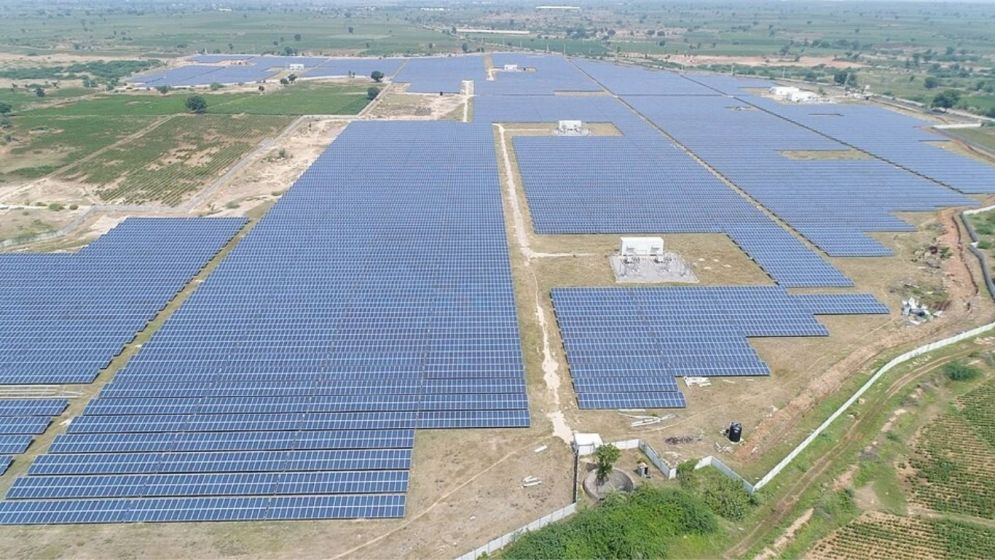
Bangla Press Desk: India has moved well beyond its earlier position as a peripheral participant in the international clean-energy transition. According to the International Renewable Energy Agency (IRENA), India had 250.52 gigawatts (GW) of installed renewable-energy capacity at the end of 2025, ranking third globally behind China and the United States. Its broader non-fossil capacity—including nuclear power—stood at roughly 267 GW at the end of 2025 and subsequently crossed the 300-GW mark in 2026.
For a rapidly expanding economy in which electricity demand continues to rise, the transformation represents a major structural shift in the country's energy system.
According to India's Ministry of New and Renewable Energy (MNRE), cumulative non-fossil installed capacity reached 300.50 GW on 31 July 2026. That amounted to just over 60% of India's stated target of 500 GW of non-fossil capacity by 2030. Non-fossil sources accounted for more than 54% of the country's total installed power-generation capacity of roughly 552 GW.
The composition of that capacity illustrates the scale of the transformation. As of 31 July 2026, India had 164.59 GW of solar, 58.14 GW of wind, 57.24 GW of hydropower, 11.75 GW of bio-power and 8.78 GW of nuclear capacity. Solar has been the standout source: installed solar capacity has risen from about 2.8 GW in 2014 to nearly 165 GW in 2026.
The pace of expansion has accelerated. During the 2025–26 financial year, India added a record 55.29 GW of non-fossil capacity, including 44.61 GW of solar and 6.05 GW of wind.
The International Energy Agency (IEA) has also recorded the acceleration. Its latest assessment says India's annual renewable-capacity additions increased by almost 60% in 2025, the fastest growth among major markets. Solar Photovoltaic accounted for almost 50 GW of new capacity during the year, while wind additions exceeded 6 GW.
Analysts have also pointed to the possibility that India's clean-energy deployment could advance faster than some of its formal policy trajectories. Such assessments, however, depend on assumptions about investment, electricity demand, manufacturing, transmission and implementation and should be distinguished from official government targets.
Beyond Targets: Building an Ecosystem
The Indian experience suggests that renewable-energy growth depends on more than setting capacity targets. Over the past decade, policymakers have combined competitive procurement, private investment, domestic manufacturing incentives and large-scale transmission development.
New Delhi has also sought to reduce dependence on imported clean-energy equipment. Initiatives such as the Production-Linked Incentive (PLI) scheme and the Approved List of Models and Manufacturers (ALMM) have supported the expansion of domestic solar manufacturing. Government data indicate that India's solar-module manufacturing capacity has risen dramatically in recent years.
The implications extend beyond climate policy. A larger domestic clean-energy industry can affect energy security, industrial competitiveness, trade exposure and investment. For developing economies, India's experience illustrates how renewable deployment can increasingly become part of a broader industrial and economic strategy.
The Road Ahead: Grid Integration and Storage
Yet installed capacity should not be confused with actual electricity generation.
Although non-fossil sources accounted for more than 54% of India's installed generating capacity by July 2026, they supplied a much smaller share of actual electricity generation. During financial year 2025–26, non-fossil sources accounted for about 29.2% of electricity generation, while coal and other fossil fuels remained the dominant source of power.
The IEA reported that coal accounted for about 71% of India's electricity generation in 2025, even as its share declined from the previous year. This distinction is important: adding renewable generating capacity does not automatically displace an equivalent amount of fossil-fuel generation.
As renewable deployment accelerates, therefore, grid integration, transmission and storage are becoming increasingly important alongside continued expansion of generation capacity.
Transmission has emerged as a particular challenge. Renewable projects can often be constructed more quickly than high-voltage transmission infrastructure, which requires land acquisition, rights-of-way, regulatory approvals and coordination among multiple agencies. The IEA has estimated that inadequate transmission infrastructure has already impeded the integration of significant renewable capacity in India.
To accommodate its 2030 non-fossil target, India is consequently expanding transmission networks through programmes including the Green Energy Corridor and other grid-modernisation initiatives.
Energy storage is becoming equally important. Solar generation is concentrated during daylight hours, while electricity demand can remain high or peak later in the day. Battery energy-storage systems, pumped-storage hydropower, stronger transmission networks and demand-side flexibility can help bridge that mismatch and make a system with a larger share of variable renewable generation more reliable.
The challenge, therefore, is no longer simply how quickly India can build renewable generating units. It is increasingly how effectively the country can connect, store, dispatch and consume the electricity those assets produce.
Relevance for Bangladesh
Bangladesh's renewable-energy sector remains at an earlier stage of development, but the country's policy direction is becoming clearer.
Recent Sustainable and Renewable Energy Development Authority (SREDA) data put Bangladesh's solar-generation capacity at about 1,350 MW, while total renewable-generation capacity reached approximately 1,781 MW by June 2026. Rooftop solar is also expanding. SREDA reported in March 2026 that more than 4,490 net-metered rooftop systems, representing roughly 214 MW, had been connected to six distribution utilities.
The Renewable Energy Policy 2025 establishes targets of generating 20 % of electricity from renewable sources by 2030 and 30 % by 2040. The government has also updated its net-metering framework, creating additional scope for rooftop and other distributed solar systems.
Bangladesh clearly cannot—and does not need to—replicate India's 300-GW scale. Its much smaller land area, high population density, electricity-system characteristics and different economic structure require a different approach.
But several elements of the Indian experience are potentially relevant.
• Maintain long-term policy predictability. Renewable projects require substantial upfront investment and long payback periods. Stable procurement rules, tariffs and regulatory procedures can reduce uncertainty for investors.
• Mobilise private capital. Competitive procurement and transparent contracting can help attract private investment while reducing the fiscal burden on the government.
• Strengthen the grid alongside generation. Transmission and distribution upgrades should advance in parallel with renewable projects rather than becoming a bottleneck after generation capacity has already been built.
• Develop storage where it provides clear system value. Batteries and other forms of storage could become increasingly important as the share of variable solar generation grows, particularly during evening demand peaks.
• Prioritise distributed solar. Bangladesh's land constraints make rooftops, commercial and industrial buildings and other already-developed spaces particularly relevant to future solar expansion.
• Make productive use of public land where feasible. Suitable government-owned or underused land could support renewable projects where environmental, social and grid considerations permit.
• Use regional electricity trade. Cross-border electricity markets can provide an additional source of flexibility and resilience, allowing Bangladesh to complement domestic renewable generation with imports and regional power-system integration.
For Bangladesh, the lesson from India is therefore not simply that renewable capacity can grow rapidly. It is that successful energy transitions require an ecosystem linking policy, finance, manufacturing, transmission, distribution, storage and electricity markets.
Bangladesh's circumstances are different from India's, and its renewable strategy will have to reflect those differences. But the Indian experience demonstrates that renewable energy can be treated not merely as a climate-policy instrument, but as part of a broader strategy for energy security, industrial development and economic resilience.
As Bangladesh seeks to reduce exposure to volatile imported fuels while meeting rising electricity demand, the central question is increasingly how to build a power system that is simultaneously affordable, reliable, secure and progressively less carbon-intensive. India's experience offers a useful case study—not a template—to inform that transition Source: daily sun.
BP/TD
[Bangla Press is a global platform for free thought. It provides impartial news, analysis, and commentary for independent-minded individuals. Our goal is to bring about positive change, which is more important today than ever before.]
YOU MAY ALSO LIKE



International
New York judge rules against Mamdani on taxing second homes
13 hours ago
by Bangla Press
-6abbaae70373a.jpg)
International
New York Times executive killed in shooting involving elderly in-laws
1 day ago
by Bangla Press
International
South Africa serial killer fears intensify with discovery of 11th woman’s body
1 day ago
by Bangla Press
Sangeet Academy