
.jpg)
Japan PM Takaichi dissolves parliament for Feb 8 election

Bangla Press
Published: 23 January 2026, 12:18 AM
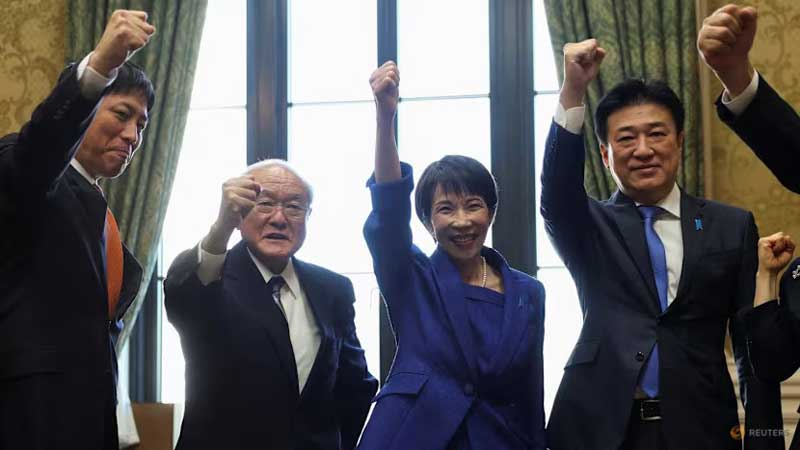
Bangla Press Desk: Japan’s Prime Minister Sanae Takaichi dissolved the lower house of parliament on Friday, January 23, paving the way for a snap general election scheduled for February 8.
Takaichi, Japan’s first female prime minister, announced earlier in the week that she would seek a fresh public mandate, citing the need to address rising living costs and boost defence spending. The dissolution was formally declared after the speaker of parliament read out the order, as lawmakers shouted the traditional chant of “banzai.”
Takaichi leads a ruling coalition made up of her Liberal Democratic Party (LDP) and the Japan Innovation Party, which currently holds only a slim majority in the powerful lower chamber. While her Cabinet enjoys relatively strong public support, the LDP itself continues to struggle with low approval ratings and the fallout from a series of political scandals.
Political analysts note that public backing for the prime minister does not necessarily translate into support for her party, with inflation and household costs remaining voters’ top concerns.
Government data released Friday showed that inflation slowed in December, helped by subsidies for electricity and gas. Consumer prices rose 2.4 per cent year-on-year, down from 3 per cent in November, though still above the central bank’s 2 per cent target.
Public dissatisfaction over rising prices played a significant role in the collapse of the previous administration, which Takaichi replaced in October. Although Japan was long affected by deflation, it has recently experienced sharp increases in living costs, compounded by a weak yen that has driven up import prices.
Food prices have been particularly sensitive. Rice prices more than doubled in mid-2025 compared with a year earlier before easing slightly in recent months. In December, rice prices were still more than 34 per cent higher than a year earlier.
In an effort to stabilise the economy, Takaichi’s cabinet approved a record 122.3 trillion yen budget for the fiscal year starting April 2026. Critics argue that dissolving parliament could delay the budget’s passage and negatively affect households.
If re-elected, Takaichi has pledged to temporarily cut the sales tax on food for two years to ease the burden of inflation. Opposition parties have also backed tax relief measures. However, concerns remain that expanded fiscal spending could worsen Japan’s already heavy public debt, projected to exceed 230 per cent of GDP in the 2025–26 fiscal year.
Financial markets have reacted nervously to the proposed tax cuts and stimulus plans, with government bond yields rising amid fears of fiscal deterioration.
Meanwhile, the central bank is expected to keep interest rates unchanged at its upcoming policy meeting, after several rate increases since early 2024 aimed at controlling inflation.
On the political front, opposition parties have formed a centrist alliance in hopes of attracting swing voters, particularly among younger and middle-aged demographics. Analysts say the election could be closely contested, although the ruling bloc remains favoured to retain power.
BP/TI
[Bangla Press is a global platform for free thought. It provides impartial news, analysis, and commentary for independent-minded individuals. Our goal is to bring about positive change, which is more important today than ever before.]
YOU MAY ALSO LIKE
.jpg)
International
CJP Gives Indian Election Chief 48-Hour Resignation Ultimatum
19 hours ago
by Bangla Press
International
Questions raised over UN Security Council's effectiveness; G-4 seeks immediate reform.
1 day ago
by Bangla Press


International
Pakistan petrol price may soar to PKR1,000 per litre: Minister
1 day ago
by Bangla Press

International
US-Venezuela oil deal will help lower fuel prices in the global market: Trump
1 day ago
by Bangla Press
Sangeet Academy