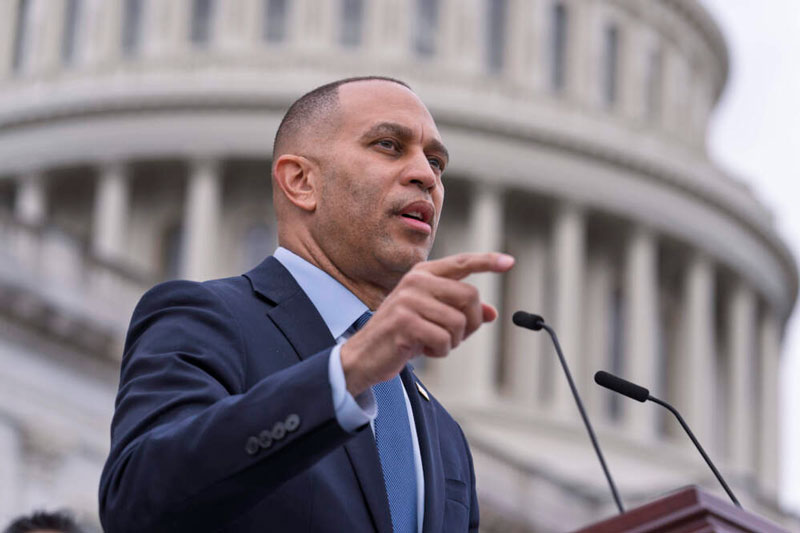
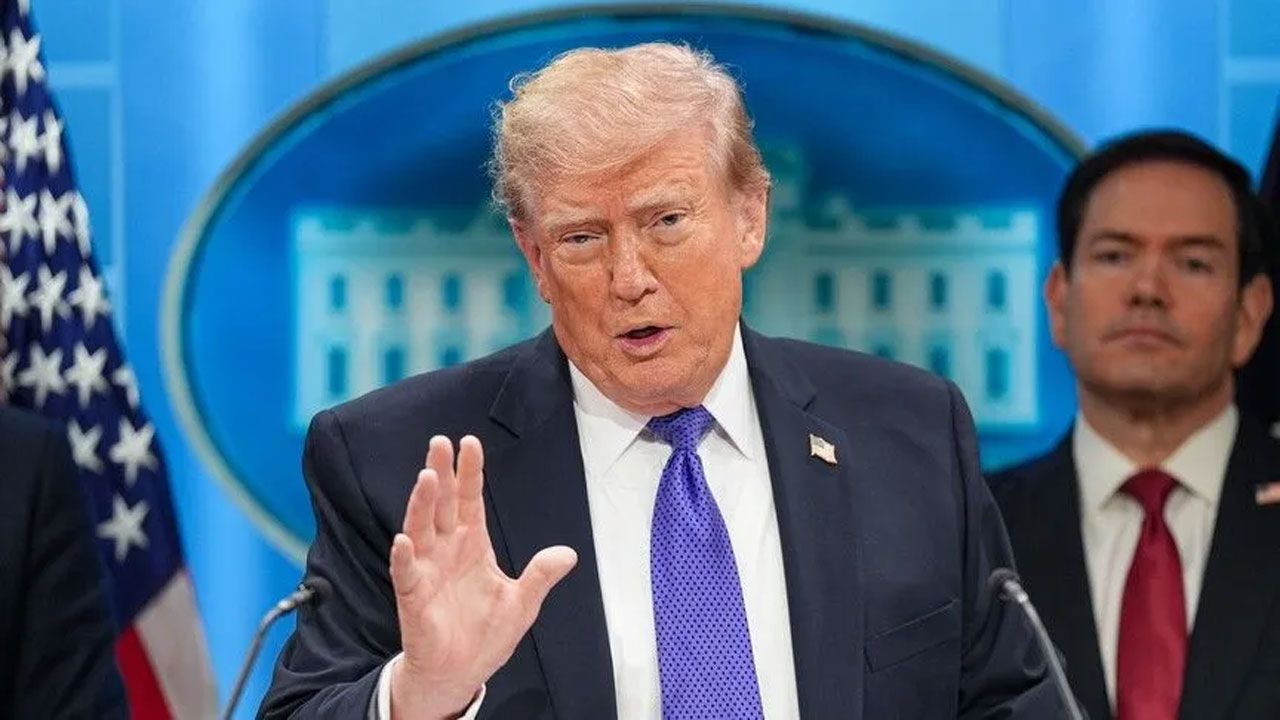
Noman Sabit: House Minority Leader Hakeem Jeffries (D-N.Y.) is set to take over the largest Democratic Caucus since the 1990s, and with it, potential headaches stemming from policy disagreements and sprawling investigations.
Democrats have been in a celebratory mood since exceeding expectations in the midterms and picking up almost 50 new seats in the House, returning them to the majority with numbers they describe as a mandate to pursue their legislative goals.
Still, the incoming Democratic Caucus is also historically diverse. And even as most of Jeffries’s colleagues say they have full confidence in the future Speaker, the party is bracing for fractious fights along ideological lines and territorial battles over various investigative interests.
“We got a large Caucus [and] we’re going to have to be disciplined. I mean, there will be moments. But I’m also going to say to you that our Caucus watched the Republicans, and we know we can’t perform like that. We know we can have intense discussions, but in the end, we got to produce because we got two years,” said Rep. Debbie Dingell (Mich.), chair of the Democratic Policy and Communications Committee.
“When [President] Trump got elected, they were sending a message they didn’t like what we were doing. This [election] is an overwhelming ‘they didn’t like what was happening.’ And if we don’t deliver, it’s a presidential election year, they’re going to deliver again, and we can’t afford that.”
While the election of several new members affiliated with the Democratic Socialists of America (DSA) sparked concerns the left flank could stall some policy goals, the party also saw a much larger wave of moderate members win new seats. The challenge for Jeffries will be in balancing the sometimes-competing interests of those two groups without alienating either one.
Additionally, Democrats are promising expansive probes into allegations of executive corruption, with a particular focus on the president’s family and administration officials, meaning multiple committees could be competing for the same witness testimony or duplicating investigative efforts.
One Democratic aide noted that Rep. Nancy Pelosi (D-Calif.), when she was leader, was known to play traffic cop among committees as her staff helped delineate what each panel should focus on.
The aide said there is an appetite for Jeffries to assume a similar role as “a reasonable traffic cop.”
“[Jeffrey] Epstein and immigration and corruption — those are right now facing a four-way stop,” the aide said.
“And unless Jeffries stands in the middle and directs traffic on how we divvy that up, and continues those conversations on how that divvies up, it’s just going to be a chaotic mess when committees start holding their hearings or asking for the first conversations or transcribed interviews with whatever investigative targets they have.”
Democrats have already launched dozens of probes while in the minority, but they’ve been almost entirely ignored by the GOP administration.
Several leading lawmakers have not hidden their enthusiasm about their newfound power, which features the ability to subpoena documents and compel testimony — including from the executive branch.
Rep. Robert Garcia (D-Calif.), set to take the House Oversight gavel next year, issued a two-word statement the night of the election: “Lawyer up.”
White House counsel Will Scharf has since penned two letters, one to Garcia and another to committee leaders broadly, making the remarkable assertion their probes could be criminal if done to harass witnesses. He also told Democrats they would need to start over and resubmit their requests for documents once they are formally in the majority.
Underlying that are plans for sprawling investigations with overlapping territory. Immigration is an interest already shared by three committees: Judiciary, Oversight and Homeland Security.
The Trump family’s profiting off the presidency has also already been explored by multiple panels, and Democrats have vowed to show how those in the president’s circle have enriched themselves through their positions even as Americans face rising costs.
Even the Epstein investigation, largely the focus of Oversight, crosses into other jurisdictions. Judiciary oversees the Bureau of Prisons, and both panels are probing the transfer of Epstein associate Ghislaine Maxwell.
The correspondence from Scharf foreshadows an aggressive resistance from the White House and underscores the need for coordination and strategizing a Democratic response.
But while some worry the party may cross wires, others say they appreciate that Jeffries has not been a micromanager.
One Democratic lawmaker, granted anonymity to speak freely, noted that Jeffries has avoided “punitive measures” for those who have bucked the Caucus, either on votes or in the approach they take in committee.
“I love freedom, so freedom is great,” the lawmaker said.
“They’ve, especially for committee work, sometimes weighed in, but have been very understanding and accommodating of members as they try to do things,” the Democrat added.
“When leadership has data showing that this type of wording or rhetoric is not helpful and undermines our case, a lot of us listen and take that into consideration. Do all of us bend all of the time? No, that doesn’t happen right now. I don’t think it’s going to happen in the next Congress. There’s going to be people who openly [fight] leadership when they try to tell us to do something, right? Because they don’t like what they’re saying. So that’s going to happen.”
Jeffries’s office did not respond to a request for comment for this story.
Current and former leadership said there will undoubtedly need to be some coordination on investigations.
“You don’t want to step on your own message. You want to have things relatively focused on what you want to focus on, so that you will magnify the public’s ability to see what we’re doing, as opposed to be distracted by three or four things you’re doing at the same time,” said Rep. Steny Hoyer (D-Md.), the former majority leader.
“Now, will things happen at the same time and just in the normal course? Of course they will. But to the extent you can provide a focus, I think the Speaker will be working with the committee chairs to do that.”
Almost all agree Pelosi was a masterful leader over her many years at the helm of the party.
But Rep. Pete Aguilar (D-Calif.), who will be the majority whip next year, said he has full confidence in Jeffries.
“We’ve seen his leadership style. We know it’s a little bit different. We served at the leadership table with Nancy Pelosi. She’s amazing. She’s on the Mount Rushmore of Democratic politicians,” he said.
“But this leadership team does it a little differently, and we look forward to being effective for our members.”
Rep. Don Beyer (D-Va.) said Jeffries will make “a good father in that respect” if any turf wars surface among committee chairs.
“He will — I don’t know ‘lay down the law’ — but I think he will guide them to constructive decisions,” Beyer said.
“He’s not a wallflower. He’s not somebody who rolls over. He’s very serious, very thoughtful.”
Questions linger over how aligned Democrats will remain as they push forward on policies they’ve promised to combat, such as Trump’s impact on the cost of living, immigration, healthcare and more.
The Democratic primaries saw several DSA members knocking off veteran incumbents, spurring concerns over the summer that the new “bloc” could be akin to the GOP’s Freedom Caucus, whose members routinely derailed votes and left Speaker Mike Johnson (R-La.) scrambling to advance even partisan bills.
The election of so many Democrats who flipped GOP-held seats now raises questions over whether the party may have trouble securing their votes on some party priorities that could be controversial in front-line districts.
“There are many times, just from political calculations, where the Speaker’s office has to drive the short-term agenda and the long-term agenda. For example, what bills do we want to take up the first and second week of January?” Beyer said.
“He’s been minority leader, so it’s different. It is different. So he’ll have a lot more power now, and hopefully use it wisely. I think he will.”
Hoyer said for all the new voices in the conference, he feels confident the Caucus is aligned on the prevailing issues Democrats campaigned on.
“I think the Democratic leadership is, and I think will continue to focus on the issues of affordability of healthcare, of housing costs, of getting this war ended, and I think that’s what they ought to be doing,” he said.
“And I think they will do it. And I think the Caucus is pretty united on those issues.”
*Copyright 2026 Bangla Press. All rights reserved. This material may not be published, broadcast, rewritten or redistributed.
BP/SM
[Bangla Press is a global platform for free thought. It provides impartial news, analysis, and commentary for independent-minded individuals. Our goal is to bring about positive change, which is more important today than ever before.]

 E-paper