

Mixed Reactions in Bangladesh as BJP Wins West Bengal

Bangla Press
Published: 05 May 2026, 01:00 AM
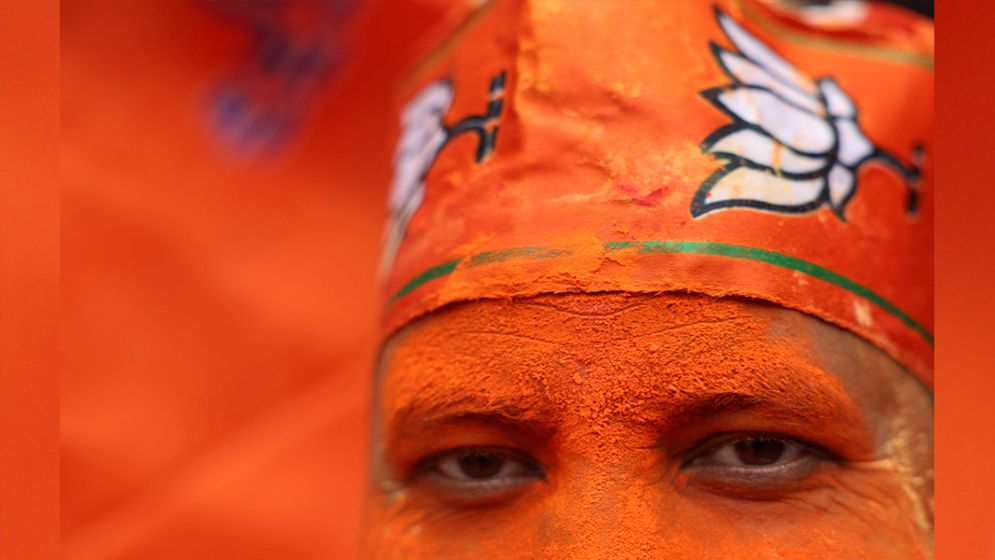
Bangla Press Desk: There is widespread discussion and varied analysis within Bangladesh’s political parties over the victory of Bharatiya Janata Party (BJP) in India’s West Bengal Legislative Assembly elections.
In particular, many are curious about the implications of Mamata Banerjee’s departure from power after nearly a decade and a half, and the BJP of Indian Prime Minister Narendra Modi assuming control of West Bengal for the first time.At the same time, political circles are debating, with a mix of interest and concern, how the West Bengal state government will now approach bilateral issues such as the sharing of Teesta river waters, border management, and matters like “push-in” or “push-back”.
Concerns have also been raised over various remarks about Bangladesh made by some Indian leaders ahead of the election. There is apprehension in some quarters that attempts to push Indian citizens into Bangladesh under the label of being Bangladeshi could increase.Some parties argue that certain comments made by BJP leaders before the election were harmful to relations between the two countries. However, from the Bangladesh government’s side, State Minister for Foreign Affairs Shama Obaed has said that whoever comes to power in West Bengal will not affect bilateral relations with Bangladesh.
Meanwhile, unofficial election results indicate that the BJP has won by a large margin, unseating Mamata Banerjee’s Trinamool Congress. Chief Minister Mamata Banerjee herself has reportedly lost her seat to BJP candidate Suvendu Adhikari.
What the parties are saying
Following the fall of Sheikh Hasina’s government in August 2024, relations between Bangladesh and India experienced significant strain, which has yet to fully normalise. Even before that, some political parties in Bangladesh had long accused India of seeking to exert dominance over the country.
This sentiment was also reflected during movements against the Hasina government, with slogans such as “Delhi or Dhaka—Dhaka, Dhaka” heard on the streets of the capital.
During the interim government period, relations deteriorated further due to incidents involving attacks on minorities, as well as retaliatory actions including attacks on Bangladesh missions in India.
A series of developments—including calls to boycott Indian products, attacks on the Indian High Commission’s cultural centre in Dhaka, the near suspension of Indian visa operations in Bangladesh, the withdrawal of certain trade facilities, and Bangladesh’s cricket team not travelling to India for the World Cup—pushed bilateral ties to a low point during that period.
However, since Bangladesh’s general election in February, there have been visible efforts by both governments to improve relations. Bangladesh’s Foreign Minister Khalilur Rahman has visited New Delhi, and prior to the visit, the Prime Minister’s foreign affairs adviser Humaiun Kobir described the evolving ties as “a new relationship between Bangladesh and India”.
Although relations with India were considered strongest during the Awami League government’s tenure, the longstanding Teesta water-sharing issue remained unresolved, largely due to opposition from West Bengal Chief Minister Mamata Banerjee, who publicly opposed the agreement.
In the run-up to the recent election, remarks made by several BJP leaders about Bangladesh also drew reactions within the country. Against this backdrop, political parties in Bangladesh closely monitored the outcome of the West Bengal polls.“As we observed, some leaders there made concerning remarks about Bangladesh and its people ahead of the election, which is unfortunate. We share a long border with West Bengal and our relations are multi-dimensional. If such remarks continue, they could have repercussions here as well,” Asif Mahmud, spokesperson for the National Citizen Party (NCP), said.
He added that they had been monitoring developments closely and noted allegations—reported in Indian media—that the BJP had made undemocratic efforts to defeat the Trinamool Congress, including actions targeting voter lists.
Jamaat-e-Islami Secretary General Mia Golam Parwar said that the outcome of the West Bengal election is unlikely to influence Bangladesh’s politics, nor do they foresee significant encouragement for extremists in Bangladesh.
“However, their Hindutva ideology, communalism and extremism are a major cause for concern. India’s state ideology is secularism, yet they themselves do not uphold it. If India remained secular, people of other religions would feel secure,” he said.
Responding to a question, he added: “The Awami League drew strength with the support of the Indian state and government, and Sheikh Hasina continues to enjoy their backing. The BJP government is supporting her. With greater shelter, they may intensify their conspiracies.”
Meanwhile, Ruhul Kabir Rizvi, political adviser to the Prime Minister and Senior Joint Secretary General of the BNP, said the West Bengal election is entirely an internal matter for India, and that the people there have exercised their democratic rights through voting.
“However, as close neighbours, relations between the two countries are extremely important. We believe that whoever is in power, bilateral ties will progress further and benefit the people. On the basis of mutual fairness, both countries will continue to advance their relationship,” he said.
Communist Party Presidium Member Mujahidul Islam Selim said that the BJP’s victory in West Bengal represents the rise of a communal force, noting that similar forces also exist in Bangladesh.
“An analysis of global politics shows that the politics of the Indian subcontinent is facing a similar crisis. Whoever comes to power will not resolve it, as they all represent bourgeois and corporate interests. However, I believe that ordinary people in both countries will move society forward on the basis of democracy and secularism,” he said.
State Minister for Foreign Affairs Shama Obaed reiterated that, regardless of who forms the government in West Bengal, Bangladesh will continue to pursue the resolution of outstanding issues with the same approach.
Responding to journalists at the Foreign Ministry, she said that dialogue remains essential regardless of which government is in power.
“Whoever governs India, the issues between us remain. We must address them,” she said.
[Bangla Press is a global platform for free thought. It provides impartial news, analysis, and commentary for independent-minded individuals. Our goal is to bring about positive change, which is more important today than ever before.]
YOU MAY ALSO LIKE

.jpg)


International
Trump Says Houthis Will Not Target US Amid Escalating Saudi Attacks
1 day ago
by Bangla Press
Sangeet Academy