

Nearly 29 percent of highly educated youth in Bangladesh are unemployed: IMF

Bangla Press
Published: 17 October 2026, 06:20 AM
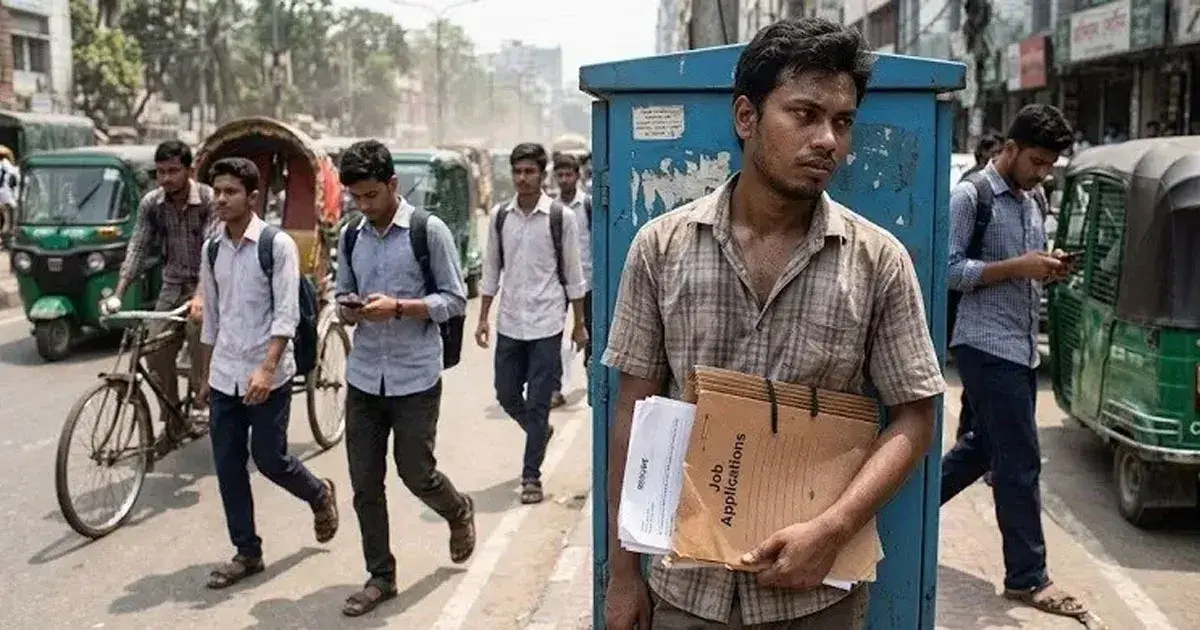
Bangla Press Desk: In Bangladesh, approximately 29 percent of highly educated young people are unemployed. Nearly half of the highly educated workforce are employed in roles that do not fully utilize their education and skills. This information is highlighted in a report by the International Monetary Fund (IMF).
The report, titled "Regional Economic Outlook: Asia and Pacific," was released last Thursday (October 15) and incorporates data available up to October 2.
According to the IMF, a major barrier for new graduates entering the job market is a "skills mismatch"—a gap between the skills job seekers possess and those required by employers. Due to this skills gap, many struggle to find employment for long periods. Even when they do secure a job, many are forced to take on roles that require a lower level of skill than they actually possess.
In many Asian countries, a large portion of the workforce is employed in the informal sector, including agriculture. Such jobs often lack job security, formal contracts, and opportunities for career advancement. Consequently, the IMF suggests that the unemployment rate alone does not fully capture the underlying weaknesses of the labor market.
The number of working-age individuals in Bangladesh is set to increase in the coming years. Effectively harnessing this human capital could present a significant opportunity for the economy. To achieve this, it is essential to expand high-quality employment opportunities within the manufacturing and service sectors, while simultaneously ensuring that the education system equips individuals with the necessary skills. Failure to do so could lead to growing frustration among the youth and potentially hinder economic growth.
The proliferation of artificial intelligence (AI) is further compounding challenges within the labor market. The IMF analyzed 40 million online job advertisements across 19 Asian economies, finding that demand for workers in professions heavily impacted by AI has declined by approximately 10 percent. Conversely, there has been an increased demand for workers possessing AI-related skills.
The IMF further notes that even countries currently experiencing a limited impact from AI may face difficulties in the future, as many of the new jobs created in the manufacturing and service sectors could be transformed or altered by AI. Citing weaknesses in the labor market, the IMF has lowered its growth forecast for Bangladesh. The organization projects that the country’s Gross Domestic Product (GDP) may grow by 3.2 percent in the 2026–27 fiscal year.
Conversely, the growth forecast for the Asia-Pacific region as a whole has been raised. Countries poised to benefit from economic expansion driven by technology and artificial intelligence (AI) see improved growth prospects. However, low-income nations remain under pressure from high energy costs and inflation.
BP/TD
[Bangla Press is a global platform for free thought. It provides impartial news, analysis, and commentary for independent-minded individuals. Our goal is to bring about positive change, which is more important today than ever before.]
YOU MAY ALSO LIKE
.jpg)
Bangladesh
The number of mobile users in the country has surpassed 190 million.
1 hour ago
by Bangla Press

Bangladesh
114 flights from Dhaka to Saudi Arabia cancelled; 17,701 passengers left in uncertainty
1 hour ago
by Bangla Press

Bangladesh
The Constitution is obligated to ensure the security of followers of all religions: Home Minister
18 hours ago
by Bangla Press
.jpg)
Bangladesh
Bangladesh to seek the return of Sheikh Hasina during talks with India
18 hours ago
by Bangla Press
.jpg)
Sangeet Academy