
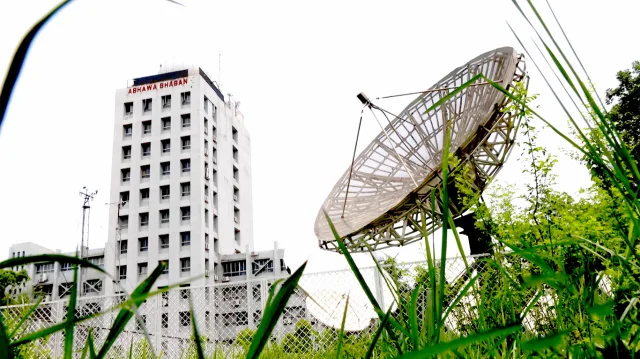
NEIR is being relaunched; active handsets will be registered automatically.

Bangla Press
Published: 22 October 2026, 06:45 AM
Bangla Press Desk: The Bangladesh Telecommunication Regulatory Commission (BTRC) has taken initiatives to prevent the evasion of approximately BDT 2,000 crore in annual government revenue, which currently occurs through the illegal manufacturing, smuggling, and unauthorized sale of mobile phones.
To this end, there is a plan to relaunch the National Equipment Identity Register (NEIR) in two phases, starting from January 1 of next year.
The system also aims to identify cloned handsets and curb fraud within mobile financial services (MFS).
According to an assessment by the National Board of Revenue (NBR)—as noted in a working paper presented at a BTRC commission meeting—the government loses approximately BDT 2,000 crore annually due to illegal mobile phones.
Under the proposed plan, the core functions of the NEIR will be activated in the first phase.
However, the mechanism for cancelling handset registrations will not be implemented during this stage. Handsets currently active on mobile operator networks will be registered automatically. Additionally, the system will incorporate the IMEI numbers of unsold handsets held by authorized importers and domestic manufacturers. It will also include provisions to identify and block handsets that have been brought into the country illegally, smuggled, or marketed while evading customs duties and taxes.
In the second phase, a mechanism for cancelling handset registrations will be introduced at an appropriate time. This will facilitate the verification of phone ownership, the identification of cloned handsets, and the prevention of financial fraud.
During the BTRC commission meeting, the Director General of the commission’s Spectrum Management (SM) division presented a detailed working paper on the relaunch of the NEIR. It stated that although the system was launched on a trial basis on July 1, 2021, key functions—such as the automatic blocking of illegally imported phones and the prevention of cloned handsets—were not implemented due to a decision by the then-government. Consequently, the primary objectives behind the establishment of the NEIR have been hindered.
The plan will be implemented by the BTRC’s Spectrum Management (SM) division. A formal letter will be sent to the Posts and Telecommunications Division to obtain the government's prior approval for implementing the system in two phases.
Various agencies have long urged the full-scale implementation of the National Equipment Identity Register (NEIR) to prevent revenue evasion, ensure discipline within the telecommunications sector, and address security risks. On October 29, 2024, the National Board of Revenue (NBR) formally requested the Bangladesh Telecommunication Regulatory Commission (BTRC) to take action to curb revenue evasion involving illegal handsets. Subsequently, on June 28, 2025, the Posts and Telecommunications Division granted preliminary approval for a plan to reactivate the system.
During a high-level inter-ministerial meeting held on December 1, 2025, directives were issued to fully implement the NEIR across all mobile networks in the country. Although preparations were in place to launch the system on January 1, 2026, the critical measures—such as blocking unauthorized phones—were not executed to avoid public inconvenience.
On June 9, 2026, security agencies submitted a formal letter highlighting the economic and national security risks, emphasizing the necessity of a full-scale NEIR implementation. A similar recommendation was made during an inter-ministerial meeting on July 2, 2026, which addressed risks related to IMEI, SIM registration, and fraud in mobile financial services.
Most recently, on September 22, a high-level meeting chaired by the Minister of Home Affairs—attended by representatives from the Posts and Telecommunications Division, Bangladesh Bank, and law enforcement agencies—recommended the implementation of the NEIR in two phases, beginning January 1, 2027.
The decision notes that unregistered, stolen, and cloned handsets are being exploited for organized crime, mobile phone theft, and fraud within mobile financial services. Security agencies maintain that a fully operational NEIR is essential to ensure the identification of—and accountability for—every device connected to the network.
Meanwhile, the BTRC has also approved a phased roadmap to phase out the use of mobile handsets that support only second-generation (2G) networks by December 2029. Under this plan, restrictions will be imposed on the approval, production, importation, and marketing of such phones.
BP/TD
[Bangla Press is a global platform for free thought. It provides impartial news, analysis, and commentary for independent-minded individuals. Our goal is to bring about positive change, which is more important today than ever before.]
YOU MAY ALSO LIKE


Bangladesh
175,000 tonnes of wheat from the United States have arrived in the country.
13 hours ago
by Bangla Press
Bangladesh
Awami League Will No Longer Be Allowed to Do Politics by Public: Speaker
1 day ago
by Bangla Press


Bangladesh
Dhaka awaits Saudi response regarding death sentences of two Bangladeshis
1 day ago
by Bangla Press
Sangeet Academy