
.jpg)
Pentagon foresees 'more limited' role in deterring North Korea

Bangla Press
Published: 24 January 2026, 09:13 AM
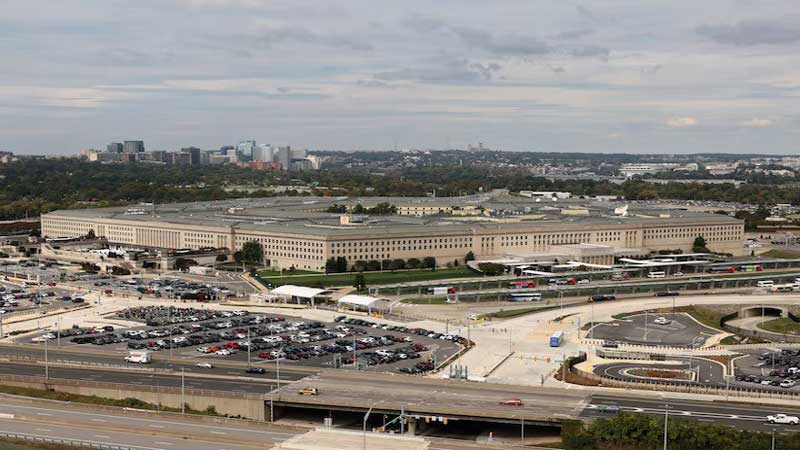
Bangla Press Desk: The Pentagon has signalled a shift toward a more limited role in deterring North Korea, with South Korea expected to take primary responsibility for its own defence, according to a newly released US National Defense Strategy document. The move could eventually lead to a reduction of US troops stationed on the Korean Peninsula.
South Korea currently hosts about 28,500 US troops as part of a combined defence posture against North Korea. In recent years, Seoul has increased its defence spending and raised its military budget by 7.5 percent this year.
“South Korea is capable of taking primary responsibility for deterring North Korea with critical but more limited US support,” the Pentagon said in the 25-page strategy document, which guides US defence policy. It added that this shift aligns with Washington’s interest in updating US force posture on the Korean Peninsula.
US officials have previously indicated a desire to make American forces in South Korea more flexible, allowing them to operate beyond the peninsula in response to wider regional challenges, including tensions involving Taiwan and China’s growing military influence.
While South Korea has resisted changes to the role of US troops, it has steadily expanded its own defence capabilities over the past two decades, with the aim of assuming wartime operational control of combined forces. South Korea maintains a standing military of approximately 450,000 personnel.
South Korea’s Defence Ministry said the US military presence remains the “core” of the alliance that has deterred North Korean aggression and preserved peace on the peninsula and in the region. It added that Seoul would continue to cooperate closely with Washington to strengthen the alliance.
North Korea has repeatedly criticised the US military presence in South Korea and joint military exercises, which Washington and Seoul describe as defensive, calling them rehearsals for invasion.
The Pentagon’s top policy official, Elbridge Colby, is expected to visit South Korea during a regional trip to Asia next week, according to a US official.
The National Defense Strategy emphasises defending the US homeland as Washington’s top priority. In the Indo-Pacific, the document states that the Pentagon aims to prevent China from dominating the region or threatening US interests. It notes that such a strategy does not require regime change or an existential conflict, but seeks stability under conditions favourable to the United States.
While the document does not mention Taiwan by name, it acknowledges the importance of maintaining balance in the region. China considers Taiwan a core issue in its relations with the United States and claims the self-governed island as its territory, a claim rejected by Taiwan.
Taiwan’s National Security Council Secretary-General Joseph Wu said the strategy reinforces the goal of preventing regional dominance and strengthening defensive capabilities along the first island chain. He said Taiwan would continue investing in defence to deter aggression.
The document also addresses global security challenges, noting that while Iran has suffered setbacks, it may still attempt to rebuild its military and pursue nuclear capabilities. It describes Israel as a key ally capable of defending itself, even as US-Israel relations remain strained over the Gaza conflict.
On Europe, the strategy states that the United States will remain engaged but will prioritise homeland defence and competition with China. Russia is described as a “persistent but manageable” threat to NATO’s eastern members.
The document adds that the Pentagon will provide the US president with options to secure American military and commercial access to strategic regions worldwide, including the Arctic.
BP/TI
[Bangla Press is a global platform for free thought. It provides impartial news, analysis, and commentary for independent-minded individuals. Our goal is to bring about positive change, which is more important today than ever before.]
YOU MAY ALSO LIKE
.jpg)
International
CJP Gives Indian Election Chief 48-Hour Resignation Ultimatum
17 hours ago
by Bangla Press
International
Questions raised over UN Security Council's effectiveness; G-4 seeks immediate reform.
1 day ago
by Bangla Press

International
Pakistan petrol price may soar to PKR1,000 per litre: Minister
1 day ago
by Bangla Press
International
US-Venezuela oil deal will help lower fuel prices in the global market: Trump
1 day ago
by Bangla Press
Sangeet Academy