
.jpg)
PM Tarique Highlights a New Fascism-Free Bangladesh at the UN

Bangla Press
Published: 24 September 2026, 09:57 PM
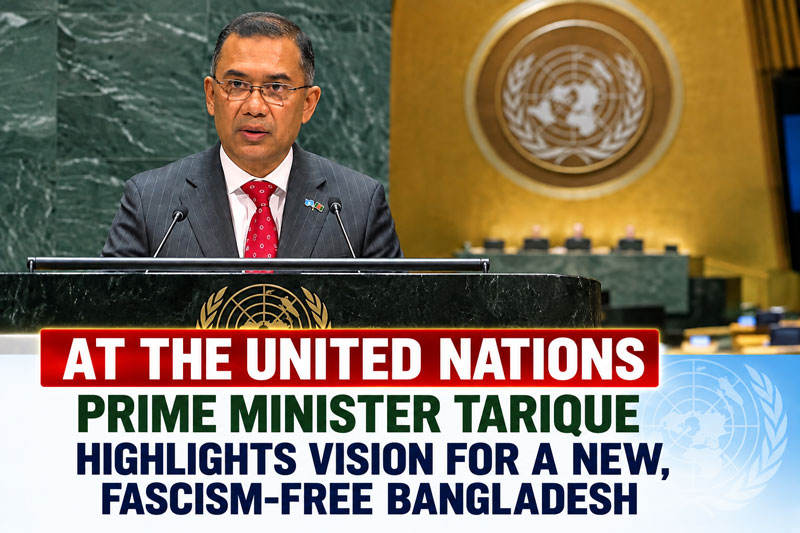
Prime Minister Tarique Rahman addressed of the United Nations General Assembly
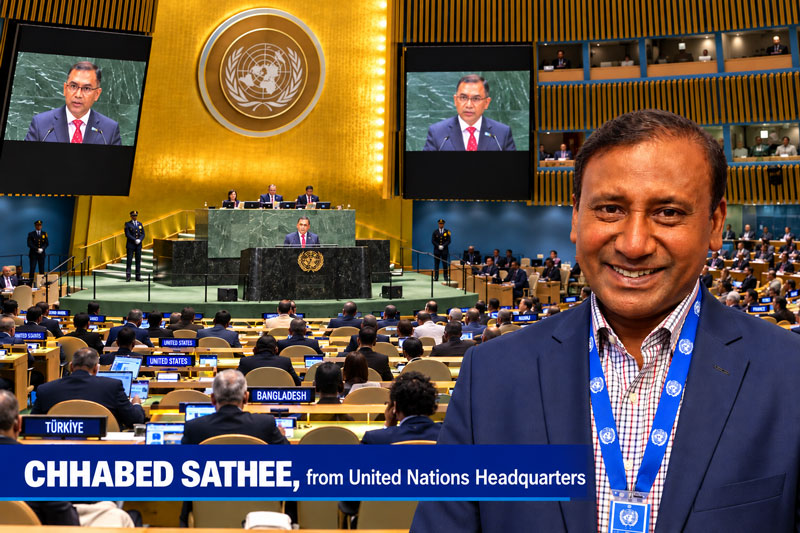
Chhabed Sathee, from United Nations Headquarters: Prime Minister Tarique Rahman addressed the 81st Session of the United Nations General Assembly on Thursday afternoon, New York time, outlining his government’s vision for a new democratic Bangladesh while emphasizing global peace, the Rohingya crisis, climate change and equitable access to artificial intelligence (AI).
Referring to more than a decade and a half of political movements against what he described as “fascist rule and exploitation,” the prime minister said Bangladesh is now free from fascism.
Presenting his government’s framework for rebuilding the country, he said, “To repair Bangladesh, which was deeply wounded by fascist rule and exploitation, the government is following a Three-R strategy—Recovery, Restoration and Reconstruction.”
At the outset of his speech, the prime minister paid tribute to those killed during the July-August 2024 student-led mass uprising, as well as those who lost their lives in democratic struggles since Bangladesh’s independence.
Referring to the country’s democratic transition following what he described as the end of more than 15 years of fascist rule, he said, “In this Bangladesh, through the free, fair and impartial national election held on February 12 this year, the people entrusted the Bangladesh Nationalist Party—BNP—with the responsibility of governing the country.”
Reaffirms Support for an Independent Palestinian State
In his address, Prime Minister Tarique Rahman reaffirmed Bangladesh’s support for the establishment of an independent Palestinian state.
“The democracy-loving people of Bangladesh are deeply concerned about the suffering of the Palestinian people seeking freedom,” he said. “Bangladesh once again reaffirms its unwavering support for their legitimate demands, including their right to self-determination and the establishment of an independent Palestinian state.”
Rohingya Crisis: ‘The Solution Lies in Myanmar’
The prime minister highlighted the pressure on Bangladesh’s resources and environment caused by hosting more than 1.2 million Rohingya for over nine years.
Calling for effective action by the international community to resolve the crisis, he said, “The source and origin of the Rohingya crisis lie in Myanmar, and therefore its solution also lies there. The only solution to this problem is the safe return of the displaced Rohingya population to their homeland in Myanmar.”
Plan to Develop Bangladesh as a Manufacturing Hub
The prime minister also outlined plans to transform Bangladesh’s working-age population into a skilled workforce and develop the country as a “manufacturing hub.”
“Bangladesh seeks the support of its development partners in this endeavor,” he said. “To create opportunities for young entrepreneurs, researchers and innovators to implement start-up initiatives, the government has allocated $50 million in the current fiscal year.”
Women at the Center of Socioeconomic Transformation
Prime Minister Rahman said women account for more than half of Bangladesh’s population and are therefore at the forefront of the government’s plans for socioeconomic transformation.
He said the government is prioritizing women’s education, employment and entrepreneurship. Access to financing for women entrepreneurs, particularly in small and medium-sized enterprises, has been expanded, while tuition-free education for women has been extended through the undergraduate level.
“We want to ensure not only electoral democracy but also the democratization of the economy so that the benefits of economic growth and prosperity reach every family and every citizen,” he said.
To achieve that goal, he said, the government has introduced assistance programs for economically disadvantaged people through social protection initiatives such as the Family Card, Farmers Card, Sports Card and E-Health Card.
The prime minister said the Family Card, issued in the name of the female head of each household, is regarded by the government as a symbol of women’s economic empowerment. The government also plans to integrate various sector-specific cards into a single “Universal Card.”
Bangladesh Calls for Stronger Global Climate Action
The prime minister described Bangladesh as one of the countries most vulnerable to the adverse effects of climate change.
“Although Bangladesh contributes very little to global carbon emissions, it has to bear the adverse impacts of climate change,” he said. “Bangladesh has therefore chosen the path of building resilience. We expect stronger global action at COP31 on climate justice, climate finance and adaptation support.”
He said the government has strengthened environmental protection programs across Bangladesh.
“As part of these efforts, the government has launched a program to plant 250 million trees across the country over the next five years,” he said. “We are emphasizing the use of clean and solar energy. To help protect the country from floods and droughts, the government has begun a program to excavate 20,000 kilometers of canals nationwide.”
He said work has also begun on the Teesta Master Plan and the Padma Barrage project to increase freshwater flows into the Sundarbans, the world’s largest mangrove forest, and to preserve water through large reservoirs.
At the same time, he said, Bangladesh has signed the 1992 Water Convention, reaffirming its commitment to cooperation on transboundary water management while strengthening domestic measures for water conservation and pollution prevention.
‘Digital Divide Must Not Become an AI Divide’
Turning to science and technology, Tarique Rahman said they would shape the future of the world.
“We are entering a new era of artificial intelligence, biotechnology and science,” he said. “Technology is advancing rapidly, but access to its opportunities is still not equal for everyone.”
Bangladesh’s large youth population and growing digital capacity, he said, have created significant new opportunities. To take advantage of them, advanced technology, knowledge and research opportunities must become accessible to all.
“We do not want today’s digital divide to become tomorrow’s artificial intelligence divide,” he said.
“Bangladesh respects innovation and intellectual property rights. At the same time, it is essential to ensure technology transfer, capacity building and affordable access to modern technologies for developing countries. No country should be left behind in this scientific advancement.”
He said Bangladesh is ready to work with other countries to build a fair and prosperous future for all.
The prime minister also called for an effective UN framework to help countries harness the rapid growth of artificial intelligence and social media in a positive and responsible manner.
‘Bangladesh First, Bangladesh for All’
Toward the end of his speech, the prime minister outlined his vision for the country.
“We want to build a Bangladesh where young people can pursue their dreams freely and without fear, where women can lead their lives with confidence, where every child can grow up with the opportunity to realize their full potential, and, above all, where people are assured of a safe and peaceful life,” he said.
“That is why we say, ‘Bangladesh First, Bangladesh for All.’”
Standing at the UN podium, the prime minister also reflected on his family’s history at the world body.
“Standing here on this global stage of the United Nations, I feel somewhat nostalgic today,” he said. “It was from this very world stage that my father, Shaheed President Ziaur Rahman, the proclaimer of Bangladesh’s independence, and my mother, former Prime Minister the late Khaleda Zia, addressed the world on behalf of the country and its people.”
“Likewise, today I stand here in defense of the interests of my country and its people, and with the hope of a peaceful global community.”
Prime Minister Tarique Rahman concluded his address by reaffirming Bangladesh’s support for the principles and values of the United Nations in the pursuit of global peace.
*Copyright 2026 Bangla Press. All rights reserved. This material may not be published, broadcast, rewritten or redistributed.
BP/SM
[Bangla Press is a global platform for free thought. It provides impartial news, analysis, and commentary for independent-minded individuals. Our goal is to bring about positive change, which is more important today than ever before.]
YOU MAY ALSO LIKE
.jpg)
.jpg)
.jpg)
Bangladesh
British High Commission, Democracy International meet Home Minister
16 hours ago
by Bangla Press
Bangladesh
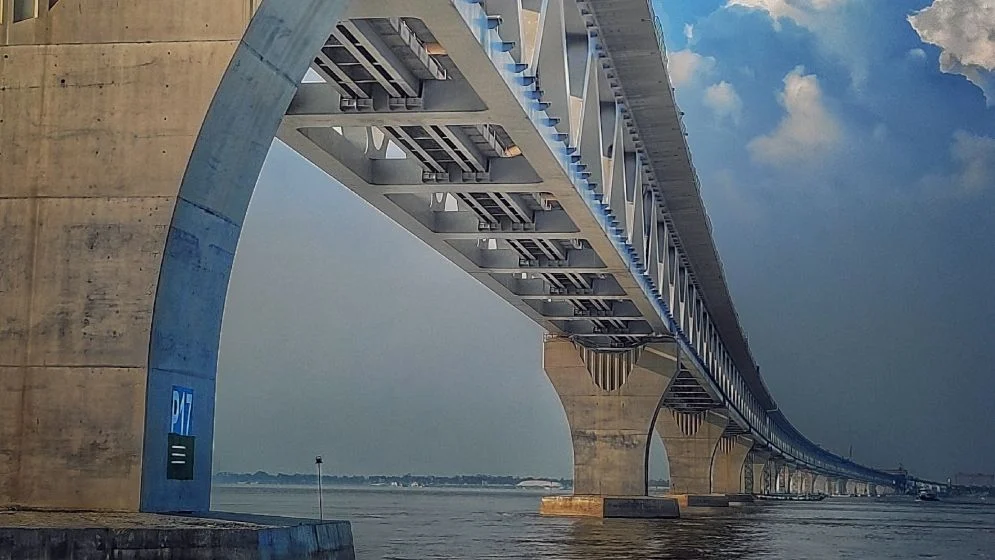
Attempt to extract 60 million cubic feet of sand puts Padma Bridge at risk.
1 day ago
by Bangla Press
Sangeet Academy