
.jpg)
Tensions rise between Canada and Trump after Carney’s speech

Bangla Press
Published: 23 January 2026, 05:59 PM
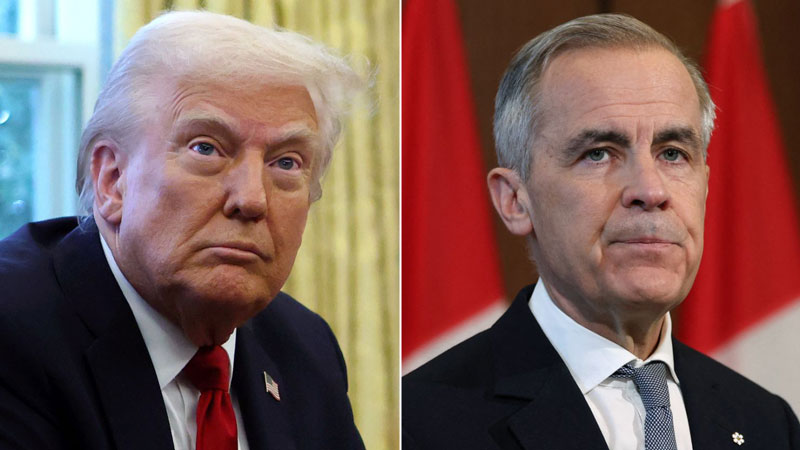
Abu Sabet: Tensions between the United States and Canada have rapidly escalated this week after Canadian Prime Minister Mark Carney delivered a rousing speech at the World Economic Forum in Davos, Switzerland on Tuesday, declaring a “rupture” in the old world order and calling on “middle powers” to unite.
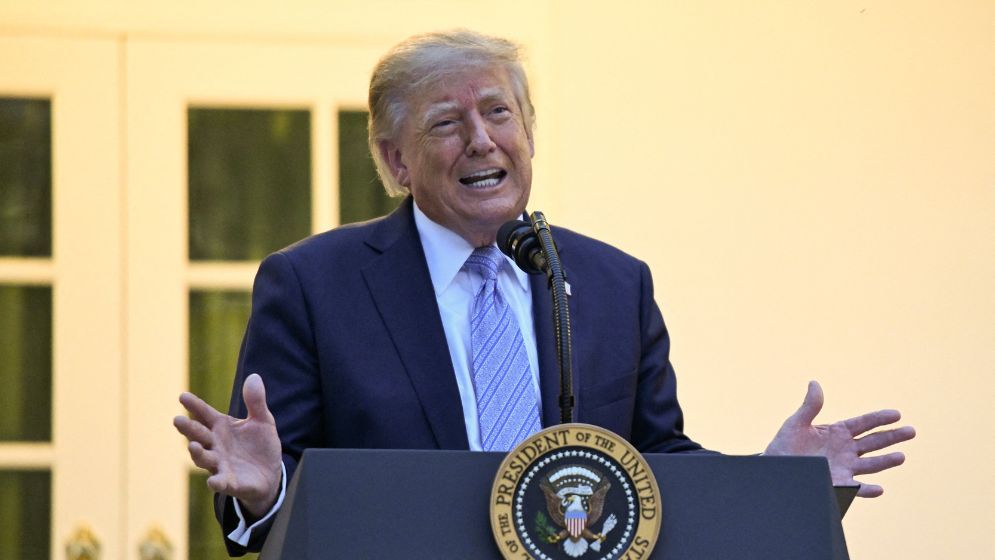
The once jovial public relationship between Carney and President Trump has descended into a barbed back-and-forth, with Trump on Friday disinviting Canada from his Board of Peace, which Ottawa was already hesitant to join.
Aaron Ettinger, a political science associate professor at Carleton University in Ottawa, said the relationship was “on a precipice.”
“We don’t know if this ends well for Canada at all. There’s the realization from the past week that Canada is not dealing with a reliable or maybe even a rational leader of the United States,” he told The Hill.
Carney’s defense of Greenland and opposition to tariffs during his moment in the Davos spotlight rankled Trump, who responded during his speech the next day, saying that Canada receives many “freebies” from the U.S. and said Carney was not “grateful.”
“But they should be grateful to us, Canada,” Trump said. “Canada lives because of the United States. Remember that, Mark, before you make your statements.”
Carney responded with praise for the relationship between the U.S. and Canada, but said Canada “doesn’t ‘live because of the United States.’ Canada thrives because we are Canadian.” Trump on Thursday withdrew his invitation for Carney to join his Board of Peace, which was formed to oversee a peace process in the Gaza Strip, but has drawn skepticism from U.S. allies over its $1 billion price tag for permanent membership and seeming ambitions to rival the United Nations.
‘Huge break’
Carney, a former central banker, visited the White House just weeks after winning election on April 28. The tone of that meeting was a marked contrast with Trump’s condescending attitude toward former Prime Minister Justin Trudeau.
Trump called Carney a “very talented person” and said they had a “very friendly conversation,” despite the Canadian leader pushing back on Trump’s talk of Canada potentially becoming the 51st state.
Trump has largely backed off his imperialist talk toward Canada, but he has continued to ramp up tariffs, and public opinion toward the U.S. remains at a 20-year low.
Canadian Ambassador to the U.S. Kirsten Hillman told The Hill this week that while negotiations between the two countries remain professional behind the scenes, there’s been a fundamental shift in how Canadians view their powerful neighbor.
“I think Canadians took for granted that a strong, predictable, open relationship with Canada based on sort of mutual benefit would always be something that Americans, not only believed in but would kind of fight for, and I think that that is no longer the case,” she said. “And I think Canadians have had a range of reactions to that, from sort of disbelief to anger to sadness too.”
Canada under Trudeau’s leadership during the first Trump administration “assumed rationality,” Ettinger said, “assumed that the people at the top, at the very top, would listen and calculate a means to ends, rationale that would turn out to be favorable for both countries.”
During Trump’s second term, Canada has had to “completely reorient the way it’s going to behave towards the United States,” Ettinger said. “And that’s a huge, huge break with the last 75 or 80 years of practice.”
The president announced in July that the U.S. would raise tariffs on some Canadian goods from 25 to 35 percent, then added another 10 percent in October in response to an anti-tariff advertisement featuring former President Reagan played during the World Series.
Carney publicly apologized for the ad, which was produced and paid for by Ontario, whose premier, Doug Ford, has been an outspoken Trump critic.
“The tariffs are a problem, as far as Canada is concerned,” Graeme Thompson, a senior analyst with the Eurasia Group, told The Hill. “Clearly it’s having negative economic effects in the areas that are being targeted, mainly southern Ontario and southern Quebec, which are where the steel and aluminum and automobiles and auto parts, primarily, are manufactured.”
But he said the talk of Canada becoming part of the U.S. was “the thing that really set off Canadian public opinion.”
“The threats, real or imagined, to Canadian sovereignty, that that represented, that was a fundamental change in how Canada-U.S. relations have been managed for more than 100 years,” he said.
Canadian public opinion toward the U.S. reached a 20-year low, according to the Pew Research Center in July. The poll stated that 64 percent of Canadians have an unfavorable view of the U.S., while 34 percent have a favorable view.
“That’s the thing that really set off Canadian public opinion, and now Mr. Carney does not have the same incentives to make a deal as he used to, or the Canadian government used to,” Thompson said of the 51st state talk.
“Because the feeling in Canada is that they would rather have no deal than a bad deal at this point, and at least for now, public opinion is willing to bear the economic and financial consequences of that decision,” Thompson said.
‘Hope is not a strategy’
Despite Trump’s antagonism, Hillman said she remained optimistic that the U.S. and Canada would eventually return to a stable economic relationship.
“Probably not without a certain amount of volatility, or, you know, commentary, but I think we’ll get there, and that the reason we’ll get there is because it’s what’s best for Americans, American workers, American companies, American communities, American jobs,” she said.
Hillman noted how USMCA, the trade agreement she helped negotiate during Trump’s first term, had seen U.S. exports to Canada jump 20 percent. “So I believe that in the end, the facts will govern the outcomes that we’re able to achieve,” she added.
Representatives of the U.S., Canada and Mexico are currently conducting a review of the USMCA, which Trump recently called irrelevant.
Hillman conceded that among Canadian business leaders, “I don’t think there’s a sense that predictability is going to come back anytime soon.”
Ettinger said the relationship is never beyond repair, but added, “Canada can’t roll on a policy of hope, like hoping that Team Blue wins the next election. The cliche is ‘hope is not a strategy.”
During his speech at Davos, Carney said the middle powers like Canada should not mourn the changing of the status quo, as great powers turn inward, calling for the diversification of trade and focus on building economic strength at home.
“Nostalgia is not a strategy, but we believe that from the fracture, we can build something bigger, better, stronger, more just. This is the task of the middle powers, the countries that have the most to lose from a world of fortresses and most to gain from genuine cooperation,” he said.
Carney will likely look to strengthen trade relations with other countries like Indonesia and China “and see if that relationship blossoms from there,” said Thompson.
Carney faced criticism from Canada’s opposition last week for a visit to China in which he announced a deal to ease tariffs on electric vehicles from China in exchange for Beijing dropping barriers on canola imports from Canada. But Trump was supportive of the deal, saying “If you can get a deal with China, you should do that.”
But even if Canada doubled its trade exports to China by 2030, “that still only means that 10 percent of Canadian exports would go to China,” Thompson said, “and if we assume that all of that game was at the expense of the United States, 70 percent of Canadian exports would still go to the United States.”
The economic and strategic interests of both the U.S. and Canada “will at some point prevail,” Thompson predicted, “whether that’s tomorrow or three years from now.”
(*This report is produced by Bangla Press. Republishing our content, images, or broadcasts in any other media outlet without permission is strictly prohibited.)
BP/SM
[Bangla Press is a global platform for free thought. It provides impartial news, analysis, and commentary for independent-minded individuals. Our goal is to bring about positive change, which is more important today than ever before.]
YOU MAY ALSO LIKE
.jpg)
International
CJP Gives Indian Election Chief 48-Hour Resignation Ultimatum
18 hours ago
by Bangla Press
International
Questions raised over UN Security Council's effectiveness; G-4 seeks immediate reform.
1 day ago
by Bangla Press
International
Pakistan petrol price may soar to PKR1,000 per litre: Minister
1 day ago
by Bangla Press
International
US-Venezuela oil deal will help lower fuel prices in the global market: Trump
1 day ago
by Bangla Press
Sangeet Academy