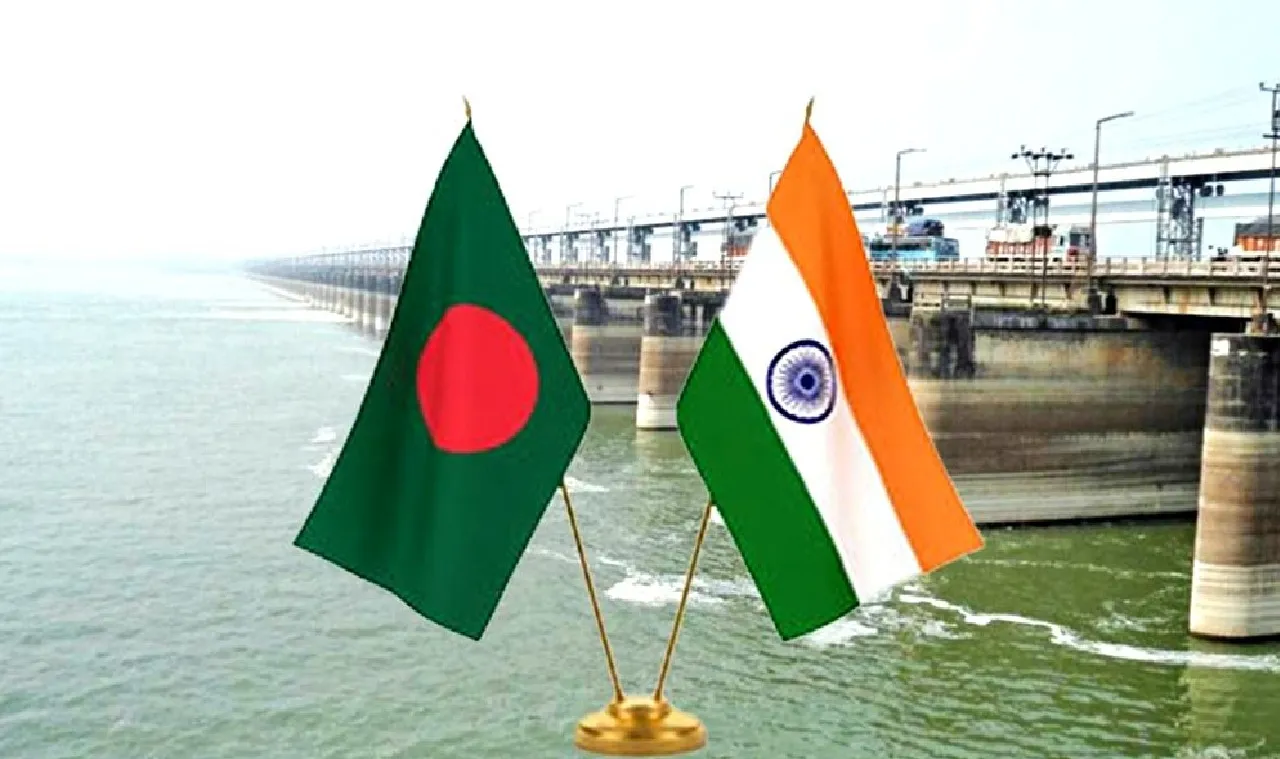
BanglaPress Desk: A technical-level meeting of the Joint Rivers Commission (JRC) between Bangladesh and India is set to take place in Dhaka, ahead of the expiration of the 30-year Ganges Water Sharing Treaty.
The meeting, which begins on Sunday (November 22), will focus on measuring and monitoring the water flow of the Ganges and Padma rivers, as well as exchanging relevant data. The proceedings will continue until November 23. An Indian delegation arrived in Dhaka on Friday to participate in the talks.
Md. Anwar Kadir, a member of the Joint Rivers Commission (Bangladesh), and Sharad Chandra, a commissioner from India’s Ministry of Water Resources, will lead their respective national delegations. As part of the meeting, a joint team from both countries will conduct measurements and observations of the Ganges’ water flow near the Hardinge Bridge in Pabna.
This meeting is being held as part of the routine measurement and monitoring of the river’s flow during the dry season, in accordance with the Ganges Water Sharing Treaty signed on December 12, 1996. However, as the 30-year agreement is set to expire on December 12, this will be the final formal technical meeting between the two nations under the existing treaty.
The Joint Rivers Commission has indicated that the extension of the current treaty or the negotiation of a new one is not on the agenda for this meeting. Furthermore, according to Indian media reports, the Indian delegation does not have the mandate to discuss the future of the agreement.
Meanwhile, Bangladesh has taken steps to initiate discussions with India regarding the renewal of the treaty or the formulation of a new agreement before the current one expires. Although a letter has been sent to India on this matter, no response has been received thus far.
Bilateral relations have become strained following the fall of the Sheikh Hasina government in the wake of a mass uprising in July–August 2024. Against this backdrop, uncertainty has emerged regarding the future of the Ganges Water Sharing Treaty.
Experts express concern that the political distance between the two nations could complicate the process of negotiating a new agreement or extending the existing one.
The construction of several dams and hydroelectric projects by India on the upper reaches of the Ganges has led to a reduction in the flow of the Padma River through the central and southern regions of Bangladesh during the dry season. Bangladesh has long complained that this is having a negative impact on agriculture, fisheries, and the environment.
Given this situation, there have been calls to include a guarantee clause—ensuring a specific volume of water—should the agreement be renewed in the future, in order to secure Bangladesh’s fair share of the water.
It is worth noting that the first agreement on the sharing of Ganges waters between Bangladesh and India was signed in 1977. Subsequently, on December 12, 1996, the two nations entered into a new 30-year agreement. Under this arrangement, there is a provision for the measurement and distribution of water flow every 10 days during the dry season, which spans from January 1 to May 31 each year. According to the agreement, both countries receive their allocated share of water within specified timeframes.
[Bangla Press is a global platform for free thought. It provides impartial news, analysis, and commentary for independent-minded individuals. Our goal is to bring about positive change, which is more important today than ever before.]

 E-paper