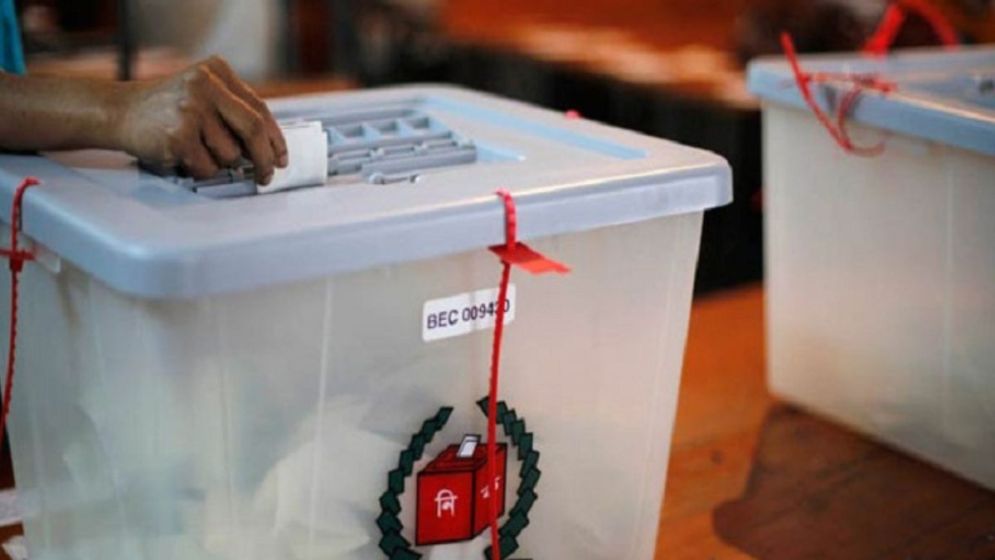
Bangla Press Desk: As Bangladesh prepares for local government elections, a debate has emerged that goes beyond electoral rules. The Jamaat-e-Islami has proposed barring office-bearers and active members of political parties banned by the government from contesting local polls. Although the proposal appears to be aimed at supporters of the Awami League, it raises a broader question: should political affiliation alone be enough to deny citizens the right to seek elected office?
A democratic society must distinguish between individual criminal responsibility and collective political guilt. The two are not the same.
There is little doubt that the Awami League faces serious allegations over its years in power, including election manipulation, abuse of state institutions, corruption and human rights violations. Those accused of criminal offences should face impartial investigations and, where the evidence warrants, prosecution through due process. Accountability is essential to restoring public confidence.
But extending punishment to everyone associated with a political party is a different matter. Supporting a party is not, in itself, a criminal offence. Democratic systems punish unlawful acts, not political identities.
International experience offers useful lessons. South Africa's transition from apartheid did not involve banning ordinary supporters of the National Party from politics. Accountability focused on those responsible for serious human rights abuses through mechanisms such as the Truth and Reconciliation Commission, while democratic competition remained open.
Chile followed a similar path after the end of Augusto Pinochet's military rule. Political figures linked to the previous regime continued to participate in elections, leaving it to voters—not the state—to decide their political future.
Indonesia also chose inclusion after the fall of President Suharto in 1998. Golkar, the party most closely associated with the authoritarian regime, was not barred from contesting elections. Its political influence rose and fell according to public support rather than administrative exclusion.
The opposite experience is equally instructive. Iraq's sweeping de-Ba'athification policy after 2003 excluded large numbers of people from public life because of their association with Saddam Hussein's Ba'ath Party. Many scholars and policymakers have since argued that the policy deepened political divisions and complicated efforts to build stable democratic institutions.
Bangladesh should draw the right lessons from these experiences. Justice is strongest when it is directed at individuals who have committed crimes, not at millions of citizens because of their political affiliation.
This principle becomes even more relevant if local government elections return to a non-party format. Candidates would compete primarily based on their personal reputation and local standing rather than under party symbols. In such circumstances, excluding individuals because of their past political affiliation would not only be difficult to implement but would also undermine the spirit of nonpartisan elections.
If the Awami League has genuinely lost public confidence after its years in power, elections should demonstrate that. Candidates associated with the party's politics will fail to win public support. A rejection by voters carries far greater democratic legitimacy than exclusion through administrative rules.
There is also a broader principle at stake. Every political force that seeks to exclude today's rival should remember that it could find itself in the opposition tomorrow. Rules designed to silence one political constituency rarely remain confined to their original target.
Bangladesh has spent decades trapped in cycles of political exclusion, with each victorious side treating its opponents as beyond redemption. That approach has produced neither lasting justice nor political stability.
The country needs accountability, but it also needs confidence in democratic institutions. Those who committed crimes should answer before independent courts. Those who merely held political beliefs should answer before the electorate.
In the end, the future of any political party—including the Awami League—should be decided neither by its rivals nor by administrative prohibitions. It should be decided by evidence in court where crimes are alleged and by the people at the ballot box where political legitimacy is tested.
[Bangla Press is a global platform for free thought. It provides impartial news, analysis, and commentary for independent-minded individuals. Our goal is to bring about positive change, which is more important today than ever before.]

 E-paper
.jpg)
.jpg)

.jpg)