
Trump’s tariff policies suffer another court setback, Uncertainty grows

Bangla Press
Published: 09 May 2026, 09:46 PM
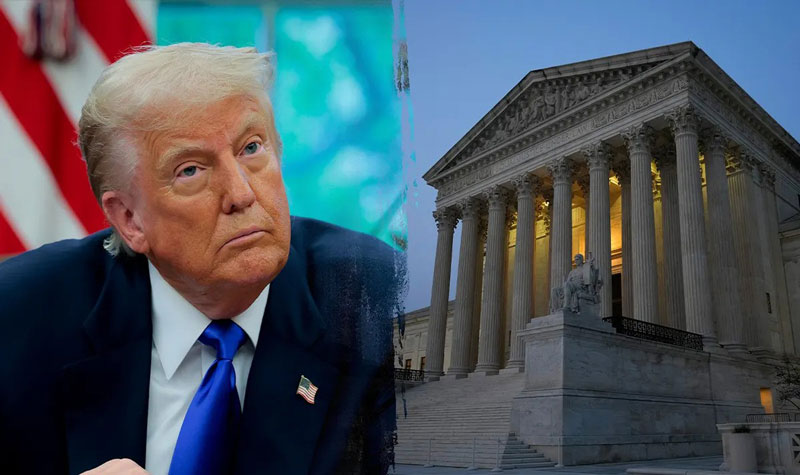
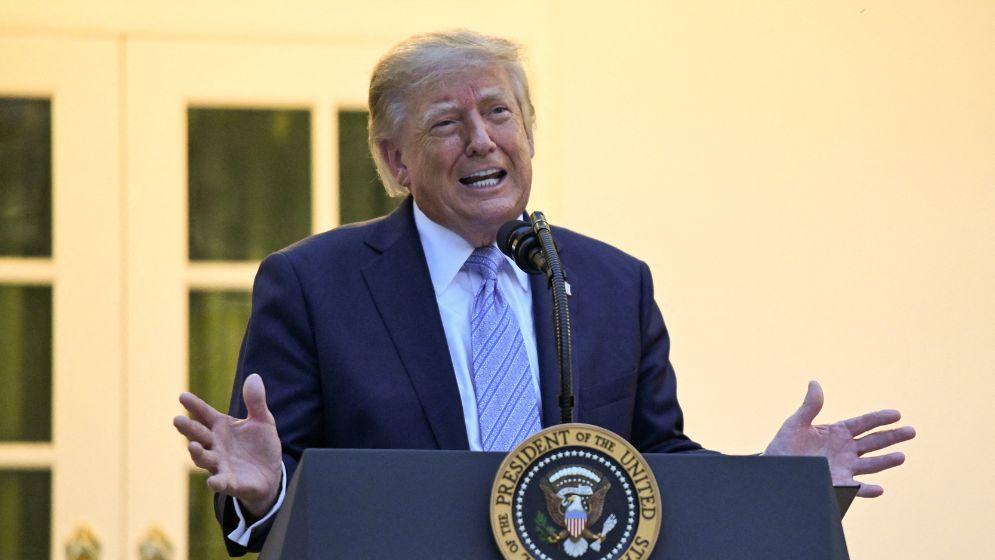
President Donald Trump
Kousholy Ema: President Trump’s trade agenda is in question following the latest court decision striking down tariffs aimed at replacing a previous regime that was also knocked down by the judiciary, raising questions about his next move on the policy.
A federal court ruled against the 10 percent tariff Trump imposed on most imports entering the United States, which had replaced global tariffs that the Supreme Court outlawed in February.
The three-judge tribunal under the U.S. Court of International Trade called the tariffs “unauthorized by law.”
After imposing targeted tariffs during his first term, Trump has taken a more aggressive and broader approach in his second stint, stretching trade laws beyond what courts have found to be legal.
The hiccups in the courts have clearly frustrated Trump, but he has shown no signs of backing down.
On Thursday, he threatened to raise tariffs on the European Union if they do not comply with their part of a U.S.-EU trade deal by July 4th. And last week he increased tariffs on cars and trucks coming from the European Union by 25 percent.
All of that also comes with the backdrop of the Iran war and Trump’s frustrations with the lack of support from traditional allies in Europe.
Some experts argue Thursday’s ruling could give other countries and blocs, like the EU, more leverage dealing with Trump on trade going forward.
“You’d have to be pretty crazy to think that this isn’t just yet another bit of leverage for all of the countries that felt over the barrel over the last year by the Trump administration,” said Scott Lincicome, vice president of economics and trade at the Libertarian-leaning CATO Institute.
Lincicome argued that while other countries may not completely abandon their deals reached with Trump, it could give them more room to drive a tougher bargain in negotiating with the administration.
Wayne Winegarden, senior fellow in business and economics at the Pacific Research Institute, compared Trump’s tariff threats to Lucy and Charlie Brown with the football.
“Unless you’re Charlie Brown, eventually you stop trying to kick the ball, because you know Lucy’s going to pull it away,” Winegarden said. “And I think the EU, some of our Asian partners are beginning to feel like Charlie Brown, and so he has less leverage with it because why would they go and make all these concessions when who knows whether the tariff will stand, but even if they do stand, will Trump continue to stand by them.”
The administration is standing firm in the face of the ruling.
“President Trump has lawfully used the tariff authorities granted to him by Congress to address our balance of payments crisis. The Trump administration is reviewing legal options and maintains confidence in ultimately prevailing,” White House spokesman Kush Desai told The Hill in a statement.
Trump himself said he wasn’t surprised with the ruling and railed against the “radical left judges” who voted against them.
“Nothing surprises me with the courts. Nothing surprises me,” Trump said Thursday. “So we always do it a different way. We get one ruling and we do it a different way.”
He reiterated his point that the U.S. is “taking in hundreds of billions of dollars” from tariffs.
The latest ruling from the U.S. Court of International Trade (CIT) imposed a permanent injunction on the 10 percent tariff Trump slapped on nearly all U.S. exports last year.
Trump’s Trade Representative Jamieson Greer responded to news of the ruling on Friday morning, saying the administration was confident that their appeal would be successful.
“You had two other judges who are apparently just hellbent on importing more from China I guess, and eliminating the president’s statutory authorities,” Greer said in an interview with Fox Business.
Greer argued in the interview that the administration used Section 122 of the 1974 Trade Act after the same court ruled last year that the same statutory authority could be a good vehicle for Trump’s tariffs.
“They essentially said that Congress passed a law that can’t be used, which we all know in the legal community, that’s not how law should be interpreted. It should be interpreted to be used, he said.
The administration is also running up against a tight timeframe. The 10 percent global tariffs imposed by the Trump administration under Section 122 are set to expire on July 24.
“If anything, it just pushes forward the administration’s timetable to turn to still other statutes,” said Ryan Young, senior economist and director of Publications at the Libertarian-leaning Competitive Enterprise Institute.
“My guess is that this game of legal whackamole is going to continue through the end of his term,” he continued.
Trump still has other avenues to pursue tariffs including through Section 232 of the Trade Expansion Act of 1962, citing national security purposes, and Sections 201 and 301 of the 1974 Trade Act.
“This is just kind of a procedural issue that the administration is fully prepared for because there are other tariff tools that are already in motion,” said Kari Heerman, a senior fellow and director of Trade and Economic Statecraft at the Brookings Institution.
Heerman said Section 301 was the most flexible vehicle for the Trump administration to push its tariffs. The statute gives the United States Trade Representative “a range of responsibilities and authorities to investigate and take action (e.g., impose a tariff) to enforce U.S. rights under trade agreements and respond to certain foreign trade practices.”
Winegarden said there are other steps Trump can take, but if he really believes in them he needs to go to Congress.
“What I think the administration really is doing is they’re searching for excuses to have his preferred policy,” Winegarden said. “And the bottom line is, if he’s correct about tariffs, which he’s not, but if he is, then do the hard work of legislating, convince Congress, the people’s representatives, that we will all be better off with tariffs and get Congress to pass it and sign the law.”
*Copyright 2026 Bangla Press. All rights reserved. This material may not be published, broadcast, rewritten or redistributed.
BP/SM
[Bangla Press is a global platform for free thought. It provides impartial news, analysis, and commentary for independent-minded individuals. Our goal is to bring about positive change, which is more important today than ever before.]
YOU MAY ALSO LIKE

.jpg)
International
Trump Says Houthis Will Not Target US Amid Escalating Saudi Attacks
1 day ago
by Bangla Press
Sangeet Academy