
8-month nationwide ban on catching Jatka (juvenile hilsa)

Bangla Press
Published: 02 November 2026, 03:40 AM
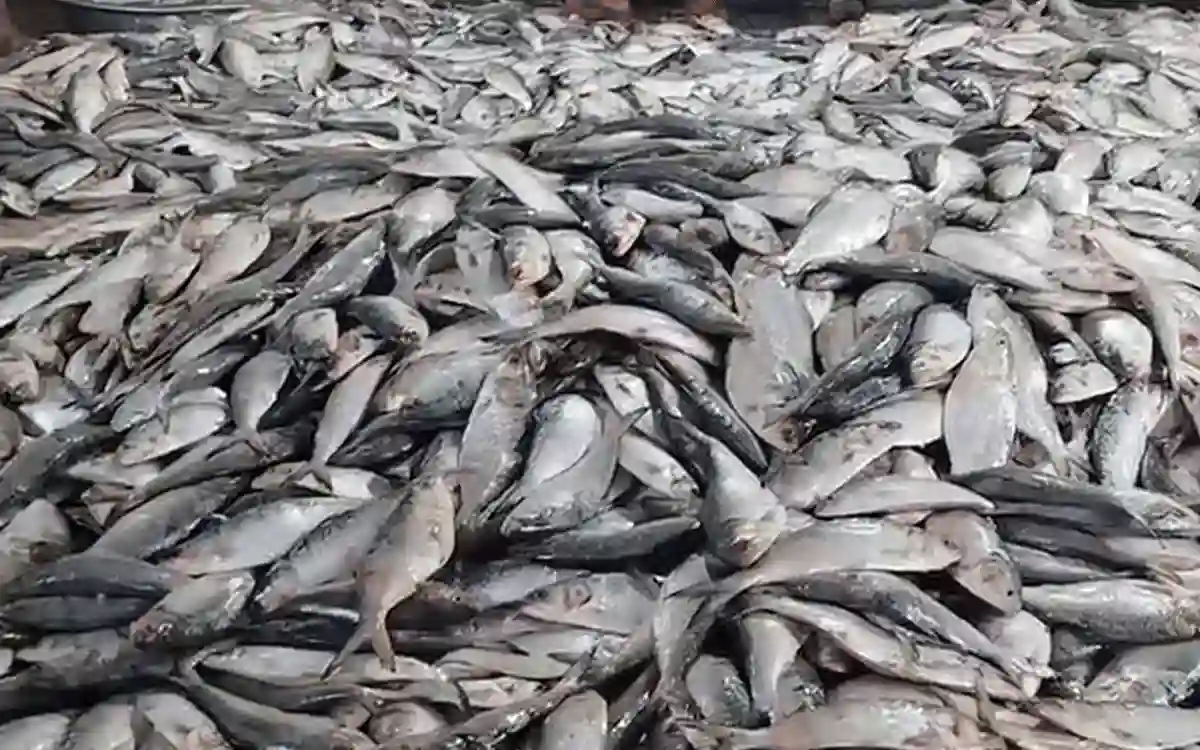
Bangla Press Desk: To boost the production of the national fish—the Hilsa—ensure the sustainable conservation of aquatic biodiversity, and meet the national demand for protein, an 8-month nationwide ban on the catching, transporting, storing, marketing, and buying or selling of juvenile Hilsa (known as ‘Jatka’) has officially commenced.
A press release from the Ministry of Fisheries and Livestock states that this legal directive came into effect nationwide on November 1 and will remain in force until June 30, 2027.
According to long-term field data collected by researchers and scientists at the Bangladesh Fisheries Research Institute (BFRI), the successful 22-day ‘Mother Hilsa Conservation Campaign-2026’—conducted nationwide from October 8 to 29—resulted in the birth of billions of Hilsa fry. These fry are currently inhabiting coastal rivers and estuaries.
Biological studies by scientists indicate that, as of early November, these fry measure 3–5 centimeters and grow at an average rate of 3–3.5 centimeters per month. Allowing them to grow naturally and safely—without interference—over the next eight months will enable them to reach a length of 25–30 centimeters and a weight of 400 grams by May–June, transforming them into fully developed, commercially viable Hilsa.
Under the Protection and Conservation of Fish Act, catching, transporting, storing, marketing, or buying and selling Hilsa smaller than 25 centimeters (10 inches)—classified as ‘Jatka’—is a punishable offense.
A ‘zero-tolerance’ policy has been adopted regarding the use of prohibited fishing gear, including *current* nets (monofilament gill nets), *behundi* (bag) nets, fine-mesh mosquito nets, and similar synthetic nets.
According to the notification issued by the Ministry of Fisheries and Livestock, those who violate these regulations will face strict legal penalties in accordance with the fisheries conservation rules. Penalties include rigorous imprisonment for a minimum of one year and up to a maximum of two years, a fine of up to 500,000 Taka, or both. Depending on the severity of the offense, the court may impose both imprisonment and a fine.
To ensure immediate action against those who violate the law, mobile courts—led by executive magistrates and supported by the Department of Fisheries and local administrations—remain active around the clock in districts and upazilas located along riverbanks.
A robust joint task force, comprising the Department of Fisheries, the armed forces, and law enforcement agencies, has been established to ensure the strict and comprehensive implementation of the law at the field level.
According to notifications from the Bangladesh Navy and the Coast Guard, their specialized command teams are conducting continuous patrols in the deep sea and coastal river estuaries using large vessels and speedboats. Simultaneously, the River Police will maintain constant surveillance over the country’s six designated river sanctuaries.
The Rapid Action Battalion (RAB), the police, and the Border Guard Bangladesh (BGB) will conduct special operations at land-based checkpoints, fish landing centers, wholesale markets, and cold storage facilities to prevent the illegal transport and storage of *jatka* (juvenile hilsa).
To support the livelihoods of registered fishers in river basins and ensure food security in rural areas during the ban on catching *jatka*, the Ministry of Disaster Management and Relief has implemented a special humanitarian assistance program (VGF rice allocation).
Under this program, over 100,000 registered fisher families—holding specific beneficiary cards across 96 upazilas in the country’s 20 primary hilsa-producing districts—will receive 40 kg of VGF rice every month, entirely free of cost.
According to fisheries scientists, the 22-day protection program for mother hilsa during the month of *Ashwin* ensures the successful spawning of hilsa, while the eight-month *jatka* protection law, which takes effect on November 1, ensures the growth and maturation of the fish.
BP/SP
[Bangla Press is a global platform for free thought. It provides impartial news, analysis, and commentary for independent-minded individuals. Our goal is to bring about positive change, which is more important today than ever before.]
YOU MAY ALSO LIKE
Bangladesh
Registration for battery-operated rickshaws begins today in 13 cities
1 hour ago
by Bangla Press

Bangladesh
Facility to send money via Bangla QR is now available for individuals as well
6 hours ago
by Bangla Press

Bangladesh
Export earnings exceeded $17 billion in four months, with 6% growth.
17 hours ago
by Bangla Press
Bangladesh
Home Minister urges against political influence in professional duties
17 hours ago
by Bangla Press
Sangeet Academy