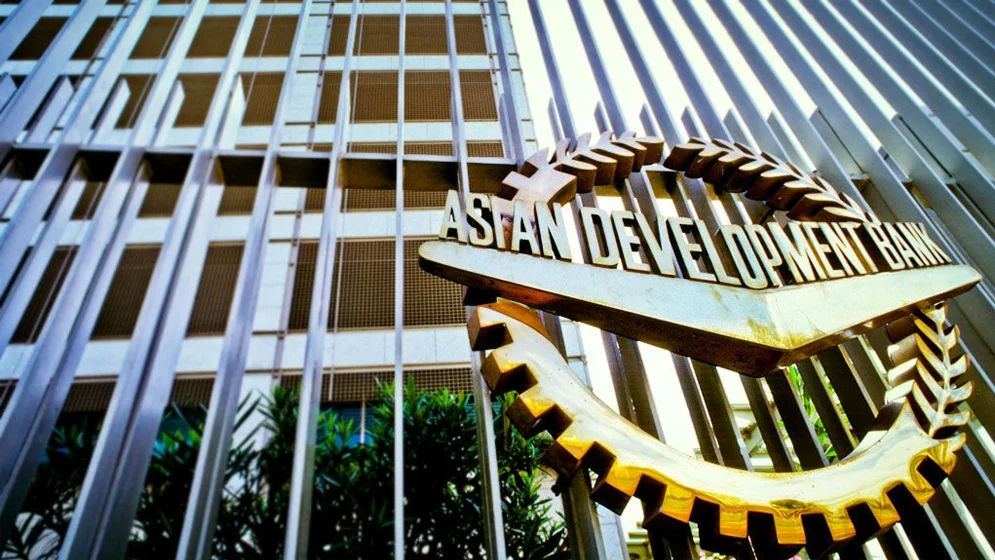
Bangla Press Desk: Asian Development Bank (ADB) Vice President Yingming Yang has said the Manila-based lending agency is ready to help Bangladesh realize its ambition of becoming a trillion-dollar economy by 2034 and an upper-middle-income country.
"Our vision is to help Bangladesh realize its ambition of becoming an upper-middle-income country and a trillion-dollar economy by 2034. ADB remains committed to supporting a more productive, investment-driven, and resilient economy that creates opportunities across the country and improves the lives of all Bangladeshis," he said.The ADB Vice-President for South, Central and West Asia said this in an exclusive interview with BSS.
Yingming Yang visited Bangladesh on August 9-13 and held senior-level consultations on ADB's next Country Partnership Strategy (CPS), sustaining policy dialogue on key reform and investment priorities, and supporting the operationalization of the Integrated Growth Network Development (IGND) initiative.
He said Bangladesh has demonstrated considerable resilience, supported by strong remittance inflows, sustained services activity, and a dynamic private sector.
"The next opportunity is to translate this resilience into a deeper economic transformation," he said.
As macroeconomic conditions stabilize, inflation moderates, and investor confidence improves, Yingming Yang said ADB expects growth to gradually strengthen, with GDP projected to expand by 3.7% in FY2026 and 4.5% in FY2027.
He said maintaining this momentum will require continued progress on structural reforms. Recent steps to strengthen tax administration, improve banking sector governance, address non-performing loans, enhance financial sector discipline, and move towards a more market-based exchange rate framework are encouraging, he said.
"Looking ahead, Bangladesh can unlock stronger and more inclusive growth by improving the investment climate, expanding reliable and affordable energy, strengthening public investment management, diversifying exports, building workforce skills, creating opportunities for women and young people, and enhancing resilience," added the ADB Vice-President.
He noted that central to this agenda is private sector development and making markets investable so that private capital can flow into productive sectors, create jobs, and drive sustainable growth.
For the people of Bangladesh, Yang said this means better jobs, more competitive enterprises, improved services, and wider opportunities beyond traditional growth centers. These reforms will be critical for raising productivity, attract investment, and support sustainable long-term development.
When asked about the new Country Partnership Strategy for Bangladesh, he said ADB's partnership with Bangladesh has always evolved with the country's aspirations.
"As we prepare the next Country Partnership Strategy, our focus is on helping Bangladesh move toward a more diversified, competitive, inclusive, and resilient economy, anchored in private sector-led economic diversification and stronger resilience to shocks. In essence, our future partnership will support Bangladesh's move from resilience to transformation," he said.
By reducing logistics costs, expanding economic opportunities beyond major urban centers, and connecting businesses and workers to larger markets, the ADB Vice-President said IGND can help build a more competitive, diversified, and resilient economy capable of sustaining higher-quality growth and job creation. "It can also help ensure that the benefits of growth are more broadly shared across regions and communities," he said.
Regarding regional cooperation, the ADB Vice-President said Bangladesh is uniquely positioned between the large and rapidly growing markets of South and Southeast Asia.
During his visit to Bangladesh in May, ADB President Masato Kanda highlighted Bangladesh's great potential to become a regional hub for transportation, logistics, energy, and digital connectivity.
"By leveraging its strategic location, Bangladesh can strengthen trade, attract investment, integrate into regional value chains, and deepen its economic links with these regions. This is another important dimension of Bangladesh's transition from resilience to transformation," he said.
To fully realize this potential, infrastructure alone is not enough, Yang said, adding roads, railways, ports, border facilities, and energy links deliver their full benefits only when complemented by efficient customs procedures, harmonized standards, predictable regulations, and seamless logistics. "Physical connectivity and policy coherence must be advanced together," he noted.
He said greater regional energy cooperation can strengthen energy security and support the transition to cleaner energy sources.ADB's recently launched $20 billion Asia-Pacific Digital Highway initiative also offers Bangladesh an opportunity to strengthen digital connectivity, expand access to reliable broadband, and build digital and AI skills.
By working with the Digital Highway initiative, he said Bangladesh can further enhance its inclusive development agenda, addressing the needs of farmers, entrepreneurs, exporters, young workers, and women-led businesses. "Initiatives such as the IGND and the South Asia Sub-regional Economic Cooperation (SASEC) also provide important platforms for advancing these objectives," he added.
At the same time, he said deeper regional integration complements, rather than replaces domestic reform. "Strengthening competitiveness at home enables Bangladesh to benefit more fully from regional opportunities, while greater regional connectivity creates stronger incentives to invest, innovate, and reform."
Together, the ADB Vice-President said these efforts can help Bangladesh build a more connected, competitive, and opportunity-rich economy for the next stage of its development, one where private sector-led growth, innovation, and investment drive lasting impact.
[Bangla Press is a global platform for free thought. It provides impartial news, analysis, and commentary for independent-minded individuals. Our goal is to bring about positive change, which is more important today than ever before.]

 E-paper


-6a0315927dc53-6ab27820ddfa5.webp)

-6ab902fd32a37.jpg)