

Cheaper Credit Fails to Spur Private Investment

Bangla Press
Published: 20 September 2026, 03:19 AM
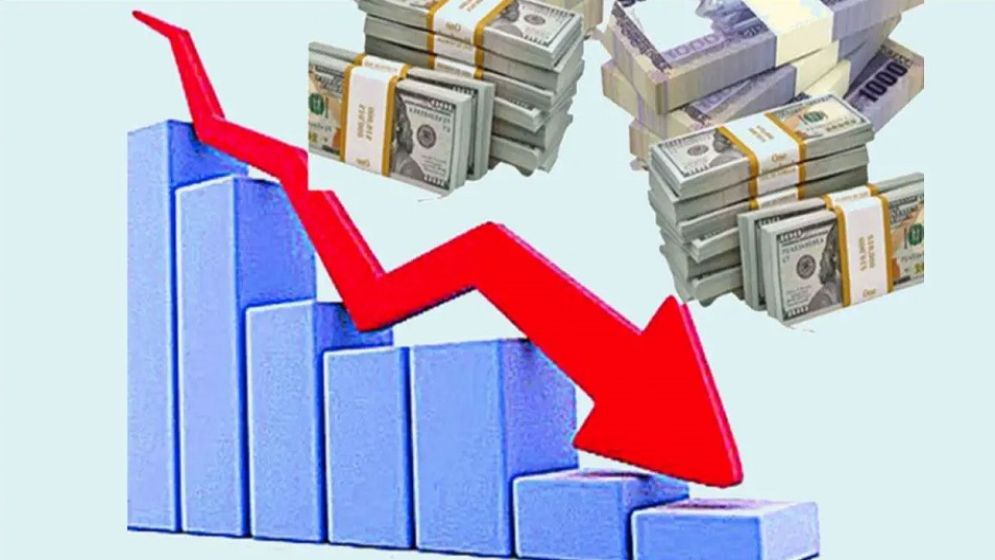
Bangla Press Desk: Despite a gradual decline in interest rates, private-sector credit growth and investment in Bangladesh remain weak, as businesses continue to face weak demand, energy shortages, political uncertainty and concerns over the broader economic outlook.
Bangladesh Bank (BB) cut its policy rate by 0.5 percentage points to 9.5 per cent, effective from August, in an effort to ease the impact of tight monetary policy, which had been in place since the first half of fiscal year 2023-24.However, the impact of the latest rate cut is yet to become clear, while borrowing costs had already begun falling several months earlier.
The weighted average interest rates on deposits and advances rose to 6.42 per cent and 12.16 per cent respectively in September 2025, the highest levels in at least three years.
Since then, the rates have gradually declined. In July, the weighted average deposit rate stood at 6.21 per cent, while the lending rate was 11.81 per cent.
Yields on treasury bills and bonds, as well as call money rates, also declined in June 2026 compared with a year earlier, reflecting improved liquidity in the banking sector, the main source of business finance in Bangladesh.
Yet private-sector credit demand remains subdued.
Credit growth to the private sector stood at 4.47 per cent in June, the lowest in 33 years. It rose slightly to 4.62 per cent in July but remained well below BB’s target of 6.8 per cent by December.
Why businesses are holding back
Taskeen Ahmed, president of the Dhaka Chamber of Commerce and Industry (DCCI), said lower interest rates alone would not be enough to revive private-sector borrowing unless investor confidence and business viability improved.
Taskeen, who has long called for lower borrowing costs, said cheaper credit might look attractive on paper, but businesses were struggling to commit capital as high operating costs and weak consumer demand squeezed profit margins.
Persistent gas and electricity shortages were also leaving factories idle, while turmoil in the banking sector, high non-performing loans, political uncertainty and global geopolitical tensions had further weakened business sentiment, he said.
Asif Ibrahim, vice-chairman of Newage Group and treasury chief of a private bank, echoed the view.
He said businesses were concerned not only about interest rates but also about energy shortages, geopolitical tensions, rising fuel costs and possible supply-chain disruptions.
Many businesses were reluctant to take fresh loans due to uncertainty over future demand, energy supplies and the broader economic outlook. They were also unsure whether new investments would generate sufficient returns to cover borrowing costs.
Banks, meanwhile, are becoming more cautious about extending fresh loans as non-performing loans rise and vulnerabilities in the financial sector deepen.
Lower rates do not guarantee higher investment
Ashikur Rahman, principal economist at the Policy Research Institute of Bangladesh, said the decline in interest rates could itself partly reflect weak demand for credit.
When businesses are reluctant to borrow, banks have less incentive to compete aggressively for deposits, he said.
Lower rates may ease financing costs for existing borrowers, but persistently weak investment could slow job creation, productivity growth and economic recovery, he said.
He added that lower borrowing costs cannot offset uncertainty over reliable energy supplies, market access and future returns, as the underlying challenges stem from weak business confidence and structural weaknesses in the investment climate.
Reviving investment would require reliable energy, greater political and policy predictability, and credible reforms to improve the business environment, rather than simply cheaper credit, he said.
Deen Islam, professor of economics at Dhaka University, said the bigger concern was what weak credit growth indicated about investment sentiment.
If businesses continued to hold back, lower interest rates alone would not generate significant new investment. Weak borrowing could eventually lead to slower expansion of productive capacity, fewer new jobs and weaker productivity growth, he said.
The policy challenge, therefore, is not simply to make credit cheaper. Businesses also need confidence that demand will recover, energy will be available, the exchange rate and regulatory environment will remain reasonably predictable, and the banking system will remain stable.
Deen said the current situation was less about the cost of borrowing and more about whether businesses believed that investing now would generate sufficient returns.
Political uncertainty adds to investment concerns
Birupaksha Paul, professor of economics at the State University of New York at Cortland, said businesses remained reluctant to borrow because borrowing costs were still high while economic growth was weak, making new investment less attractive.
He also said many mills and factories were concerned about political exclusion, which was undermining business and investment confidence.
Unlike the ruling BNP’s previous terms in office in 1991 and 2001, when businesses had greater clarity about the political environment, the current government’s political strategy appeared less clear, he added.
Without greater political inclusivity and clarity, businesses were unlikely to regain the confidence needed to increase investment, he said.
DCCI’s Taskeen said the biggest concern was that delayed investment could weaken productive capacity, reducing future exports and job creation.
Alongside cheaper loans, sustained reductions in business costs were needed, he said.
The bigger challenge over the next one to two years would be sustaining existing private-sector investment in the country rather than attracting new investment, he said.
Energy crisis weighs on credit demand
Bank officials said private-sector credit demand had weakened as weaker exports, high inflation and the energy crisis continued to constrain businesses, with the country facing a double whammy from global and domestic economic shocks.
Global disruptions, including tariff impositions, the Covid-19 pandemic, the Ukraine war and the Middle East crisis, had hurt exports, particularly to the US and European markets, they said.
As a result, many manufacturing plants that once operated at 80 per cent capacity were now running at 40 per cent or even 30 per cent.
The energy crisis was a bigger constraint on investment than borrowing costs, naturally affecting businesses and reducing demand for credit, they said.
[Bangla Press is a global platform for free thought. It provides impartial news, analysis, and commentary for independent-minded individuals. Our goal is to bring about positive change, which is more important today than ever before.]
YOU MAY ALSO LIKE

Business
Gold prices fell for the fourth consecutive day in the global market.
2 days ago
by Bangla Press


Business
World Bank to enter into a partnership agreement with Bangladesh: Finance Minister
1 week ago
by Bangla Press
.jpg)
Business
Remittance inflows have increased by 17.30 percent over the year.
1 week ago
by Bangla Press
Sangeet Academy