
Could Bangladesh Be the Next Test Market for Pakistani Cars?

Bangla Press
Published: 12 August 2026, 11:36 PM
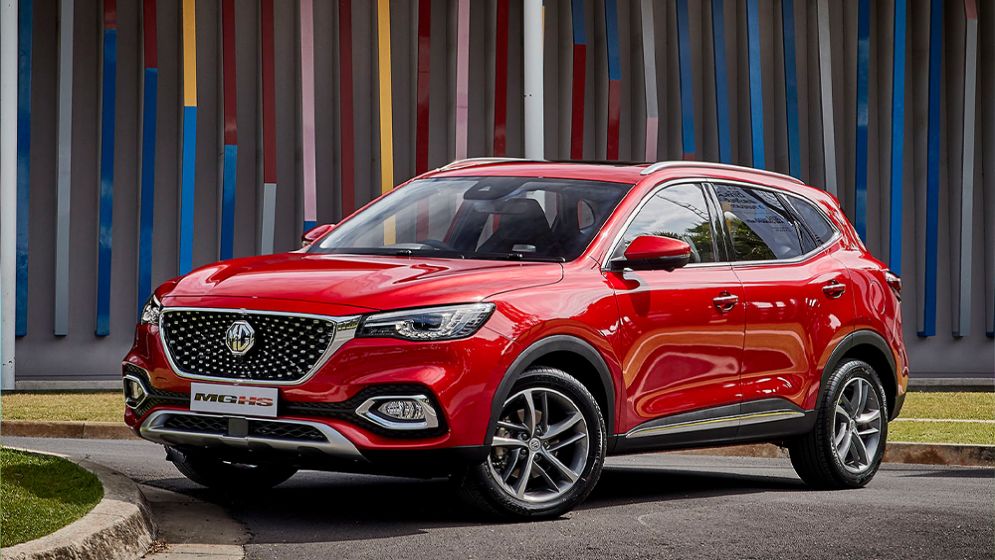
Bangla Press Desk: The proposed entry of Pakistan-assembled MG vehicles into Bangladesh is being presented as another sign of warming economic relations between the two countries. It may also become a useful test of whether Bangladesh can use international competition to deliver better value to automobile consumers.
MG JW Automobile Pakistan and one of Bangladeshi company have signed a memorandum of understanding under which 100 vehicles are expected to be exported this year, with the proposed volume rising to 5,800 vehicles over four years.For Pakistan's automotive industry, this is an important export opportunity. For Bangladesh, however, the more important question is not simply whether Pakistani cars should enter the market. It is whether they offer the best combination of price, safety, quality, technology, reliability and after-sales service available to Bangladeshi consumers.
That distinction matters.
Bangladesh should welcome competition in the automobile market. But it should also shop around.
If the objective is to give consumers more choice and better prices, there is no reason for Dhaka to limit that search to Pakistan. Bangladesh should actively compare vehicles and commercial offers from Pakistan, India, China, Japan, South Korea, Thailand, Indonesia, Malaysia and other competitive automotive-producing countries.
The winner should be determined by the market—not by diplomacy.
Pakistan itself is still strengthening its automotive regulatory framework. In 2025, its Engineering Development Board introduced safety, quality and environmental standards for locally manufactured and assembled vehicles, including standards linked to UNECE regulations. At the same time, parliamentary discussions have raised concerns about the effectiveness of automotive quality oversight.
In one particularly notable 2025 parliamentary discussion, lawmakers were told that Pakistani manufacturers and assemblers complied with only 18 of 200 internationally recognised vehicle safety standards. That figure should be treated cautiously: it was information presented to a parliamentary committee rather than an independent audit of every vehicle manufactured in Pakistan. Nevertheless, it demonstrates why Bangladesh should examine compliance model by model rather than accept general assurances about vehicle quality.
The relevant question for Dhaka is therefore straightforward: Does the specific vehicle being offered to Bangladesh meet Bangladesh's and global safety, emissions and technical requirements, and can that compliance be independently demonstrated?
That is not an anti-Pakistan position. It is basic consumer protection.
Pakistan's road-safety record also deserves context, although it should not be misused to make a simplistic connection between road accidents and passenger-car quality. The World Health Organization has reported a road-traffic mortality rate of 11.9 deaths per 100,000 people for Pakistan, based on 2021 data. Road deaths, however, reflect multiple factors, including driving behaviour, road conditions, enforcement, vehicle condition and emergency response.
Academic research into motorway crashes in Pakistan similarly identifies a mixture of causes, including speeding, drowsy driving, poor road conditions and tyre-related failures. Such evidence does not establish that Pakistani passenger cars are inherently unsafe. It does reinforce the need for rigorous inspection of vehicle safety and mechanical standards.
There is another important point that often gets lost in the phrase "Made in Pakistan".
MG JW Automobile Pakistan is part of an international automotive supply chain involving JW-SEZ and SAIC. The fact that a vehicle is assembled in Pakistan does not mean that its engineering, technology or components are exclusively Pakistani.
For Bangladesh, therefore, the appropriate benchmark is not nationality. It is performance.
A Pakistani-assembled MG should be compared with an equivalent vehicle from China, India, Thailand, Indonesia, Japan or South Korea on a common scorecard.
How many airbags are standard? Does the model have ABS and electronic stability control? What is its crash-test performance? What emissions standard does it meet? What is the warranty period? What is the expected fuel or electricity cost? How readily available are spare parts? What will servicing cost after three, five or seven years?
And perhaps most importantly: what will the vehicle actually cost the consumer after customs duties, taxes, registration, financing and maintenance?
A low sticker price does not necessarily mean a low-cost vehicle.
The same principle applies to after-sales service. Before approving a large-scale import programme, Bangladesh should know who will honour warranties, who will bear the cost of recalls, how quickly critical spare parts can be supplied and whether qualified technicians and diagnostic equipment will be available outside Dhaka.
The proposed 5,800-unit programme is therefore large enough to warrant serious commercial due diligence, even though it is small by the standards of major automotive markets.
Pakistan's existing export record provides useful context. According to official data presented to Pakistan's Senate, 434 locally assembled vehicles were exported to 20 countries over three fiscal years, generating Pakistani Rs1.42 billion in export receipts. The destinations included Japan, the United Arab Emirates, Thailand, the United States, China, Sri Lanka and Bangladesh.
This makes one thing clear: it would be inaccurate to claim that international markets have simply rejected Pakistani vehicles.
But it is equally clear that Pakistan's automotive export volumes remain modest. The proposed Bangladesh programme would therefore represent a substantial expansion of Pakistan's passenger-vehicle exports.
That is precisely why Bangladesh should treat the first shipments as an opportunity to gather evidence.
If the vehicles perform well, consumers will benefit. Existing automobile distributors will face greater competitive pressure. Prices may become more competitive, equipment levels may improve and manufacturers may have to provide better warranties and service.
But Bangladesh should not stop there.
Dhaka should use the opening created by the Pakistan deal to invite competition from other automotive producers as well.
If China can offer a better-equipped electric vehicle at a lower total cost, Bangladesh should consider it.
If India can offer competitively priced compact cars with an established regional supply chain, Bangladesh should consider those vehicles.
If Thailand or Indonesia can provide stronger manufacturing quality and parts availability, their offers should be assessed.
If Japanese or Korean manufacturers can provide superior reliability and safety over the vehicle's lifetime, consumers should have access to those alternatives too.
The objective should be to create a competitive sourcing strategy,.
Bangladesh's automobile market remains heavily influenced by high import duties, taxes, limited model availability and relatively expensive ownership. Consumers therefore need more meaningful competition—not simply more brands.
The government's role should be to establish a level playing field.
Every importer should face the same safety requirements, emissions rules, testing procedures and consumer-protection obligations. Every manufacturer should disclose warranty conditions and recall arrangements. And every vehicle should be evaluated on its own technical merits.
Bangladesh already has established procedures for vehicle imports, while its automobile policy explicitly emphasises the formulation and enforcement of quality, safety and emissions standards.
Those mechanisms should be applied rigorously.
There is also a broader economic opportunity here. If Bangladesh is serious about developing its automobile industry, it should use imports strategically. Foreign manufacturers could be encouraged not merely to sell finished vehicles but also to establish assembly operations, develop local suppliers, transfer technology, train technicians and eventually produce components in Bangladesh.
Competition can therefore be used as an industrial-policy tool.
Bangladesh should welcome Pakistani automobiles if they meet the country's standards and offer consumers genuine value. But Dhaka should simultaneously invite competitive proposals from other countries and manufacturers.
The question should never be, Which country should Bangladesh favour?
It should be, Which manufacturer gives Bangladeshi consumers the safest, best-equipped and most reliable vehicle at the most competitive lifetime cost?
That is the standard a growing consumer market deserves.
Trade diplomacy can open doors. But in a competitive automobile market, consumers—not diplomats—should ultimately decide which cars stay on the road.
[Bangla Press is a global platform for free thought. It provides impartial news, analysis, and commentary for independent-minded individuals. Our goal is to bring about positive change, which is more important today than ever before.]
YOU MAY ALSO LIKE

Business
Government rolls out AVS for safer savings certificate transactions
5 days ago
by Bangla Press

Sangeet Academy