
Debate over govt neutrality in the referendum

Bangla Press
Published: 20 January 2026, 01:13 AM
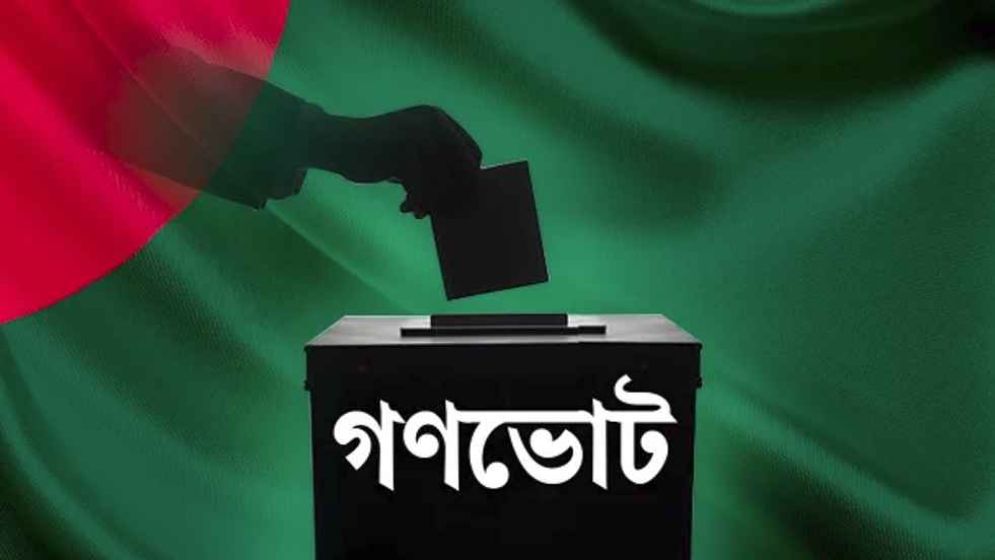
Bangla Press Desk: Alongside the national parliamentary election scheduled for February 12, a national referendum is also being organised. The referendum will be held on four issues. The government has already begun campaigning to ensure that people vote “Yes” in the referendum. Advisers are touring districts to build public support in favour of a “Yes” vote. From the government side, strong promotional initiatives supporting a “Yes” vote have been undertaken across all government and semi-government offices, educational institutions, and other public spaces.
However, many have raised questions about whether the interim government is legally and ethically entitled to campaign in favour of a “Yes” vote. They argue that the current government is a neutral one. As an alternative to a caretaker government, it is committed to holding free and fair elections. A government overseeing elections cannot take sides. As a result, a debate has emerged over whether the interim government has the legal authority to campaign for a specific outcome in a national referendum.
Defending the campaign, Ali Riaz, special assistant to the chief adviser, said that the interim government emerged through a mass uprising, with its primary agenda being reform, visible justice, and elections. To implement reforms, he argued, the July Charter must be approved through a “Yes” vote in the referendum.
Constitutional expert Shahdeen Malik, however, holds a different view. He said there is no scope for the government to campaign in favour of a “Yes” vote. Such actions amount to direct government interference in the electoral process and could further destabilise the country politically in the future. Shahdeen Malik stated, “I have never seen an interim or caretaker government organising elections asking for a “Yes” vote in this manner. To my knowledge, there is no legal or ethical standard that allows this. It can clearly be described as unlawful or unethical.” According to him, in any vote, citizens exercise their constitutional freedom to vote for whichever side they choose—this is a universal rule. Any attempt by the government to ask for votes or work in favour of one side is entirely unlawful.
Former Professor of Law at the University of Dhaka, Ridwanul Hoque, said that this is a political issue for political parties, while the very “spirit” of an interim government is non-political.
Election Commissioner Abul Fazal Md Sanaullah said that the government may campaign to raise public awareness about the referendum. According to him, the government is highlighting the importance of the referendum, which is necessary, but it is not explicitly telling people to vote “Yes” or “No”.
At a discussion titled “Referendum 2026: What and Why?” organised by Citizens for Good Governance (Shujan), the interim government’s labour adviser and former election commissioner Sakhawat Hossain said that if only the interim government tries to explain the July National Charter to the public, many questions will arise. The Election Commission must also take to the field regarding the referendum, and the government will provide whatever cooperation is necessary.
Meanwhile, a Facebook post was made explaining why the Chief Adviser’s support for a “Yes” vote in the referendum aligns with Bangladesh’s democratic practices. The post said that some recent comments have claimed that the interim government and Chief Adviser Professor Muhammad Yunus’s open support for a “Yes” vote on the implementation of the July National Charter 2025 is inconsistent with the neutrality expected of an interim administration. While such concerns deserve discussion, the post argued that when assessed in light of Bangladesh’s current political reality, the interim government’s mandate, and international democratic practices, these criticisms lack a solid foundation.
In support of this argument, the post cited examples of referendums in various countries:
United Kingdom (2016): Prime Minister David Cameron actively campaigned for a “Remain” vote in the Brexit referendum, presenting continued EU membership as being in the national interest.
Scotland (2014): First Minister Alex Salmond was the leading face of the “Yes Scotland” campaign, presenting the referendum as a democratic opportunity to determine the country’s future.
Turkey (2017): President Recep Tayyip Erdoğan led a nationwide campaign in favor of constitutional amendments expanding executive power.
Kyrgyzstan (2016): President Almazbek Atambayev urged voters to support constitutional reforms aimed at strengthening the parliamentary system.
France (1962): President Charles de Gaulle directly sought public support through a referendum to change the method of presidential elections, despite parliamentary opposition.
In all these cases, the support of incumbent leaders was not labelled undemocratic; rather, it was viewed as an expression of political accountability—leaders advocating what they believe is right and ultimately accepting the people’s decision.
Earlier, Law Adviser Dr Asif Nazrul explained the government’s position on the referendum, saying, “We are campaigning in favour of the referendum because of our commitment to reform. From the beginning, we have said that we want extensive reforms in Bangladesh. We are doing what we can within our authority. The reforms that require constitutional amendments are being placed before the people through a referendum, and we are appealing to them. We have never pretended otherwise—we are pro-reform.” He added, “In Bangladesh, in all previous referendums, the government has always taken a position. A referendum does not form a new government.”
Despite these explanations, many continue to raise questions. Critics point out that under the Representation of the People Order (RPO), the Election Commission has appointed Deputy Commissioners (DCs) and Upazila Nirbahi Officers (UNOs) as Returning Officers and Assistant Returning Officers for the 12 February parliamentary election. From the announcement of the election schedule to the publication of results in the official gazette, these officials operate under the control, supervision, and directives of the Election Commission—not the government. During this period, the government cannot transfer them without EC approval, and failure to act impartially constitutes a criminal offence under the “Election Officers (Special Provisions) Act, 1991”.
Once the election schedule is announced, conducting the parliamentary election becomes the administration’s top priority. The electoral code of conduct applicable to candidates and political parties in the parliamentary election also applies to the current campaign and the referendum.
Legal experts believe this creates even deeper legal complexities. Under Section 5 of the Referendum Ordinance, Returning Officers and Assistant Returning Officers automatically serve as referendum officials by virtue of their positions. The same applies to presiding officers, assistant presiding officers, and polling officers. Once assigned electoral duties, they are legally bound to act impartially in both processes.
Yet, the interim government has instructed officials to conduct “awareness campaigns” that clearly contain persuasive messages, such as “Vote ‘Yes’ to implement all reforms.” “A ‘No’ vote will bring nothing,” and “Vote ‘Yes’ for change.”
Senior Supreme Court lawyer ZI Khan Panna said the government is supposed to remain neutral during elections and cannot campaign for any side. “But they have taken a side,” he said. “The government is campaigning for a ‘Yes’ vote. This is illegal.”
He added that legality or illegality seems to hold little value for this government. “Those who are supposed to be neutral—the government—are not remaining neutral. Election campaigning is officially supposed to begin on 22 January, but they have already started campaigning for one side. This is a clear violation. The government is using public money to campaign for a ‘Yes’ vote. This is completely unethical.”
Explaining further, the senior lawyer said that public money includes funds contributed by supporters of the “No” side as well. “That means the government is using their money to campaign against their own position. Moreover, teachers and bank officials have been instructed to campaign for a ‘Yes’ vote, yet on election day, these same officials are supposed to conduct polling impartially.”
The interim government has published the July National Charter, which proposes 11 major reforms, including preventing arbitrary constitutional amendments by ruling parties, introducing provisions for referendums in the constitution, limiting a prime minister’s tenure to a maximum of 10 years, appointing a deputy speaker from the opposition, forming a bicameral parliament, creating a balance of power between the president and prime minister, and restricting the president’s power to grant pardons.
Twenty-six political parties, including the BNP and Jamaat, have signed the July Charter, though the BNP expressed dissent on nine proposals. However, four political parties—including the newly formed National Citizen Party (NCP), created by leaders of the July mass uprising—did not sign it.
On 28 October, the National Consensus Commission submitted recommendations to Chief Adviser Muhammad Yunus on how to implement the July National Charter, suggesting approval of constitutional amendments through a referendum. The commission also opined that the referendum could be held on or before the day of the national election.
However, on 29 October, the BNP criticised the commission’s recommendations submitted to the interim government, calling them inconsistent. Party leaders said issues that were neither discussed nor agreed upon by the commission were included. Ignoring these controversies, the government is moving ahead with the referendum.
The referendum will be held on four issues, consolidated into a single question:
“Do you agree with the July National Charter (Constitutional Reform) Implementation Order, 2025, and the following constitutional reform proposals recorded in the July National Charter?”
a) During election periods, the caretaker government, Election Commission, and other constitutional institutions will be formed in accordance with the processes described in the July Charter.
b) The next parliament will be bicameral. A 100-member upper house will be formed in proportion to the votes received by parties in the national parliamentary election, and constitutional amendments will require approval by a majority of the upper house.
c) The winning parties in the next election will be bound to implement 30 agreed reform proposals in the July Charter, including increased women’s representation in parliament, appointment of a deputy speaker from the opposition, election of parliamentary committee chairs from the opposition, term limits for the prime minister, enhanced presidential powers, expansion of fundamental rights, judicial independence, and reforms in local government.
d) Other reforms outlined in the July Charter will be implemented in accordance with political parties’ commitments.
On referendum day, voters will express their opinion by casting either a “Yes” or “No” vote on this single combined question. This has created confusion among the public. Many have asked: if a voter disagrees with one of the four components, where is the option to say “No” to that specific issue?
Amid all these debates and questions, the country is moving toward a referendum. The key question remains: will the referendum truly reflect the will of the people?
BP/TD
[Bangla Press is a global platform for free thought. It provides impartial news, analysis, and commentary for independent-minded individuals. Our goal is to bring about positive change, which is more important today than ever before.]
YOU MAY ALSO LIKE
.jpg)
.jpg)
Bangladesh
5 arrested in connection with the leaking of Youth Development exam questions
12 hours ago
by Bangla Press
.jpg)
Bangladesh
All flights from Dammam to Riyadh suspended until October 18
12 hours ago
by Bangla Press
Sangeet Academy