Bangla Press Desk: Ministers are increasingly overwhelmed by a surge of lobbying, with visitors thronging government offices from morning till late at night.
“From 9am to midnight, it is nothing but requests. Necessary matters must be addressed, but if lobbying becomes the primary focus, it will create problems,” said Mirza Fakhrul Islam Alamgir, Minister for Local Government, Rural Development and Cooperatives. He made the remarks at an event at the Krishibid Institution in the capital last month.
Since the formation of the BNP-led government, lobbying efforts have intensified across the administration. Party activists and people from various professions are flocking to the Secretariat—the nerve centre of governance—to press their demands. Although the government has not yet completed a month in office, ministers and state ministers are already finding themselves in an awkward position due to the volume and diversity of requests. While refraining from publicly criticising party members, they are urging patience and encouraging them to focus on national interests, assuring that legitimate concerns will be considered in due course.
In recent days, the number of visitors at ministerial offices in the Secretariat has multiplied several-fold. Towards the end of the interim government’s tenure, access for the general public had been almost non-existent, with only officials present. With the return of an elected political government, however, lobbying activities have resurged. Ministers report being inundated with requests ranging from local development projects, business contracts, fertiliser dealership appointments, and construction work, to transfers and postings of officials across sectors.
Many visitors are also seeking jobs for family members, reconsideration of freedom fighter verification cases, inclusion in social allowance schemes, and reshuffles in police positions such as Officers-in-Charge (OC) and Sub-Inspectors (SI). Requests are also being made for transfers of Assistant Commissioners (Land), leasing of water bodies, and changes in field-level administration, including Upazila Nirbahi Officers (UNO), Deputy Commissioners (DC), and divisional offices. A group is reportedly lobbying for the contractual reappointment of retired officials in various institutions.
Ministers and state ministers admit to feeling irritated at times by the relentless stream of demands, although they maintain that only lawful and justified requests will be considered. They have also urged party members not to act with undue haste or impatience.
Over the past few working days, waiting rooms and corridors of various ministries have been packed with visitors seeking meetings with ministers. At the Ministry of Home Affairs, many are pushing for the withdrawal of cases on political grounds, while others are lobbying for police postings. The Ministries of Education, Health and Agriculture are also witnessing constant crowds.
Doctors are seeking transfers from remote areas to the capital or more desirable district towns. Some groups are advocating for the reinstatement of doctors aligned with one organisation while promoting the interests of another. Education cadre officials are also lobbying for postings in reputed colleges, particularly in Dhaka.
At the Ministry of Public Administration, former officials appear to outnumber current ones, many seeking contractual reappointment after retirement. Officers placed on special duty (OSD) are also pressing for postings. Crowds have similarly been observed at the Ministries of Disaster Management and Local Government. Following recent cyclones in several districts, MPs have been submitting DO letters requesting allocations, while others are directly meeting ministers to press their demands.
The Local Government Ministry has seen particularly heavy crowds, as party activists seek both political meetings and development allocations for their constituencies. State Minister for Public Administration Md Abdul Bari told Bangladesh Pratidin, “We aim to ensure recruitment based on merit and competence.” However, several officials claim that despite such assurances, decisions are often influenced by informal recommendations, leading to questionable appointments.
They point to the recent pattern of issuing individual orders for UNO postings—an unusual practice—as evidence that lobbying is influencing decisions. According to officials, such practices could undermine administrative efficiency.
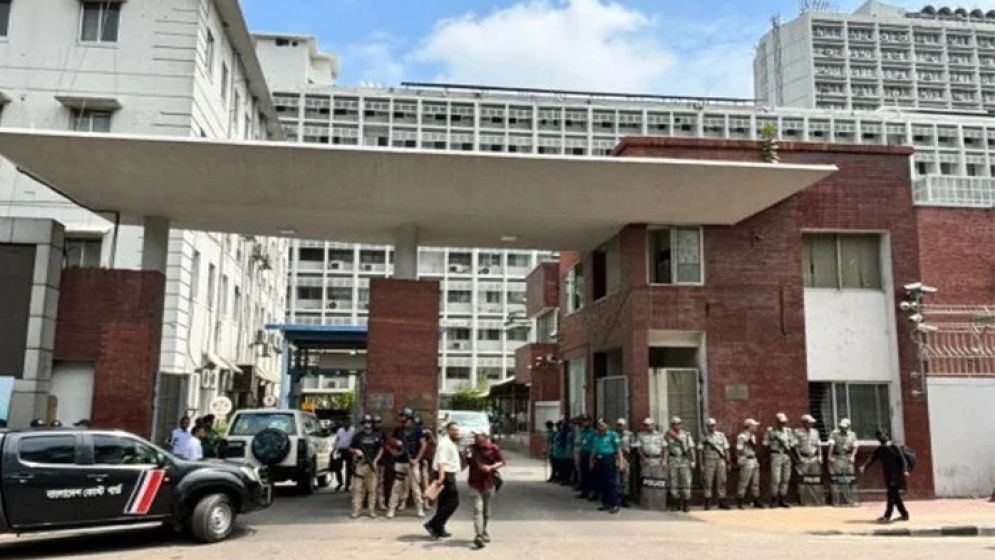
Visitor pressure is also high in secretaries’ offices. Although entry passes to the Secretariat remain limited, large numbers of people are still managing to gain access daily. Joint secretaries can issue one pass, additional secretaries two, and secretaries three, while ministers and state ministers can issue up to five passes. However, even after quotas are exhausted, visitors often manage to enter through informal means and move between ministries throughout the day pursuing their requests. The Prime Minister’s office in the new Building No. 1 remains off-limits to visitors.
According to the Government Servants Conduct Rules of 1979, such lobbying in the Secretariat is restricted, but these provisions have historically been overlooked during political administrations. Even during the interim government’s tenure, lobbying remained widespread, with several advisers expressing frustration.
In the early days after the new government took office, ministers were largely occupied with receiving floral greetings and introductions. Those who once came with bouquets are now returning with a range of demands. Many party activists recount years of deprivation, harassment, and false cases, claiming financial ruin over the past 16 to 17 years, and now seek government support in various matters. They are urging ministers to respond positively to their requests.
Speaking on condition of anonymity, a state minister told Bangladesh Pratidin, “It is true that lobbying is extensive. We have to listen to party members alongside our official duties. Not all requests can be fulfilled, especially if they are not lawful. But if we do not listen or respond courteously, they feel hurt. At times, the sheer volume of people can be frustrating, but they come to us because we hold responsibility.”
Another cabinet member said, “Becoming a minister naturally raises expectations. It is normal for people—from our constituencies and beyond—to approach us. We are also learning the workings of our ministries. Since politics is for the people, we try to respond where demands are justified.”
Former bureaucrat and public administration expert Md Firoz Mia said, “People will inevitably approach political leaders from their constituencies, and maintaining public support often requires addressing some of these concerns. However, all forms of lobbying should be discouraged. Genuine grievances must be addressed, but lobbying should not become a means for securing undue advantage.”
Sources say that even before the formation of the new government, advisers during the interim administration had been under constant pressure from lobbying, except for a brief period towards the end of their tenure, with several expressing similar frustration.
Source: Bangladesh Pratidin
[Bangla Press is a global platform for free thought. It provides impartial news, analysis, and commentary for independent-minded individuals. Our goal is to bring about positive change, which is more important today than ever before.]

 E-paper


.jpg)

.jpg)