
UN’s top court conducts first full hearing of Rohingya genocide case in more than a decade

Bangla Press
Published: 09 January 2026, 05:15 AM
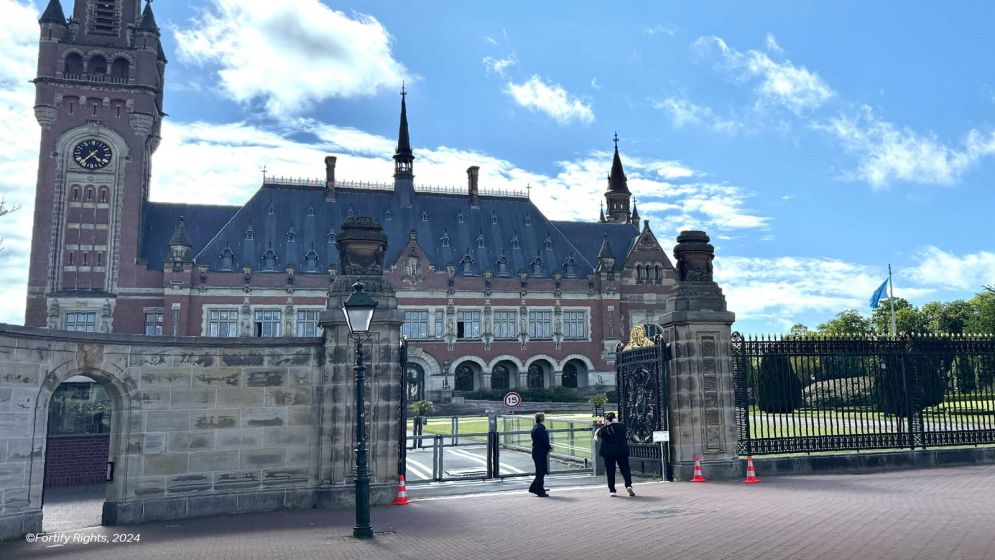
Bangla Press Desk: The International Court of Justice (ICJ) should find Myanmar responsible for genocide against the Rohingya community and ensure that the legal interpretation of genocide encompasses the full range of atrocities suffered by the Rohingya — including killings, sexual and gender-based violence, denial of citizenship, and conditions of life calculated to destroy the group in whole or in part, said Fortify Rights on Friday (9 Jan).
On Monday, 11 January, the ICJ in The Hague, Netherlands, will open public hearings in The Gambia v. Myanmar, a landmark case under the 1948 Genocide Convention alleging that Myanmar committed genocide against the Rohingya people in Rakhine State.
This marks the first full merits hearings in a genocide case at the ICJ in more than a decade.
Matthew Smith, Chief Executive Officer and founder at Fortify Rights, will be attending the trial in person at the ICJ in The Hague as part of The Gambia’s official delegation.
“This trial represents a significant challenge to the Myanmar junta’s grip on power and impunity,” said Zaw Win, Senior Human Rights Specialist at Fortify Rights. “Impunity depends on silence, and justice begins by recognizing what the Rohingya—and all people in Myanmar affected by atrocity crimes — have endured. This trial is an important step toward accountability.”
The hearings are scheduled to run from January 12 to 29, 2026, and will include witness testimony and expert evidence.
Filed in November 2019 by The Gambia, the case accuses the state of Myanmar of violating its obligations to prevent and punish genocide against the Rohingya, including killings, sexual violence, and actions deliberately inflicting conditions of life calculated to bring about the group’s destruction. While it centers on Myanmar military-led attacks against the Rohingya in Rakhine State in 2016 and 2017, the case also examines broader, longstanding, and ongoing patterns of genocidal conduct against them.
Fortify Rights welcomes the hearings as a critical opportunity for international justice for the Rohingya.
“In almost 80 years, the world’s highest court has ruled on genocide only twice — and this is the first full genocide case in more than ten years,” said Matthew Smith, Chief Executive Officer and founder at Fortify Rights. “International law doesn’t fail because it lacks a police force. It works because it changes what states can justify—and what the world will tolerate. If this trial were merely symbolic, the Myanmar military would ignore it. Instead, they have mobilized their full legal and political machinery in response.”
On November 15, 2023, multiple states — including Canada, the U.K., Denmark, France, Germany, and the Netherlands — filed a joint declaration of intervention at the ICJ in support of the case brought by The Gambia. Zero countries have intervened in the case in support of Myanmar.
Fortify Rights urges the ICJ to robustly affirm Myanmar’s responsibility under the Genocide Convention, and to hold it accountable for failing to prevent genocide, failing to punish perpetrators, failing to preserve evidence, and continuing to violate its obligations under international law.
Fortify Rights also calls on states and international bodies to support the ICJ’s mandate and facilitate compliance with any final judgment, including measures that protect the rights and dignity of the Rohingya.
The ICJ previously ordered provisional measures against Myanmar, requiring it to prevent genocidal acts and preserve evidence, which the junta has continued to disregard, said Fortify Rights.
The hearings come amid the Myanmar junta’s ongoing atrocity crimes nationwide, including mass displacement, attacks on civilians, and the collapse of domestic accountability mechanisms after the 2021 military coup. Against this backdrop, the ICJ proceedings can help advance accountability for crimes against the Rohingya and clarify states’ obligations under the Genocide Convention.
“The world is watching what justice looks like in the 21st century,” said Ejaz Min Khant, Human Rights Specialist at Fortify Rights. “This case is about setting a global standard — that genocide has consequences, that survivors are heard, and that obligations under international law must be respected and enforced.”
BP/SP
[Bangla Press is a global platform for free thought. It provides impartial news, analysis, and commentary for independent-minded individuals. Our goal is to bring about positive change, which is more important today than ever before.]
YOU MAY ALSO LIKE
Bangladesh
Ministry urges applicants not to be misled over primary teacher recruitment
9 hours ago
by Bangla Press
Bangladesh
Bangladesh calls for stronger global action on autism, inclusion
9 hours ago
by Bangla Press


Bangladesh
DNCC administrator vows no compromise on clearing illegal footpath occupation
9 hours ago
by Bangla Press
Sangeet Academy