
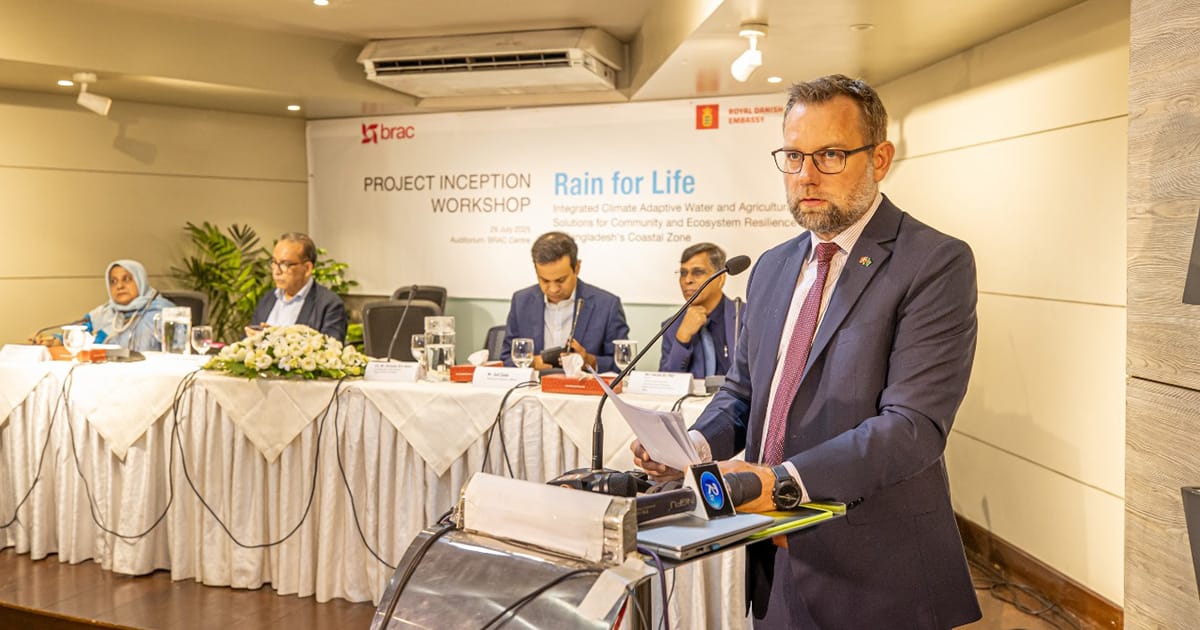
 Bangla Press Desk: Christian Brix Møller, ambassador of the Kingdom of Denmark to Bangladesh, noted that the 'Rain for Life' project represents a shift toward holistic, inclusive and nature-based approaches—ensuring water access not only for people, but for crops, livestock, and ecosystems.
The initiative, he said, reflects the Danish government’s long-standing commitment to sustainable development and builds on Bangladesh’s globally recognised leadership in climate action.
The ambassador reaffirmed Denmark’s commitment to supporting climate-vulnerable communities and promoting green growth in Bangladesh.
BRAC, with support from the Danish Ministry of Foreign Affairs, formally launched the three-year initiative through an inception workshop held at the BRAC Centre in Dhaka on Tuesday.
Bangla Press Desk: Christian Brix Møller, ambassador of the Kingdom of Denmark to Bangladesh, noted that the 'Rain for Life' project represents a shift toward holistic, inclusive and nature-based approaches—ensuring water access not only for people, but for crops, livestock, and ecosystems.
The initiative, he said, reflects the Danish government’s long-standing commitment to sustainable development and builds on Bangladesh’s globally recognised leadership in climate action.
The ambassador reaffirmed Denmark’s commitment to supporting climate-vulnerable communities and promoting green growth in Bangladesh.
BRAC, with support from the Danish Ministry of Foreign Affairs, formally launched the three-year initiative through an inception workshop held at the BRAC Centre in Dhaka on Tuesday.
BRAC, Denmark launch ‘Rain for Life’ to boost coastal water security, climate resilience

Banglapress
Published: 23 September 2025, 10:25 AM
 Bangla Press Desk: Christian Brix Møller, ambassador of the Kingdom of Denmark to Bangladesh, noted that the 'Rain for Life' project represents a shift toward holistic, inclusive and nature-based approaches—ensuring water access not only for people, but for crops, livestock, and ecosystems.
The initiative, he said, reflects the Danish government’s long-standing commitment to sustainable development and builds on Bangladesh’s globally recognised leadership in climate action.
The ambassador reaffirmed Denmark’s commitment to supporting climate-vulnerable communities and promoting green growth in Bangladesh.
BRAC, with support from the Danish Ministry of Foreign Affairs, formally launched the three-year initiative through an inception workshop held at the BRAC Centre in Dhaka on Tuesday.
Bangla Press Desk: Christian Brix Møller, ambassador of the Kingdom of Denmark to Bangladesh, noted that the 'Rain for Life' project represents a shift toward holistic, inclusive and nature-based approaches—ensuring water access not only for people, but for crops, livestock, and ecosystems.
The initiative, he said, reflects the Danish government’s long-standing commitment to sustainable development and builds on Bangladesh’s globally recognised leadership in climate action.
The ambassador reaffirmed Denmark’s commitment to supporting climate-vulnerable communities and promoting green growth in Bangladesh.
BRAC, with support from the Danish Ministry of Foreign Affairs, formally launched the three-year initiative through an inception workshop held at the BRAC Centre in Dhaka on Tuesday.
[Bangla Press is a global platform for free thought. It provides impartial news, analysis, and commentary for independent-minded individuals. Our goal is to bring about positive change, which is more important today than ever before.]
YOU MAY ALSO LIKE

.jpg)
Bangladesh
The number of mobile users in the country has surpassed 190 million.
27 minutes ago
by Bangla Press
Bangladesh
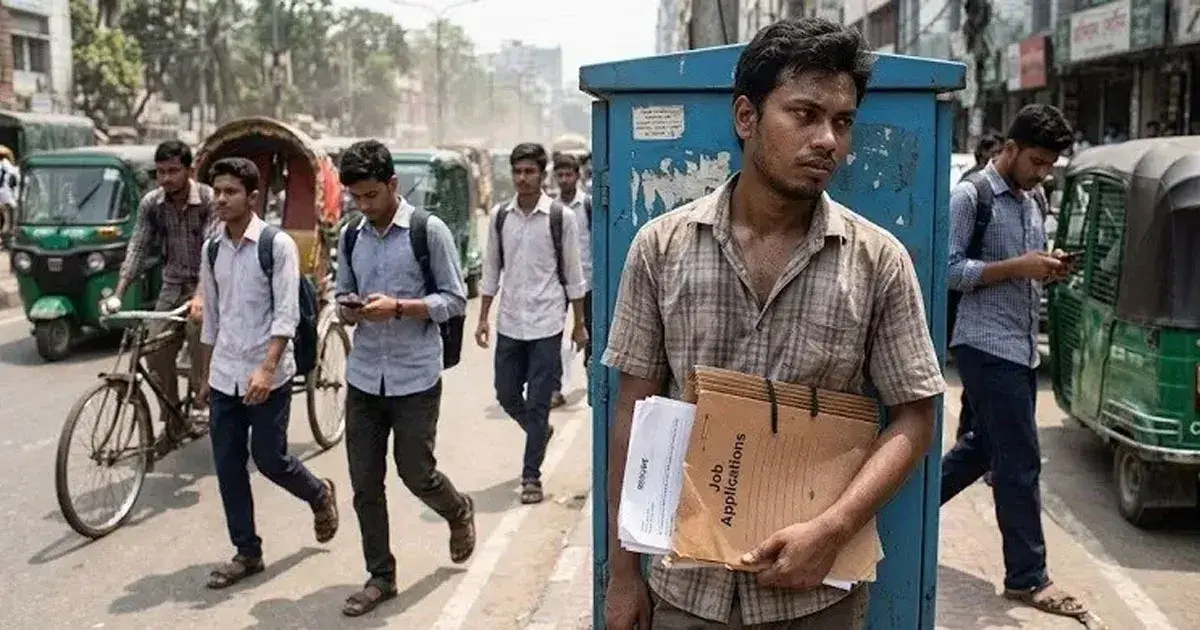
Nearly 29 percent of highly educated youth in Bangladesh are unemployed: IMF
29 minutes ago
by Bangla Press

Bangladesh
114 flights from Dhaka to Saudi Arabia cancelled; 17,701 passengers left in uncertainty
31 minutes ago
by Bangla Press
Bangladesh
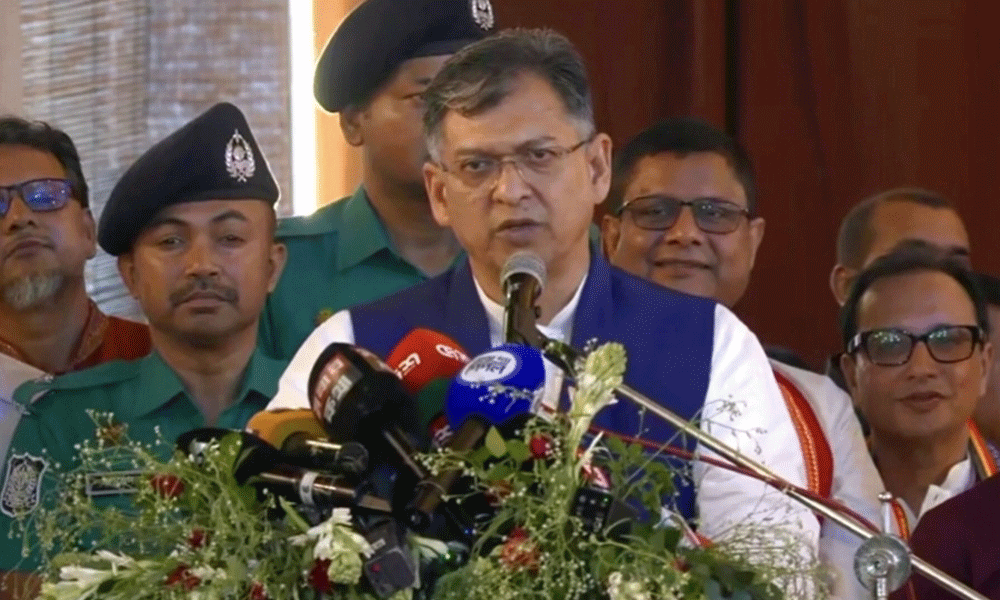
The Constitution is obligated to ensure the security of followers of all religions: Home Minister
17 hours ago
by Bangla Press
.jpg)
Bangladesh
Bangladesh to seek the return of Sheikh Hasina during talks with India
17 hours ago
by Bangla Press
Sangeet Academy