

Butcher shortage in U.S: Thousands of expatriates struggle to receive 'Qurbani Meat'

Bangla Press
Published: 27 May 2026, 01:53 PM
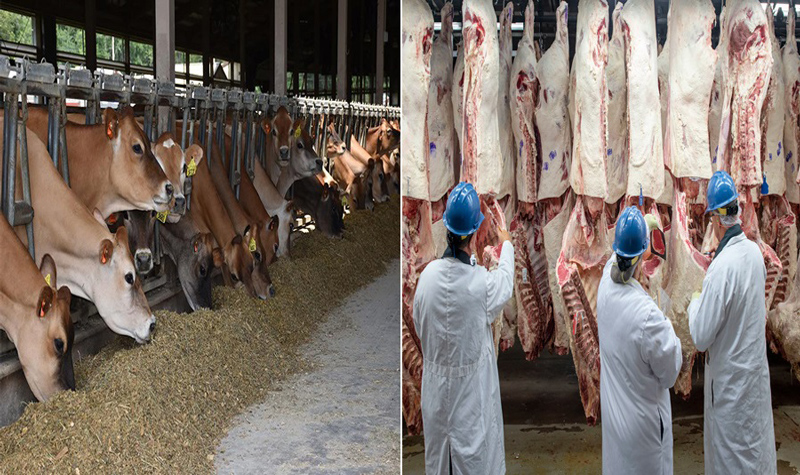
Butcher shortage in U.S
Chhabed Sathee: Thousands of Bangladeshi expatriates in the United States have been suffering hardships in obtaining sacrificial meat during Eid-ul-Azha due to a severe shortage of butchers. The long-standing butcher crisis has now reached an alarming level, causing growing frustration among expatriate Bangladeshis year after year.
On Eid day, many expatriates are forced to entertain guests with meat purchased from retail grocery stores, while they receive their actual Qurbani meat two to three days later.
Although this problem has persisted for decades, it has almost become a normal reality for expatriates in the U.S. There are more than 38,000 cattle, goat, and livestock farms across the country. Bangladeshi expatriates continue to place joint cow and individual goat Qurbani orders at these farms despite the ongoing difficulties.
Every Eid, thousands of cows and goats are slaughtered at farms across different states. Animals are processed serially according to booking numbers, meaning some people receive their meat on Eid day while many others wait two or three additional days. Only a small number of expatriates are fortunate enough to get their Qurbani meat on the day of Eid itself.
Around 35 percent of Bangladeshi expatriates in the United States participate in joint cow sacrifices or individual goat sacrifices. Not only Bangladeshis, but Muslims from various countries begin visiting farms nearly a month before Eid to select and reserve animals by weight.
After Eid prayers, many expatriates rush directly to farms, where they spend hours waiting for their turn. Often, after waiting all day without their serial number being called, they return home empty-handed and come back again the next day. The struggle for receiving sacrificial meat continues in this way.
Thousands of Bangladeshi expatriates from New York, Massachusetts, New Jersey, Washington, D.C., Virginia, Maryland, California, Texas, Florida, Georgia, Connecticut and several other states reportedly travel to farms weeks before Eid to reserve sacrificial animals.
Expatriates have also alleged widespread meat theft at farms under the pretext of “waste disposal.” Many Muslims expressed shock after discovering that farms were allegedly discarding far more meat than expected as waste. According to experienced grocery workers, after removing hide, stomach, legs, and other organs, only about one-third of a cow’s weight should normally be discarded. However, many farms were accused of discarding one-and-a-half to two-thirds of the total weight as waste.
An experienced butcher working at a New York grocery store said that excessive amounts of meat are often categorized as fat or waste and removed improperly. Protesters who question the practice are sometimes allegedly threatened that their animals will be processed late or not at all.
Large farms in the United States reportedly raise up to 15,000 cattle, while medium and smaller farms maintain between 1,000 and 5,000 animals. Millions of cattle are slaughtered annually across the country.
The cost of one share in a sacrificial cow in the United States is around $250.
New York expatriate Tofayel Ahmed said he had regularly participated in Qurbani after moving to the United States eight years ago. Last year, he and his friends selected a cow weighing 1,560 pounds at a farm. However, after Eid, they received only 560 pounds of meat after “waste” was removed.
“It is unbelievable that a thousand pounds of waste could come from one cow. I have never seen or heard of such a thing,” he said.
Connecticut expatriate Jamir Uddin said disagreements often arise among partners if they fail to arrive at the farm on time. After bringing the animal home, there is additional hassle involved in cutting and distributing the meat.
For that reason, he now regularly buys meat from New York grocery stores before Eid and celebrates with store-bought meat, while sending money to relatives back home for Qurbani.
Due to the severe shortage of butchers and meat cutters across more than 38,000 livestock farms in the United States, nearly 30 percent of Bangladeshi expatriates reportedly do not receive their Qurbani meat on Eid day. Many celebrate Eid initially with purchased meat and receive their actual sacrificial meat only two or three days later.
*Copyright 2026 Bangla Press. All rights reserved. This material may not be published, broadcast, rewritten or redistributed.
BP/SM
[Bangla Press is a global platform for free thought. It provides impartial news, analysis, and commentary for independent-minded individuals. Our goal is to bring about positive change, which is more important today than ever before.]
YOU MAY ALSO LIKE

Migration
Maryland BNP Seeks Restoration of ‘Ziaur Rahman Way’ in Baltimore
3 weeks ago
by Bangla Press
Migration
Expatriates’ Welfare Minister Attended Los Angeles Convention at FOBANA’s Official Invitation
3 weeks ago
by Bangla Press

Migration
New York Reception for PM Tarique Canceled: ‘Extortion or Cost-Cutting’ Behind the Decision?
3 weeks ago
by Bangla Press
Migration
Chhabed Sathee Receives Fifth Consecutive ‘Courageous Journalism’ Award
4 weeks ago
by Bangla Press
Migration
40th FOBANA Convention Wraps Up Three-Day Celebration in Los Angeles
1 month ago
by Bangla Press
Sangeet Academy