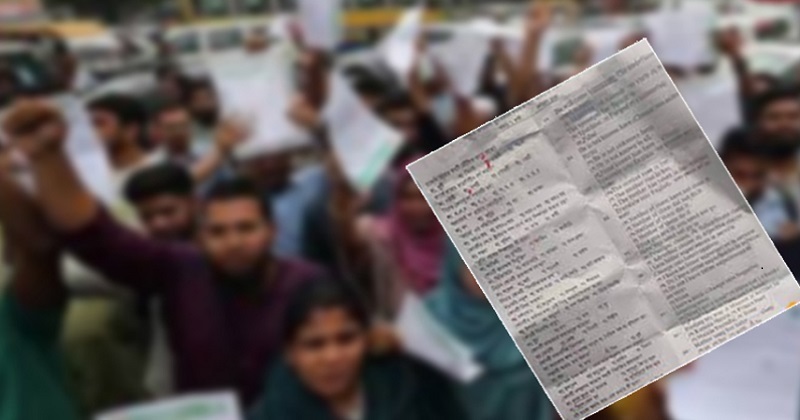
Bangla Press Desk: The National Communication Association (NCA) 2025 Annual Convention in Denver drew international academic attention to Bangladesh’s July 2024 student-led mass uprising, with multiple presentations examining how a decentralised Gen-Z movement achieved historic political change despite violent crackdowns, internet shutdowns, and censorship.
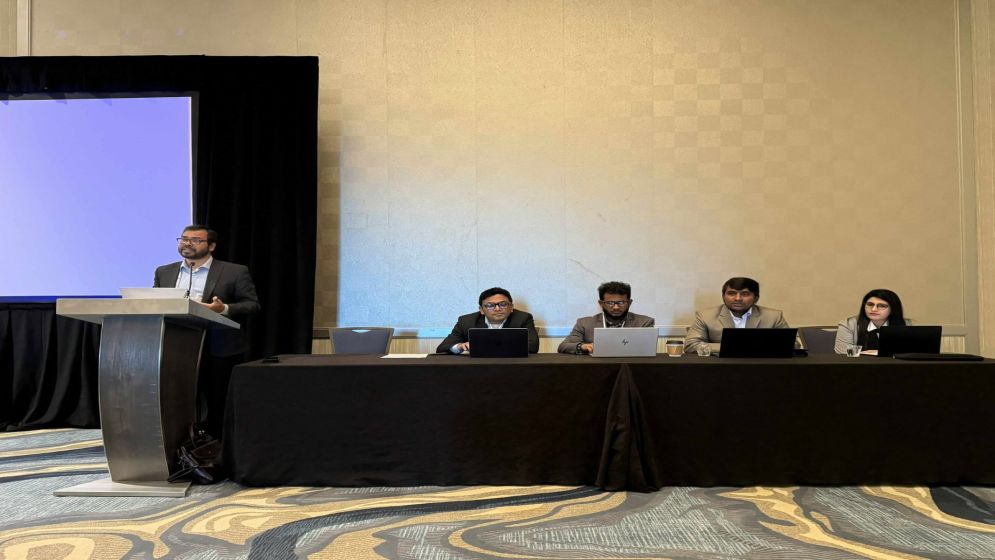
The dedicated panel, “From Rights Movement to Regime Change,” was chaired by Mohammad Ala-Uddin, Assistant Professor of Communication Studies at Saint Mary’s College, Indiana, and featured scholars from US and Bangladeshi institutions analysing the cultural and communicative forces that sustained the uprising.
In his presentation, Shah Jahan Shuvo, a doctoral candidate at the University of Alabama, showed how protesters shifted from digital coordination to street-based organising after the government imposed a telecommunications blackout, arguing that the movement represents a defining case of post-digital resistance.
Md Harisur Rahman, Associate Professor at North South University and Fulbright Visiting Scholar at Southern Illinois University Carbondale, analysed how protest songs such as “Shono Mohajon” and “Deshta Tomar Baper Naki” became emotional and organisational anchors during state repression, transforming individual frustration into collective resolve.
A second analysis was presented by Didarul Islam Manik of Central New Mexico Community College, whose study of graffiti identified themes of counter-hegemony, satirical resistance, and visual defiance that reclaimed public space and mobilised citizens during a period of total media blackout.
Saiqa Shahzadi, from the University of New Mexico, examined how Pakistani newspapers framed the uprising through narratives of instability and geopolitical anxiety, often downplaying youth agency while foregrounding regional insecurity.
Beyond the panel, additional research on the July uprising included a paper by AKM Zamir Uddin of the University of Georgia, who analysed how Sheikh Hasina’s 14 July press conference intensified the political crisis by misreading public sentiment and escalating rhetorical hostility toward student protesters.
A documentary screening by Fatema Amin of Shanghai Jiao Tong University presented 36 July, which traces how protesters used the symbolic extension of “36 July” to sustain momentum after the prime minister’s resignation, capturing the emotional and visual memory of the movement.
Scholars noted that the July uprising is becoming a global reference point for understanding contemporary social movements, illustrating how music, memes, street art, and offline mobilisation can reshape political outcomes even under surveillance and censorship.
For Bangladesh, this growing international visibility signals a shift from experiencing history to shaping its global interpretation, bringing the voices of students, cultural analysts, and ordinary citizens into worldwide scholarly conversation.
An edited volume, titled Critical Media Perspectives on the 2024 Bangladesh Uprising, to be published by Bloomsburg, will further expand this scholarship by including revised versions of the studies presented in the NCA panel.
BP/TD
[Bangla Press is a global platform for free thought. It provides impartial news, analysis, and commentary for independent-minded individuals. Our goal is to bring about positive change, which is more important today than ever before.]

 E-paper
.jpg)
.jpg)
.jpg)