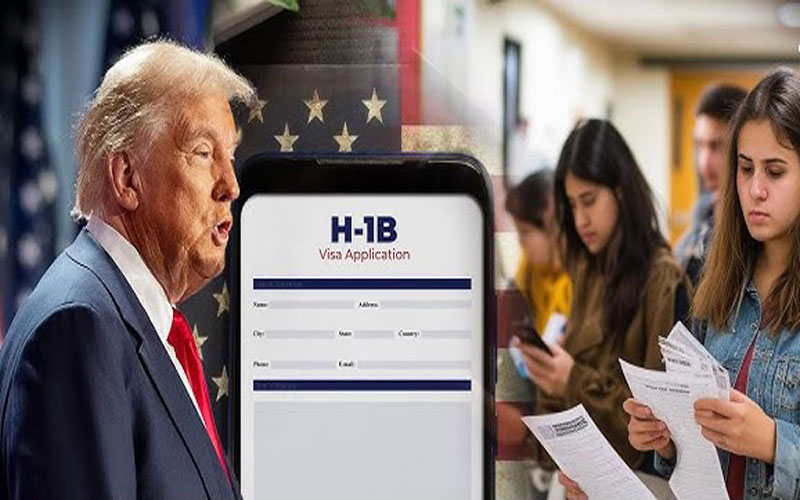
Noman Sabit: The Trump administration is ordering a new layer of scrutiny for temporary workers and international students, telling applicants for key U.S. visas to make their social media accounts public as the State Department expands “online presence” checks.
In a notice published Tuesday, the department said that from December 15, it will require an online presence review for all H-1B skilled worker applicants and their H-4 dependents, on top of the students and exchange visitors already subject to the same screening. To “facilitate this vetting,” it instructs all applicants for H-1B, H-4 and the F, M and J student and exchange categories to switch their social media privacy settings to “public.” The State Department said it uses “all available information” in visa screening to identify people who are inadmissible, including those seen as a threat to national security or public safety, and described every visa adjudication as “a national security decision,” adding that “a U.S. visa is a privilege, not a right.”
The move comes after months of tighter immigration controls under President Donald Trump, including new social media checks by U.S. Citizenship and Immigration Services (USCIS), expanded ideological vetting of applicants and a sharp rise in visa revocations, often justified as necessary to protect national security and “American values.”
Why It Matters
The latest directive targets a cluster of visa categories at the heart of America’s high-skilled workforce and university system. H-1B visas are a primary route for technology companies and other employers to bring in foreign talent, while F-1, M-1 and J-1 visas cover academic study, vocational training and exchange programs that brought more than 1.5 million foreign students to U.S. campuses in 2024. Newsweek reporting has shown that H-1B visas have become a flashpoint inside Trump’s own political coalition: The administration has backed steep fee hikes and enforcement initiatives like “Project Firewall,” while business groups and some Republicans argue the program is critical to U.S. competitiveness and to filling STEM shortages.
The same pattern is visible in student and exchange visas. Since Trump returned to office, more than 6,000 F-1 visas have been revoked in a matter of months, according to data cited in a recent Newsweek analysis, with college leaders warning that aggressive enforcement could hollow out local economies and campus budgets.
Layering mandatory “public” social media exposure on top of that trend deepens concerns already raised by universities, civil-liberties advocates and immigration lawyers about the chilling effect of surveillance on lawful speech. At the same time, the new State Department rule underscores how central social media and online activity have become to Trump-era immigration policy, with visa holders and applicants facing consequences for posts, affiliations or protest activity that officials interpret as security or ideological risks.
BP/SM
[Bangla Press is a global platform for free thought. It provides impartial news, analysis, and commentary for independent-minded individuals. Our goal is to bring about positive change, which is more important today than ever before.]
 E-paper