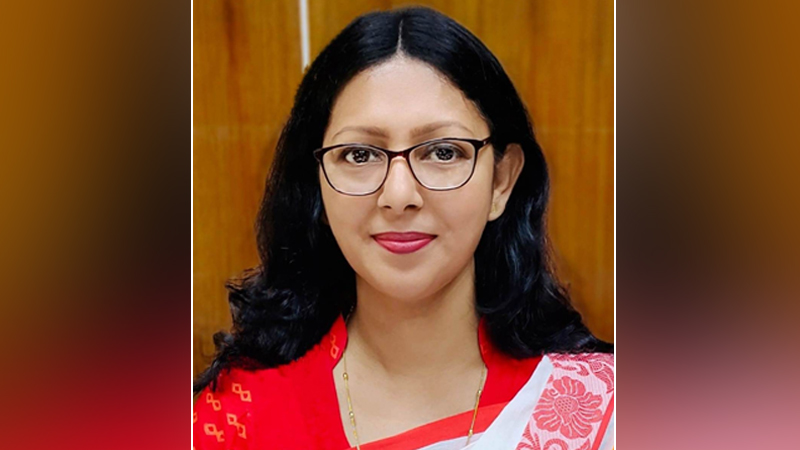
Bangla Press Desk: Home Minister Salahuddin Ahmed has said there is no need to convert the recently concluded referendum into a bill and pass it in parliament, as the ordinance under which the referendum was held has now lapsed.
He made the remarks on Sunday night at the national parliament building after a meeting of a special committee.Responding to questions about the referendum ordinance, the minister said the ordinance has served its purpose. “The referendum it was meant for has been conducted, and no further referendum will be held under it. There is therefore no point in approving it again and converting it into a law,” he explained.
He added that, under Article 93 of the Constitution, ordinances must be presented in parliament, and their fate decided within 30 days of a parliamentary session. “But this ordinance has already fulfilled its purpose. It was not part of the Constitution. It was enacted solely for holding a referendum, and its use has now ended,” he said.
Speaking about the special committee meeting, Salahuddin said discussions were held on a total of 133 ordinances. “We reviewed each of the 133 ordinances. Many will be passed as they are, while some will be brought as bills in amended form. Due to time constraints (before 10 April), not all bills can be presented. The remaining ones will be introduced in the next session,” he said.
On differences expressed by opposition members during the meeting, the minister said several members from both the opposition and ruling parties submitted ‘notes of dissent’ on certain ordinances. “Their views will be properly reflected in the report. When ministers present the bills, everyone will have the opportunity to speak during the first, second, and third readings,” he added.
Asked what happens to ordinances if the 30-day period lapses, he said any ordinance or bill that cannot be presented within the time automatically lapses. “There is no problem with this. We will reintroduce them as bills in the next session. For cases like boundary determination or RPO, which have future effects, these must be converted into law,” he explained.
Regarding ordinances on the Human Rights Commission or police, he said these fall under the Law Ministry, and the Law Minister will provide details. He also mentioned that the special committee’s report will be tabled in parliament on 2 April.
[Bangla Press is a global platform for free thought. It provides impartial news, analysis, and commentary for independent-minded individuals. Our goal is to bring about positive change, which is more important today than ever before.]

 E-paper
.jpg)

.jpg)