 Bangla Press Desk: Creativity had sparked the last year’s July uprising, engaging more people and giving it a unique shape. Therefore, a mere movement, demanding reforms in quota system in public jobs, turned into a civil rebellion. Recalling those momentous days, the Daily Sun is bringing a series of stories on the role of slogans, graffiti, posters, cartoons and songs behind ouster of Sheikh Hasina-led authoritarian regime. Here is the first part.
Any movement in this part of the world gets the first endorsement from the streets. Even in this age of social media, the future success of a struggle depends on how people take part in it and feel the united call of the nation while staying together with fellow activists. And be it to annoy the opponents or understand the changing demands and aspirations of the protesters keeping them ignited in the same spirit, slogans play a pivotal role in either case.
July Uprising 2024 is a glaring example of how a movement can be initiated and ultimately shaped through the slogans uttered by its dedicated activists. Slogans of this unique Gen-Z uprising hold a special place in the history of mass revolts and deserve discussion as they not only reflect the political climate of a community but also map its cultural trajectory.
For example, at the beginning of the movement, protesters chanted “Quota na Medha? Medha, Medha” (Quota or merit? merit, merit) and “Amar Sonar Banglay, Boishommer Thai Nai” (In my golden Bengal, there is no place for discrimination). But on the night of 14 July, when Sheikh Hasina reportedly compared the protesters to the children of collaborators (razakars), the agitated students of Dhaka University responded within hours, in the middle of the night, chanting slogan like “Tumi Ke Ami Ke, Razakar, Razakar/ Ke Boleche Ke Boleche, Shoirachar Shoirachar” (Who are you? Who am I? – Razakar, razakar/ Who said it? Who said it? – Autocrat, autocrat) or “Chaite Elam Odhikar, Hoye Gelam Razakar” (We claimed our rights, they called us Razakar).
Bangla Press Desk: Creativity had sparked the last year’s July uprising, engaging more people and giving it a unique shape. Therefore, a mere movement, demanding reforms in quota system in public jobs, turned into a civil rebellion. Recalling those momentous days, the Daily Sun is bringing a series of stories on the role of slogans, graffiti, posters, cartoons and songs behind ouster of Sheikh Hasina-led authoritarian regime. Here is the first part.
Any movement in this part of the world gets the first endorsement from the streets. Even in this age of social media, the future success of a struggle depends on how people take part in it and feel the united call of the nation while staying together with fellow activists. And be it to annoy the opponents or understand the changing demands and aspirations of the protesters keeping them ignited in the same spirit, slogans play a pivotal role in either case.
July Uprising 2024 is a glaring example of how a movement can be initiated and ultimately shaped through the slogans uttered by its dedicated activists. Slogans of this unique Gen-Z uprising hold a special place in the history of mass revolts and deserve discussion as they not only reflect the political climate of a community but also map its cultural trajectory.
For example, at the beginning of the movement, protesters chanted “Quota na Medha? Medha, Medha” (Quota or merit? merit, merit) and “Amar Sonar Banglay, Boishommer Thai Nai” (In my golden Bengal, there is no place for discrimination). But on the night of 14 July, when Sheikh Hasina reportedly compared the protesters to the children of collaborators (razakars), the agitated students of Dhaka University responded within hours, in the middle of the night, chanting slogan like “Tumi Ke Ami Ke, Razakar, Razakar/ Ke Boleche Ke Boleche, Shoirachar Shoirachar” (Who are you? Who am I? – Razakar, razakar/ Who said it? Who said it? – Autocrat, autocrat) or “Chaite Elam Odhikar, Hoye Gelam Razakar” (We claimed our rights, they called us Razakar).
The language that drove the July uprising

Banglapress
Published: 23 September 2025, 10:25 AM
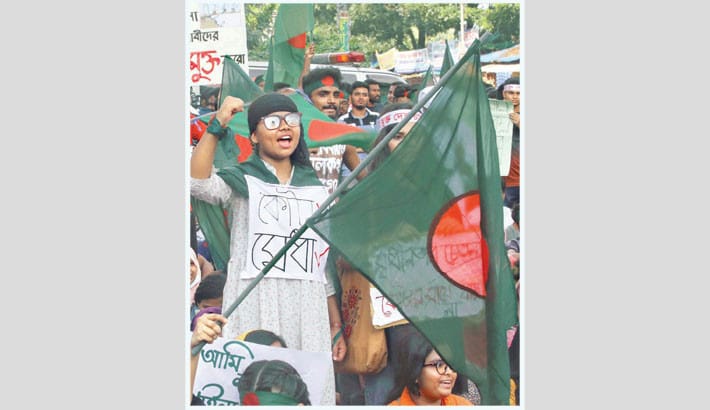 Bangla Press Desk: Creativity had sparked the last year’s July uprising, engaging more people and giving it a unique shape. Therefore, a mere movement, demanding reforms in quota system in public jobs, turned into a civil rebellion. Recalling those momentous days, the Daily Sun is bringing a series of stories on the role of slogans, graffiti, posters, cartoons and songs behind ouster of Sheikh Hasina-led authoritarian regime. Here is the first part.
Any movement in this part of the world gets the first endorsement from the streets. Even in this age of social media, the future success of a struggle depends on how people take part in it and feel the united call of the nation while staying together with fellow activists. And be it to annoy the opponents or understand the changing demands and aspirations of the protesters keeping them ignited in the same spirit, slogans play a pivotal role in either case.
July Uprising 2024 is a glaring example of how a movement can be initiated and ultimately shaped through the slogans uttered by its dedicated activists. Slogans of this unique Gen-Z uprising hold a special place in the history of mass revolts and deserve discussion as they not only reflect the political climate of a community but also map its cultural trajectory.
For example, at the beginning of the movement, protesters chanted “Quota na Medha? Medha, Medha” (Quota or merit? merit, merit) and “Amar Sonar Banglay, Boishommer Thai Nai” (In my golden Bengal, there is no place for discrimination). But on the night of 14 July, when Sheikh Hasina reportedly compared the protesters to the children of collaborators (razakars), the agitated students of Dhaka University responded within hours, in the middle of the night, chanting slogan like “Tumi Ke Ami Ke, Razakar, Razakar/ Ke Boleche Ke Boleche, Shoirachar Shoirachar” (Who are you? Who am I? – Razakar, razakar/ Who said it? Who said it? – Autocrat, autocrat) or “Chaite Elam Odhikar, Hoye Gelam Razakar” (We claimed our rights, they called us Razakar).
Bangla Press Desk: Creativity had sparked the last year’s July uprising, engaging more people and giving it a unique shape. Therefore, a mere movement, demanding reforms in quota system in public jobs, turned into a civil rebellion. Recalling those momentous days, the Daily Sun is bringing a series of stories on the role of slogans, graffiti, posters, cartoons and songs behind ouster of Sheikh Hasina-led authoritarian regime. Here is the first part.
Any movement in this part of the world gets the first endorsement from the streets. Even in this age of social media, the future success of a struggle depends on how people take part in it and feel the united call of the nation while staying together with fellow activists. And be it to annoy the opponents or understand the changing demands and aspirations of the protesters keeping them ignited in the same spirit, slogans play a pivotal role in either case.
July Uprising 2024 is a glaring example of how a movement can be initiated and ultimately shaped through the slogans uttered by its dedicated activists. Slogans of this unique Gen-Z uprising hold a special place in the history of mass revolts and deserve discussion as they not only reflect the political climate of a community but also map its cultural trajectory.
For example, at the beginning of the movement, protesters chanted “Quota na Medha? Medha, Medha” (Quota or merit? merit, merit) and “Amar Sonar Banglay, Boishommer Thai Nai” (In my golden Bengal, there is no place for discrimination). But on the night of 14 July, when Sheikh Hasina reportedly compared the protesters to the children of collaborators (razakars), the agitated students of Dhaka University responded within hours, in the middle of the night, chanting slogan like “Tumi Ke Ami Ke, Razakar, Razakar/ Ke Boleche Ke Boleche, Shoirachar Shoirachar” (Who are you? Who am I? – Razakar, razakar/ Who said it? Who said it? – Autocrat, autocrat) or “Chaite Elam Odhikar, Hoye Gelam Razakar” (We claimed our rights, they called us Razakar).
[Bangla Press is a global platform for free thought. It provides impartial news, analysis, and commentary for independent-minded individuals. Our goal is to bring about positive change, which is more important today than ever before.]
YOU MAY ALSO LIKE

.jpg)
Bangladesh
The number of mobile users in the country has surpassed 190 million.
1 hour ago
by Bangla Press
Bangladesh
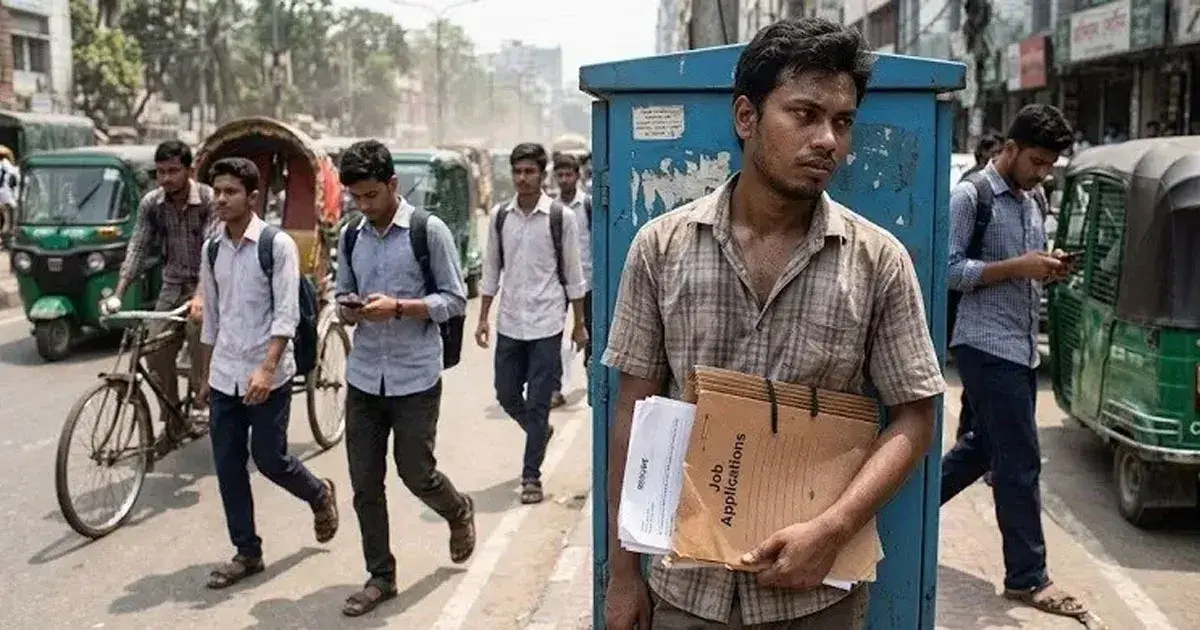
Nearly 29 percent of highly educated youth in Bangladesh are unemployed: IMF
1 hour ago
by Bangla Press
Bangladesh
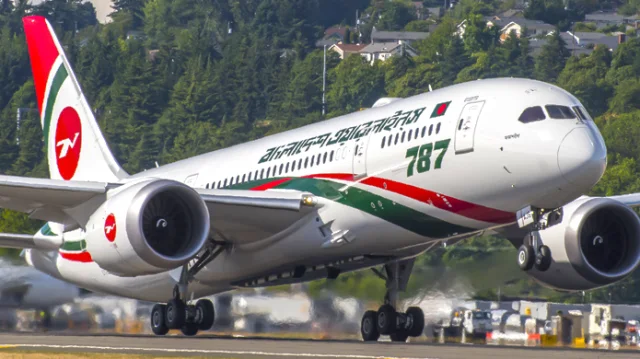
114 flights from Dhaka to Saudi Arabia cancelled; 17,701 passengers left in uncertainty
1 hour ago
by Bangla Press
Bangladesh
The Constitution is obligated to ensure the security of followers of all religions: Home Minister
18 hours ago
by Bangla Press
.jpg)
Bangladesh
Bangladesh to seek the return of Sheikh Hasina during talks with India
18 hours ago
by Bangla Press
Sangeet Academy