
The Poverty Magician Departs Leaving More Poor Behind

Bangla Press
Published: 18 February 2026, 02:06 AM
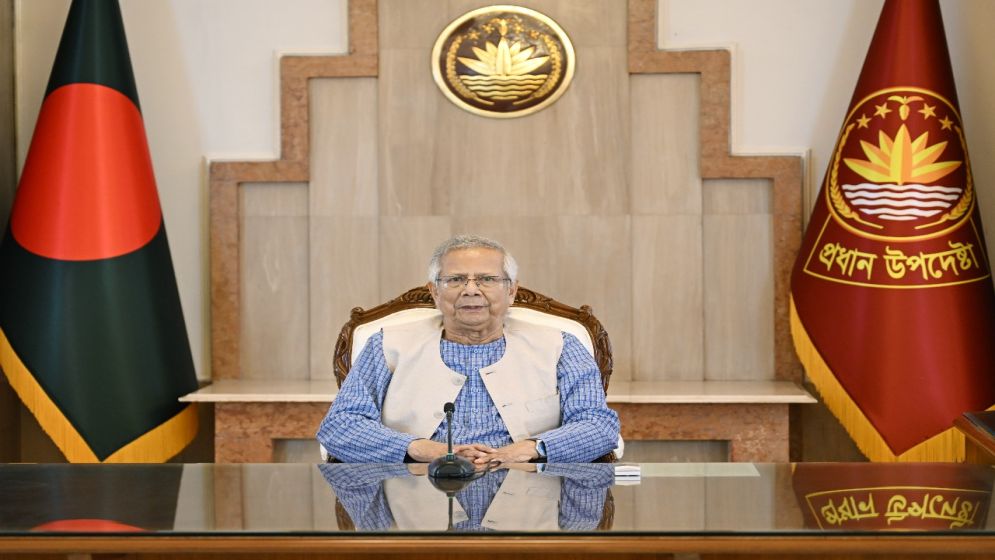
Bangla Press Desk: Nobel Peace Prize laureate Muhammad Yunus is widely known for his famous vision of “sending poverty to the museum.” By assuming the role of Chief Adviser of Bangladesh’s interim government, he had a significant opportunity to reduce poverty. However, the reality is that he was unable to utilize that opportunity effectively. During his tenure, an additional 30 lakh people reportedly fell into poverty.
Experts say that Yunus took oath as Chief Adviser on August 8, 2024, following the fall of the Awami League government amid a mass uprising driven by an anti-discrimination student movement. To manage the administration, he appointed advisers and special assistants of his own choosing. He also enjoyed strong support from political parties and student groups aligned with the uprising, including BNP, Jamaat-e-Islami, and NCP. This gave him a major opportunity to reform the weakened state structure, reduce poverty, combat corruption, stabilize the financial sector, and strengthen institutions. Critics argue that he failed to capitalize on this opportunity.
Renowned economist and former Vice-Chancellor of Jahangirnagar University, Professor Abdul Bayes, said that people expected the economy to recover under Yunus’s leadership. Instead, most economic indicators reportedly declined, except for remittance inflows and foreign exchange reserves. Business confidence weakened, industrial production slowed, and there were no significant new initiatives or major domestic or foreign investments. Meanwhile, unemployment and poverty increased. According to estimates cited from the World Bank, nearly 3 million people became newly poor during his tenure.
Private sector investment declined significantly. In June 2024, private investment stood at 24 percent of GDP, but by June 2025 it had fallen to 22.48 percent—a drop of nearly 1.5 percentage points in just one year, marking one of the sharpest declines in four decades.
Public investment also dropped to its lowest level in 10 years. According to the Centre for Policy Dialogue (CPD), implementation of the Annual Development Programme (ADP) between July and November stood at only 11.5 percent, the lowest in a decade.
By the end of September 2025, defaulted loans in Bangladesh’s banking sector reached Tk 6,44,515 crore, or 35.73 percent of total disbursed loans—an unprecedented increase from 20.2 percent in December of the previous year. Research data suggest Bangladesh’s default loan ratio had become the highest in the world during this period.
Yunus left behind a government debt burden of approximately Tk 23 lakh crore. According to Bangladesh Bank, total domestic and foreign government debt stood at Tk 22,50,904 crore by the end of FY2024–25. During the July–December period of the current fiscal year, the interim government borrowed an additional Tk 61,148 crore from domestic banks and nearly Tk 13,000 crore from foreign sources.
In December, inflation stood at 8.5 percent, while wage growth remained below 8.1 percent. As a result, people’s expenses increased faster than their incomes, reducing purchasing power. At the same time, high policy interest rates raised borrowing costs, reducing private sector credit and increasing business operating expenses.
Despite broader economic difficulties, foreign exchange reserves increased. Yunus highlighted this in his farewell speech, stating that reserves had reached $34 billion, largely driven by remittances, and that food inflation had declined significantly.
However, UK-based academic and researcher Dr. Lubna Tureen criticized what she called “reserve-focused policy,” arguing that reserves are not an end goal but a tool. She said the true priorities should be productive capacity, employment, food and energy security, and policy independence. She suggested that reserve growth may have come at the cost of reduced imports, lower industrial output, and increased pressure on ordinary citizens.
In his first national address, Yunus promised to strengthen local government institutions, decentralize power, reform administrative and judicial systems, and ensure free and fair elections. Observers say that while a peaceful election was eventually held, many promised reforms were not fully implemented.
Corruption allegations also surfaced involving officials and associates of the interim administration, and some cases remain under investigation. Questions were raised about financial transparency and reported benefits received by institutions linked to Yunus, including tax exemptions and regulatory approvals for entities such as Grameen Bank and other Grameen-affiliated organizations.
Globally, Yunus promoted the vision of achieving “Three Zeros”: zero poverty, zero unemployment, and zero net carbon emissions. Critics argue that during his tenure, poverty and unemployment increased rather than decreased.
As Yunus steps down and returns to his global initiatives, observers question whether he can continue to advocate this vision with the same authority. For many, his time in office remains a subject of intense debate—between expectations of transformative reform and the realities of economic and institutional challenges.
Source: daily Sun
BP/SP
[Bangla Press is a global platform for free thought. It provides impartial news, analysis, and commentary for independent-minded individuals. Our goal is to bring about positive change, which is more important today than ever before.]
YOU MAY ALSO LIKE
.jpg)
.jpg)
Bangladesh
5 arrested in connection with the leaking of Youth Development exam questions
9 hours ago
by Bangla Press

.jpg)
Sangeet Academy