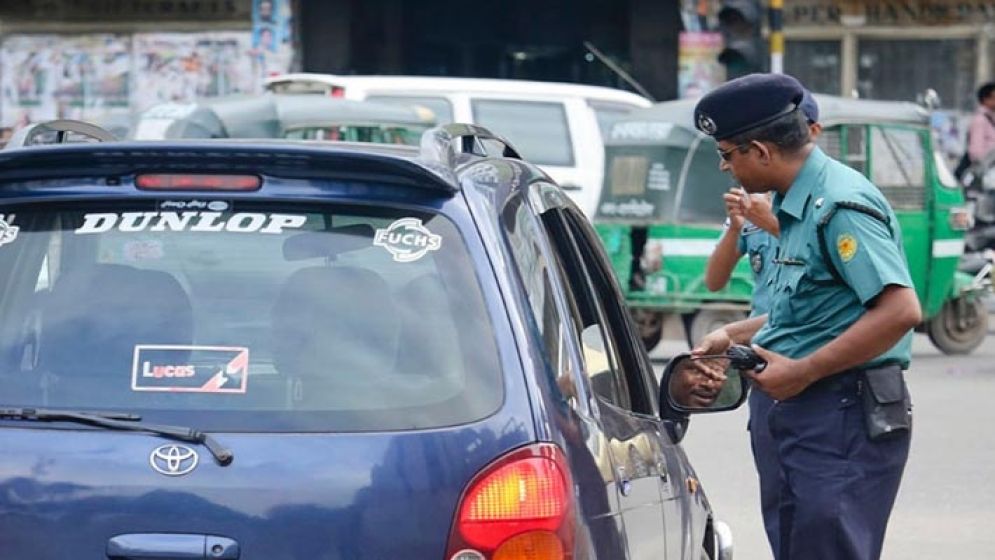
Bangla Press Desk: Traffic police sergeants, senior traffic officers and other law enforcement officials have got the power to impose fines on the spot for breaching tolerable sound levels on roads and other areas, as per updated pollution rules, significantly boosting enforcement capacity.
Earlier, the powers were limited to magistrates, who could not regulate noise pollution properly due to manpower shortage.
The government issued the gazette notification concerning the Noise Pollution (Control) Rules-2025, replacing the 2006 regulations, on Monday, said a media release on Tuesday.
Authorities said the earlier rules had several limitations and lacked clarity on key regulatory issues, which hindered effective enforcement, UNB reported citing the media release.
The new rules have been formulated to address those gaps by incorporating current needs, practical realities, and technological considerations.
The new rules also introduce clear punitive measures for the import, manufacture, storage, and sale of horns, an area previously unregulated despite being one of the major sources of noise pollution, with authorities believing this will help bring uncontrolled horn use under effective control.
Several incorporated directives in the updated rules include a ban on the use of loudspeakers, microphones, amplifiers, or musical instruments in public places without written permission; prohibition of picnics in natural forests and wildlife habitats; a maximum noise limit of 90 decibels for social events, which must end by 9 PM; a complete ban on fireworks, horns, or similar noise-generating items in silence zones; restrictions on night-time construction; new provisions for controlling noise from industrial establishments and generators; and alignment of penalties with the Road Transport Act, 2018.
The updated rules were prepared following extensive consultations, including meetings and workshops with stakeholders.
Feedback from all ministries was incorporated, and the draft was made publicly available on the Ministry’s website for citizen comments.
Best practices from India, Nepal, Sri Lanka, Malaysia, Kenya, and South Africa were reviewed to identify weaknesses in the 2006 Rules and refine the new framework accordingly.
BP/SP
[Bangla Press is a global platform for free thought. It provides impartial news, analysis, and commentary for independent-minded individuals. Our goal is to bring about positive change, which is more important today than ever before.]

 E-paper
.jpg)
.jpg)
.jpg)