
 Bangla Press Desk: The recent UN General Assembly vote on the resolution known as the “New York Declaration” marked a turning point in the long and fraught path of the Palestinian question. The resolution passed with 142 votes in favor, 10 against, and 12 abstentions, once again placing the “two-state solution” at the center of international efforts to resolve the conflict. Yet the absence of Iran—long regarded as a staunch supporter of the Palestinian cause—raised a serious question: Why did Tehran refrain from participating in this vote?
The Two-State Equation: Dividing Land or Dividing Truth?
From Iran’s perspective, the two-state formula is based on a political bargain in which 78 percent of historic Palestine is allocated to Israel and only 22 percent is designated as a “Palestinian state.”
Tehran argues that such a division not only fails to restore historical justice but also imposes a new layer of injustice on the Palestinian people. For this reason, Iran has repeatedly stressed that lasting peace will only emerge when the full and inalienable rights of Palestinians—ranging from the right of return to self-determination—are recognized.
Bangla Press Desk: The recent UN General Assembly vote on the resolution known as the “New York Declaration” marked a turning point in the long and fraught path of the Palestinian question. The resolution passed with 142 votes in favor, 10 against, and 12 abstentions, once again placing the “two-state solution” at the center of international efforts to resolve the conflict. Yet the absence of Iran—long regarded as a staunch supporter of the Palestinian cause—raised a serious question: Why did Tehran refrain from participating in this vote?
The Two-State Equation: Dividing Land or Dividing Truth?
From Iran’s perspective, the two-state formula is based on a political bargain in which 78 percent of historic Palestine is allocated to Israel and only 22 percent is designated as a “Palestinian state.”
Tehran argues that such a division not only fails to restore historical justice but also imposes a new layer of injustice on the Palestinian people. For this reason, Iran has repeatedly stressed that lasting peace will only emerge when the full and inalienable rights of Palestinians—ranging from the right of return to self-determination—are recognized.
Why did Iran abstain from UN vote on Palestinian Statehood?

Banglapress
Published: 23 September 2025, 10:26 AM
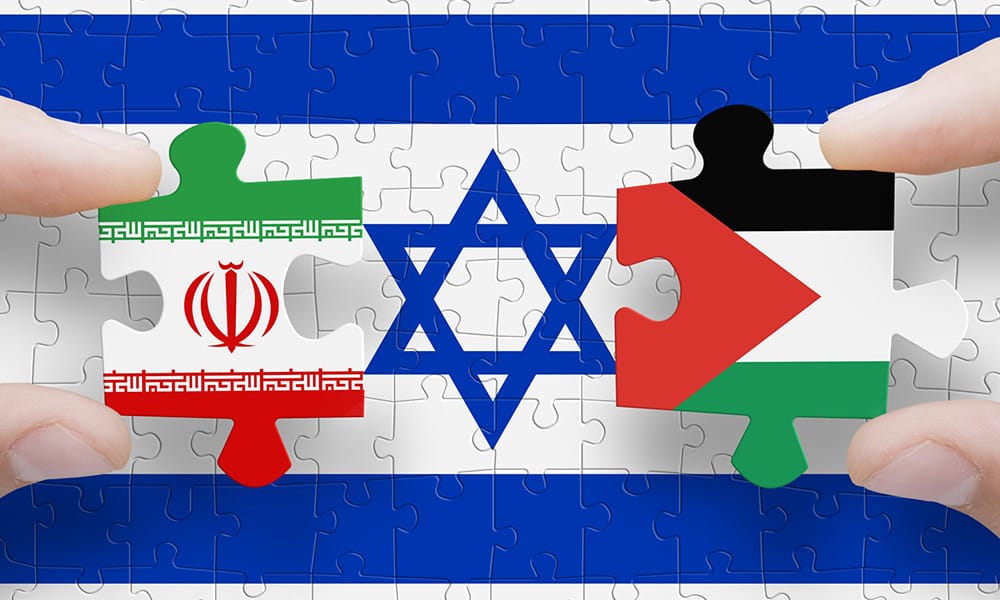 Bangla Press Desk: The recent UN General Assembly vote on the resolution known as the “New York Declaration” marked a turning point in the long and fraught path of the Palestinian question. The resolution passed with 142 votes in favor, 10 against, and 12 abstentions, once again placing the “two-state solution” at the center of international efforts to resolve the conflict. Yet the absence of Iran—long regarded as a staunch supporter of the Palestinian cause—raised a serious question: Why did Tehran refrain from participating in this vote?
The Two-State Equation: Dividing Land or Dividing Truth?
From Iran’s perspective, the two-state formula is based on a political bargain in which 78 percent of historic Palestine is allocated to Israel and only 22 percent is designated as a “Palestinian state.”
Tehran argues that such a division not only fails to restore historical justice but also imposes a new layer of injustice on the Palestinian people. For this reason, Iran has repeatedly stressed that lasting peace will only emerge when the full and inalienable rights of Palestinians—ranging from the right of return to self-determination—are recognized.
Bangla Press Desk: The recent UN General Assembly vote on the resolution known as the “New York Declaration” marked a turning point in the long and fraught path of the Palestinian question. The resolution passed with 142 votes in favor, 10 against, and 12 abstentions, once again placing the “two-state solution” at the center of international efforts to resolve the conflict. Yet the absence of Iran—long regarded as a staunch supporter of the Palestinian cause—raised a serious question: Why did Tehran refrain from participating in this vote?
The Two-State Equation: Dividing Land or Dividing Truth?
From Iran’s perspective, the two-state formula is based on a political bargain in which 78 percent of historic Palestine is allocated to Israel and only 22 percent is designated as a “Palestinian state.”
Tehran argues that such a division not only fails to restore historical justice but also imposes a new layer of injustice on the Palestinian people. For this reason, Iran has repeatedly stressed that lasting peace will only emerge when the full and inalienable rights of Palestinians—ranging from the right of return to self-determination—are recognized.
[Bangla Press is a global platform for free thought. It provides impartial news, analysis, and commentary for independent-minded individuals. Our goal is to bring about positive change, which is more important today than ever before.]
YOU MAY ALSO LIKE
International
Social media ban for minors: France takes first step in EU
5 hours ago
by Bangla Press
International
New York mayor says ICC warrant does not allow city to detain Netanyahu
5 hours ago
by Bangla Press

International
Trump clears nuclear pact opening door for Saudi uranium enrichment
5 hours ago
by Bangla Press

International
Venezuelan leader Maduro’s US trial could begin in June 2027
5 hours ago
by Bangla Press

International
US keeps negotiation option open in Iran crisis, says Rubio
5 hours ago
by Bangla Press

International
FBI Arrests Khalid Over $547 Million Medicare Fraud Scheme
8 hours ago
by Bangla Press
Sangeet Academy