

Women workers step out of shadows to demand rights, recognition, reform

Bangla Press
Published: 10 December 2025, 11:15 AM
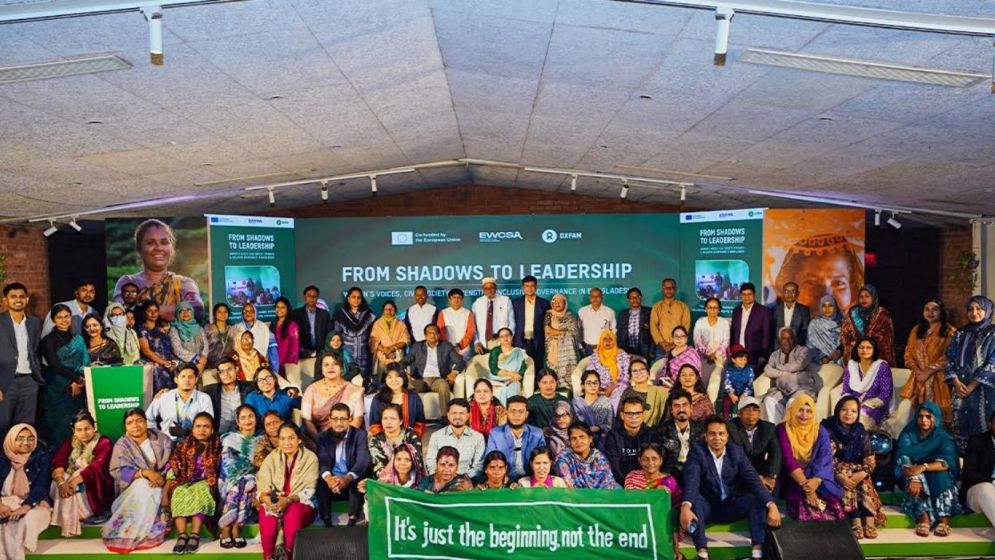
Bangla Press Desk: Bangladesh’s vast economy—where women make up most of the 85% working in informal and marginalised formal systems—took centre stage in Dhaka on Wednesday as women from domestic work, tea gardens, fisheries and home-based readymade garment work confronted government and relevant actors at the “From Shadows to Leadership” event, exposing inequalities while showcasing emerging changes.
The event, organised by Oxfam in Bangladesh with 33 civil society partners and co-funded by the EU under the Empowering Women Through Civil Society Actors in Bangladesh (EWCSA) project, highlighted the baseline findings: only 0.73% of women had formal contracts, 85% lacked rights awareness, and most had never engaged with a CSO—evidence of deep policy gaps and long-standing invisibility. Yet in five years, EWCSA has shifted this trajectory, with women emerging as leaders, organising collectively and engaging institutions that once overlooked them.
At the event, domestic worker Putul Akhter from Barisal said, “I never knew my own identity until this project showed me, I had one. Once humiliated and unseen, we now demand legal recognition, contracts, and the dignity every worker deserves.”
Tea worker from Sylhet Shila Kurmi said, “We demand a living wage, labour law implementation, safe healthcare, decent workplaces and education—not as favours but as rights. We have been heard; now we must be heeded as we continue our journey from isolation to advocacy.”
Speakers throughout the day underscored that structural change cannot happen without legal reform.
Syed Sultan Uddin Ahmed, Executive Director of BILS and former Head of the Labour Reform Commission, shared, “Women workers in these four sectors have little legal protection. For this, we all need to work together. True change requires both organisation and movement.”
Farida Akter, Adviser at the Ministry of Fisheries and Livestock, in a video message, said, “Tea Garden workers, fisherfolk, domestic workers, and home-based RMG workers are marginalised. Their contributions must be formally calculated and recognised through identification and policy change. We must also shift the public mindset and expand media engagement, so rights move from paper to practice.”
Michal Krejza, Head of Development Cooperation at the EU Delegation to Bangladesh, said, “Women from the EWCSA project are making an outstanding impact, and it has strengthened the systems that make rights real.”
He added, “Progress for workers is clear but unfinished. Lasting change demands stronger enforcement, wider social protection, sustained women’s leadership, and locally owned reforms to ensure every woman can stand in the light.”
EWCSA shows how sustained support and collective organising shift power: domestic workers win compensation, tea workers gain leadership roles, fisherwomen secure ID commitments, and home-based garment workers drive wage and safety reforms nationally.
Ashish Damle, Country Director of Oxfam in Bangladesh, said, “When people awaken, there is much to say and even more to do. We are now in a phase of possibility—integrating technology and building on this awareness to empower communities with sustainable, independent futures. True sustainability means moving from support to self-reliance for workers.”
Rasheda K Choudhury, Executive Director of CAMPE, said, “Forums, partnerships and meaningful engagement with political actors are essential ̵ especially now ̵ to ensure women workers’ rights are clearly reflected in national manifestos.”
Mahmuda Sultana, Programme Director of Oxfam in Bangladesh, gave a detailed presentation on the event. A photo storybook with 10 stories of women from four sectors was unveiled at the event.
Representatives from the government, development partners, NGOs, CSOs, media and workers from four sectors also joined the event. Moderated by Md Sariful Islam from Oxfam, the call emerging from the event is that Bangladesh must enforce labour protections, strengthen local governance accountability, ensure identity and social protection coverage for excluded groups, and embed women’s associations in institutional frameworks so their leadership continues beyond the project’s lifespan.
BP/SP
[Bangla Press is a global platform for free thought. It provides impartial news, analysis, and commentary for independent-minded individuals. Our goal is to bring about positive change, which is more important today than ever before.]
YOU MAY ALSO LIKE
.jpg)
.jpg)
Bangladesh
5 arrested in connection with the leaking of Youth Development exam questions
22 hours ago
by Bangla Press
.jpg)
Bangladesh
All flights from Dammam to Riyadh suspended until October 18
22 hours ago
by Bangla Press
Sangeet Academy