
AI Can Predict Cancer Patients’ Survival Prospects from Facial Images

Bangla Press
Published: 21 October 2026, 10:41 AM
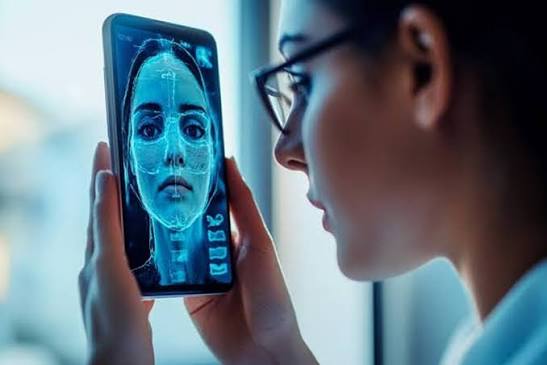
Bangla Press Desk: Artificial intelligence (AI) can estimate a person’s biological age from a facial photograph or selfie and provide insights into survival prospects for cancer patients. Researchers at Mass General Brigham, a US healthcare institution, have developed an AI model that analyses facial images to identify certain features associated with a patient’s physical condition. The study has been published in The Lancet Digital Health.
According to the researchers, facial features may contain important information about a person’s underlying health and physical fitness. In the future, such information could help doctors assess risks and plan treatment for cancer patients. However, the technology is still under evaluation and is not ready to replace conventional medical assessments.
The AI model used in the study is called Foundation Artificial Intelligence for Health Recognition (FAHR-Face). It was trained using more than 40 million facial images. Researchers developed two separate tools based on the model. One estimates biological age from a facial image, while the other attempts to assess risks associated directly with cancer patients’ survival prospects.
How Does the AI Model Work?
The FAHR-Face model uses deep-learning technology to analyse large volumes of data and identify patterns and relationships among different features.
The model has two tools: FAHR-FaceAge and FAHR-FaceSurvival. The first estimates a person’s biological age, which refers to how old the body appears based on its condition and functioning. Biological age may differ from chronological age.
FAHR-FaceSurvival, meanwhile, estimates risks associated with a cancer patient’s survival prospects directly from a facial image. It does not use biological age as an intermediate step.
Researchers said the two tools analyse different areas of the face. To estimate biological age, the model examines features such as the forehead, temples and folds extending from the sides of the nose towards the corners of the mouth. For survival-risk estimation, features beneath the eyes and around the upper part of the nose receive greater emphasis.
However, the precise biological mechanisms behind the association between these facial features and mortality risk among cancer patients remain unclear. The AI primarily identifies statistical patterns in images. It cannot diagnose cancer, detect tumours or determine an individual’s exact lifespan.
Hugo Aerts, senior author of the study and director of the Artificial Intelligence in Medicine programme at Mass General Brigham, said that, to their knowledge, this was the first example of AI being used to estimate cancer patients’ survival prospects directly from an ordinary photograph.
What Does the Study Say About Biological Age and Mortality Risk?
Researchers found a significant association between estimated biological age and mortality risk among cancer patients receiving radiotherapy in the United States.
The patients were followed for an average of around four years. The findings showed that those whose estimated age based on facial images was at least five years higher than their actual age had a 21% higher risk of death than the comparison group.
In contrast, patients who appeared at least five years younger than their chronological age had a 17% lower risk of death.
The findings suggest that chronological age alone may not fully capture a person’s physical condition. Facial appearance may contain features that offer additional clues about other aspects of health.
However, the reported figures of 21% and 17% represent differences in risk between groups. They do not mean that a patient who looks older than their actual age has a 21% chance of dying, or that looking younger guarantees recovery.
The study also found associations between higher AI-estimated biological age and smoking, excessive alcohol consumption and drug use. However, it does not establish that visible signs of ageing themselves increase the risk of death among cancer patients.
How Could the Technology Help Doctors?
Assessing a patient’s physical fitness and ability to tolerate treatment is important when determining a cancer treatment plan. Doctors need to consider a patient’s overall health before surgery, radiotherapy, chemotherapy or other cancer treatments.
The same treatment may be effective for one patient but carry greater risks for another. Age, physical frailty, pre-existing conditions and overall fitness all play important roles in treatment decisions.
Raymond Mak, a radiation oncologist at the Mass General Brigham Cancer Institute and a corresponding author of the study, said the goal was to make health assessment using facial images more measurable, consistent and accessible. This could potentially support personalised treatment planning, but it would never replace clinical judgement.
If further research establishes the technology’s effectiveness, it could provide additional information when assessing a patient’s physical condition before intensive treatment begins. It might also help identify patients who need more detailed evaluations of their physical fitness.
However, the AI model alone cannot determine whether a particular treatment is suitable for a patient. Decisions must take into account the type and stage of cancer, tumour characteristics, previous treatments, laboratory results, scans, ability to perform daily activities and the patient’s own preferences.
How Effective Could It Be in a Country Like India?
India has a substantial cancer burden, making improvements in detection, treatment planning and access to appropriate care important public-health priorities.
If a single photograph could provide additional information about health risks, the technology might eventually offer a relatively accessible assessment tool. However, accessibility alone does not guarantee that a technology will be effective in clinical practice.
It is essential to establish whether an AI model trained or tested using data from other populations performs equally accurately among patients in India. Facial characteristics, age and demographic composition, cancer types and experiences of accessing healthcare may differ among populations.
Before the model is used routinely, its performance would need to be evaluated among people from different regions of India and across different cancer types, disease stages and healthcare settings. Researchers would also need to establish whether it offers additional benefits compared with conventional clinical assessments.
Privacy is another important consideration. Facial images are sensitive personal information. Using this technology in healthcare would require transparency about patient consent, data security and how images are collected and used.
Ethical guidelines for AI in Indian medical research and healthcare also emphasise patient safety, accountability and responsible use.
Most importantly, patients must not be denied treatment on the basis of an AI-generated risk score. Such predictions may provide useful information for discussions between doctors and patients, but they should never be the sole basis for determining access to treatment.
Can This AI Be Used Now?
No. Researchers have said that further studies are needed before the technology can be widely used to guide individual treatment decisions based on facial images.
Even if an AI model identifies features associated with a patient’s survival prospects, it cannot necessarily explain the underlying causes or establish whether treatment guided by those predictions would improve patient outcomes. Its additional value over conventional medical assessments must be demonstrated through independent testing in different populations.
Patients’ facial appearance and AI-estimated biological age should therefore not be treated as reliable, standalone measures of individual cancer prognosis or the likely course of the disease.
The research into FAHR-Face offers new insights into the potential applications of AI in cancer care. By estimating biological age and identifying features associated with survival prospects from facial images, the technology could eventually contribute additional information to patient risk assessments.
However, its accuracy, safety, potential for bias and performance across different populations must be established before it can be used effectively in clinical practice. A selfie may one day help support personalised cancer assessments, but it cannot replace comprehensive medical examinations, a patient’s treatment history or a doctor’s clinical judgement.
Source: NDTV
[Bangla Press is a global platform for free thought. It provides impartial news, analysis, and commentary for independent-minded individuals. Our goal is to bring about positive change, which is more important today than ever before.]
YOU MAY ALSO LIKE

Lifestyle
Working at a desk for long periods can damage bones and joints.
5 days ago
by Bangla Press

Lifestyle
How harmful is it to eat a samosa on an empty stomach in the morning?
6 days ago
by Bangla Press


Lifestyle
Same Bedtime, Different Wake-Up Times: How Does It Affect Your Body?
1 week ago
by Bangla Press

Lifestyle
Learn about the benefits of eating tomatoes regularly to keep your liver healthy.
1 week ago
by Bangla Press
Sangeet Academy