
Energy Crisis and Rising Costs Strain Bangladesh’s Garment Industry

Bangla Press
Published: 28 June 2026, 07:07 AM
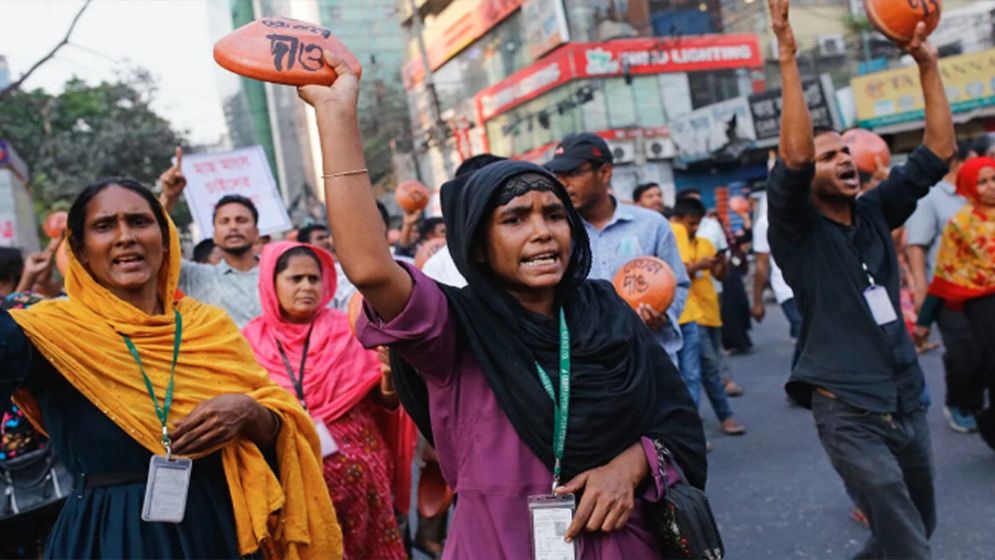
Bangla Press Desk: Bangladesh's garment sector is facing mounting pressure from a deepening energy crisis and rising production costs, threatening exports, employment and economic stability.
Prolonged power outages, surging fuel and raw material prices, and weakening global demand have forced factories to cut production, reduce orders and lay off thousands of workers, raising fresh concerns over the future of the Bangladesh’s garment sector also regarded as country's largest export-earning sector.
Although the war launched by the United States and Israel against Iran has, for now, come to an end, Bangladesh continues to grapple with a severe energy crisis. The country's ready-made garment (RMG) industry has been among the hardest hit.
Bangladesh’s garment sector, spinning, knitting, and dyeing factories consume vast amounts of natural gas and petrochemical products. Around 95 percent of the country's oil and gas imports come from the Gulf region, making the sector highly vulnerable to disruptions and price hikes.
Rising energy costs have placed enormous pressure on manufacturers. On 6 June, major garment exporter Al-Muslim Group laid off approximately 1,900 workers from its knitwear and denim factories in Dhaka.
More than four million people work in Bangladesh's garment industry, the majority of them women. They produce clothing for leading Western brands such as Zara and H&M. Nearly 40 million people—about one-quarter of the country's population—depend directly or indirectly on the sector.
Last year, Bangladesh’s garment sector accounted for 80 percent of Bangladesh's export earnings and contributed nearly 13 percent of the country's gross domestic product (GDP). Bangladesh is the world's second-largest garment exporter after China.
In May, the government imposed average daily power cuts of around two hours in and around Dhaka. In Chattogram, the country's second-largest city, outages have at times lasted up to eight hours a day. To keep production running, some factory owners have turned to diesel-powered generators. However, in a time-sensitive industry, even the 10–15 minutes required to start a generator can result in significant losses, according to Abil Bin Amin of the Bangladesh Ethical Trading Initiative.
Between February and May, garment production declined by nearly 30 percent. Delays in manufacturing, transportation disruptions, and weaker consumer demand in Western markets have prompted global brands to reduce their orders. Abdullah Hil Naqeeb, owner of a jacket manufacturing factory in Dhaka, said his orders have fallen by around 20 percent since the conflict began. According to Bangladesh's Ministry of Commerce, garment exports declined for the tenth consecutive month in May, falling by 8 percent compared with the same month a year earlier.
The increase in fuel prices has also driven up the cost of raw materials. Synthetic fibres, dyes, finishing chemicals, plastic buttons, and zippers all rely on petrochemical inputs, which together account for roughly 65 percent of the cost of producing a garment. Around 30 percent of garments manufactured in Bangladesh use polyester fibres and yarn made from naphtha, the price of which has surged by nearly one-third since the conflict began.
The garment industry is also highly fragmented. While a limited number of vertically integrated textile mills exist, most factories perform only a single stage of the production process, increasing transportation requirements. Abdullah Hil Naqeeb estimates that his transport costs have risen by around 30 percent.
In May, Bangladesh's central bank announced a Tk600 billion stimulus package for struggling businesses, with the largest share allocated to the garment sector. However, the loans carry an interest rate of around 7 percent, making them difficult to afford for companies already under severe financial strain.
As during the COVID-19 pandemic, international brands have been unwilling to pay higher prices despite rising production costs. The situation remains unchanged. Since January this year, an estimated 9,500 workers have lost their jobs across nearly 80 factories. There are growing concerns that labour unrest, similar to that witnessed in 2023 and 2024, could re-emerge.
On 7 June, Samli Khatun arrived for work at Cortex Apparels in Madhabpur only to find a layoff notice posted at the factory gate. "It will be very difficult for me to find another job," she said. "As a woman, my opportunities are limited. I may have no choice but to return to my village." Source: daily Sun
BP/TD
[Bangla Press is a global platform for free thought. It provides impartial news, analysis, and commentary for independent-minded individuals. Our goal is to bring about positive change, which is more important today than ever before.]
YOU MAY ALSO LIKE



Business
Government rolls out AVS for safer savings certificate transactions
6 days ago
by Bangla Press
Sangeet Academy