

Industry Struggles Amid Recession Pressure

Bangla Press
Published: 02 June 2026, 03:16 AM
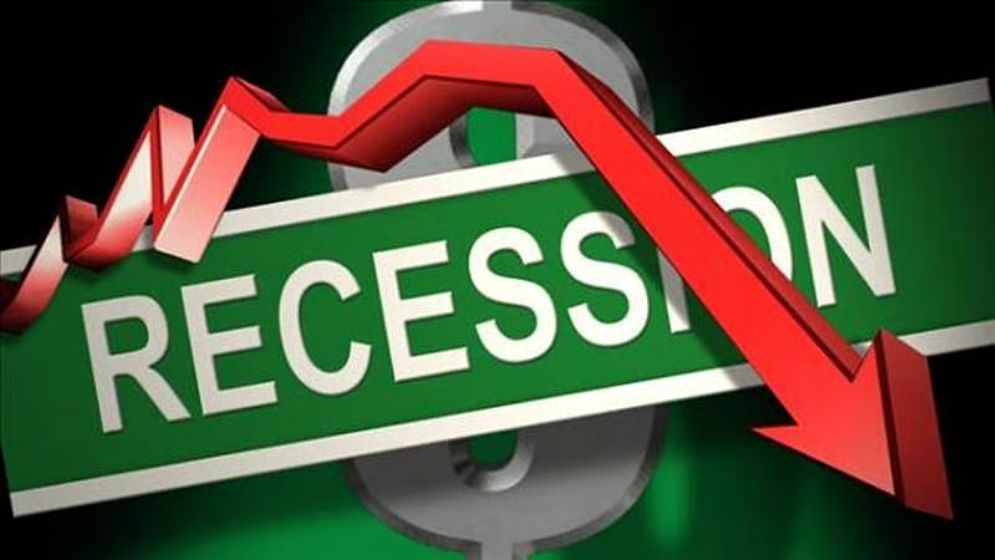
Bangla Press Desk: The private sector, the principal driving force of Bangladesh’s economy, is facing a deep crisis. Demand for credit in the recession-hit industrial sector has fallen to rock bottom. As a result, private sector credit growth has dropped to a historic low, investment has stagnated, and both production and employment are declining.
According to economists and business leaders, the private sector is struggling under a four-pronged assault: high interest rates, a prolonged energy crisis, a mountain of non-performing loans, and an investment-unfriendly tax regime. As the national budget approaches, the business community’s primary expectation is that the government will take effective measures to revive private investment.
According to the latest Bangladesh Bank data, private sector credit growth stood at just 4.72 percent at the end of March this year—the lowest level on record since the central bank began maintaining comparable data in 2003. The previous record low was registered in February this year. Credit growth has remained in single digits since August 2024, while demand for new loans has fallen sharply.
Banks are increasingly investing in government securities in search of safer returns. High borrowing costs, the energy crisis, and external pressures arising from instability in the Middle East have all contributed significantly to the decline in credit demand.
Economists and bankers warn that the crisis in the private sector is not merely economic but also social. Rising unemployment could fuel social instability, making the current situation a major warning sign for investment and economic recovery. They argue that high levels of defaulted loans, persistent energy shortages, elevated interest rates, exchange rate volatility and an investment-unfriendly tax structure have undermined business confidence. Consequently, banks have become more cautious in lending, while entrepreneurs are losing interest in making new investments. Given that Bangladesh’s economy is largely driven by the private sector, experts view this stagnation with growing concern.
Dr Mustafa K Mujeri, former Director General of the Bangladesh Institute of Development Studies (BIDS) and former Chief Economist of Bangladesh Bank, said: “The private sector is the main engine of economic development. If it becomes weak or falls into recession, overall economic growth is bound to slow. The government’s primary responsibility is to ensure an environment in which the private sector can contribute fully to the economy. It must create an investment-friendly climate and remove all barriers to business activity.”
He added: “What is concerning is that business leaders have repeatedly identified their problems and presented various demands to previous governments at meetings and seminars, yet no effective solutions have emerged. The upcoming budget must contain specific and practical measures to stimulate private investment. There is no alternative to encouraging private investors if the wheels of development are to start turning again. The budget should provide a clear roadmap for addressing the issues holding back the sector.”
Why Is Industry in Recession?
Industry insiders say that the prolonged downturn in the industrial sector over the past five years has been driven by an acute liquidity crisis in the banking sector, high interest rates, persistent inflation, shortages of foreign currency, and difficulties in importing raw materials.
Before the economy could fully recover from the shock of the Covid-19 pandemic in March 2020, a global economic slowdown emerged in 2022 and was later intensified by political changes and instability in 2024. This prolonged crisis has led to soaring dollar prices and severe foreign exchange shortages, significantly disrupting the opening of letters of credit (LCs) needed to import industrial raw materials and capital machinery.
Unable to import raw materials on time and facing chronic energy shortages, many entrepreneurs have been forced to cut production capacity by half. A recent report by the Metropolitan Chamber of Commerce and Industry (MCCI) stated that the decline in imports of capital machinery has effectively halted the establishment and expansion of new industries.
Business leaders and entrepreneurs argue that excessive non-performing loans and irregularities in the financial sector have created a severe liquidity crisis in banks, making it increasingly difficult to secure investment loans while also pushing up borrowing costs. Combined with acute shortages of gas and electricity, rising fuel prices and higher transport costs, production expenses have increased dramatically.
The resulting surge in product prices has further eroded consumers’ purchasing power, already weakened by inflation, negatively affecting overall sales. The record decline in credit flow to the private sector has generated deep concern among entrepreneurs, leaving the industrial sector trapped in a fragile and severe recession.
High Interest Rates Raising Production Costs
To meet the conditions attached to International Monetary Fund (IMF) loans, the government has repeatedly increased gas and electricity prices, raising production costs compared with competing countries. To contain inflation, Bangladesh Bank has maintained its policy rate at 10 percent for the past 18 months. The Governor has made it clear that this contractionary policy will remain in place until inflation falls to 7 percent.
As a result, commercial lending rates have risen to between 14 and 17 percent. Entrepreneurs increasingly believe that new investments are no longer profitable due to escalating financing and production costs.
Factories Closing Amid Energy Crisis
The prolonged shortage of gas and electricity continues to disrupt industrial production. Recent geopolitical tensions surrounding Iran have further increased the prices of fuel, fertiliser and other commodities.
Nearly 400 garment factories have reportedly closed over the past three years. Experts believe it will be difficult to restore a favourable investment climate unless the energy crisis is resolved.
Slump in New Investment and Capital Machinery Imports
Imports of capital machinery—a key indicator of industrial expansion and new investment—have declined sharply.
According to Bangladesh Bank, settlements of LCs for capital machinery imports during the first nine months (July–March) of fiscal year 2025–26 totalled US$1.38 billion, compared with US$1.54 billion during the same period of the previous fiscal year, representing a decline of 10.43 percent.
The broader import trend has also weakened. Total LC settlements during July–March amounted to US$50.43 billion, down from US$52.61 billion a year earlier, a decline of 4.14 percent.
Industry stakeholders view the sustained fall in capital machinery imports as a significant negative signal for Bangladesh’s long-term industrialisation prospects.
Stimulus Package and Signs of Hope
In an effort to revitalise the private sector, Bangladesh Bank has recently announced a Tk600 billion stimulus package. The central bank says the initiative could help reopen closed factories, increase investment and create more than 2.5 million jobs.
However, some economists caution that unless supply-side constraints and weaknesses in the banking sector are addressed, the stimulus could further fuel inflation.
The government is expected to focus on increasing revenue collection and maintaining economic stability. Business leaders want the tax base expanded and spending efficiency improved rather than imposing additional tax burdens.
Budget Expectations and Business Demands
The proposed budget for the coming fiscal year is expected to total approximately Tk9.38 trillion.
Business leaders say the budget must restore investor confidence, reduce production costs and ensure policy stability. Their key demands include lowering interest rates to reasonable levels, guaranteeing energy supplies, reducing tax-related harassment, simplifying the VAT system, creating special funds for SMEs, increasing export incentives, improving ports and infrastructure, and preparing for Bangladesh’s graduation from Least Developed Country (LDC) status.
In pre-budget discussions for fiscal year 2026–27, leading business organisations jointly called for lower business costs and modernisation of the tariff structure. The FBCCI, DCCI, MCCI and FICCI urged the National Board of Revenue (NBR) to gradually abolish Advance Tax (AT) and Advance VAT (AVAT) at the production stage to boost productivity and protect domestic industries. They also proposed simplifying VAT refunds through a one-stop service system.
To attract foreign investment, FICCI and MCCI emphasised rationalising corporate tax rates and reducing the disparity between listed and non-listed companies.
Business leaders have also stressed the importance of energy security and policy continuity, warning that high energy prices, dollar shortages and liquidity pressures in the banking sector—exacerbated by global geopolitical tensions and the Middle East crisis—are severely disrupting domestic industrial production.
Former DCCI President Ashraf Ahmed said: “The 2026–27 budget must shift its focus towards accelerating private sector development. To lift private credit growth from its current low single-digit level, the government should reduce deficit financing through commercial banks. This would help prevent further crowding out of private investment. For genuine economic growth, public resources should be redirected from administrative expenditure towards high-multiplier infrastructure investment.”
He also argued for expanding the tax net rather than increasing taxes on existing corporate taxpayers, saying: “Broadening the tax base without raising effective tax rates is the only rational path to achieving sustainable revenue growth.”
BTMA President Shawkat Aziz Russell said: “Domestic production is declining, and many factories are unable to utilise their full capacity. At the same time, some international orders are being shifted abroad, particularly to India. This threatens not only industry but also employment. Under these circumstances, preserving existing industries should be the highest priority. Alongside establishing new industries, we need accessible and effective financing to strengthen existing ones. The reality, however, is that the banking sector itself is under pressure. Rising non-performing loans and liquidity shortages have made many banks reluctant to provide fresh industrial loans. This budget should not merely be an expenditure plan; it should be a practical roadmap for protecting industry and employment. Without safeguarding existing industries, achieving economic recovery will be extremely difficult.”
Source: Kaler Kantho
[Bangla Press is a global platform for free thought. It provides impartial news, analysis, and commentary for independent-minded individuals. Our goal is to bring about positive change, which is more important today than ever before.]
YOU MAY ALSO LIKE


Business
Government rolls out AVS for safer savings certificate transactions
1 week ago
by Bangla Press
Sangeet Academy