Israel has kept dangerous weapons hidden for 66 years under the guise of a ‘textile factory’

Bangla Press
Published: 08 November 2026, 10:49 PM
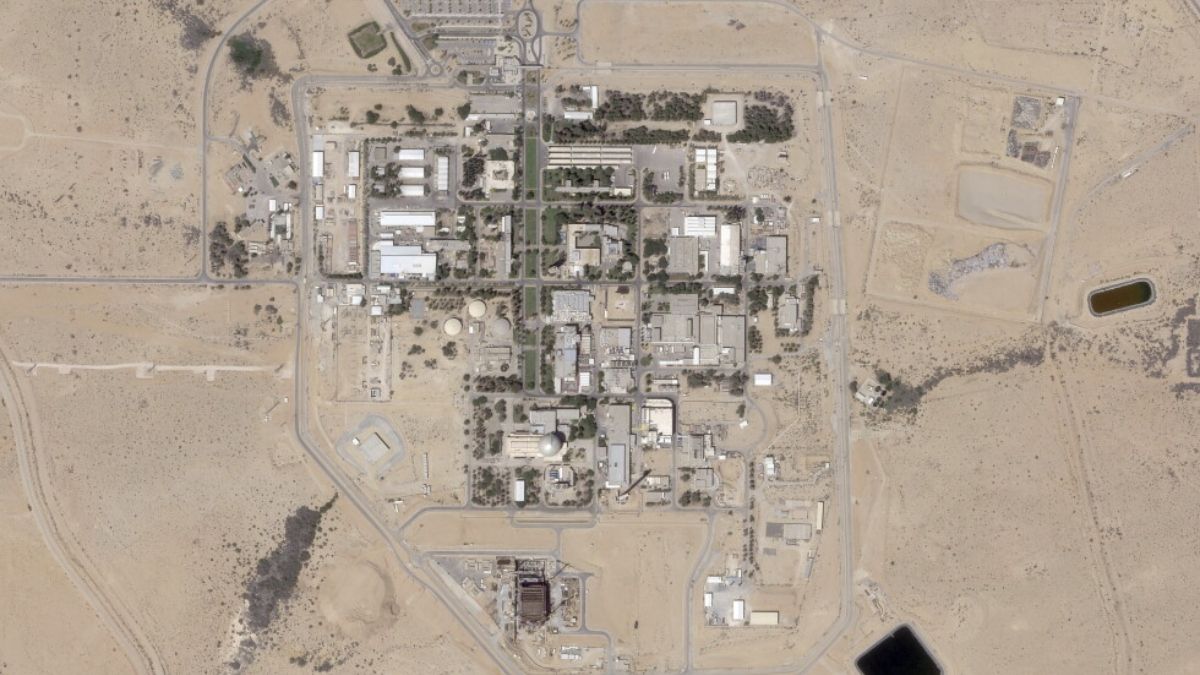
Bangla Press Desk: It was early 1960. A group of American diplomats was flying over the Negev Desert in an Israeli helicopter when they spotted a construction site about 20 miles west of the Dead Sea. Pointing toward it, a U.S. official asked what it was. Adi Cohen, an official from Israel’s Ministry of Finance, was present—as was Ogden Reid, the U.S. Ambassador to Israel. Cohen replied that it was a "textile factory."
In reality, it was the Dimona nuclear facility—the birthplace of the only nuclear arsenal in the Middle East. A few months later, U.S. intelligence uncovered the truth. Ambassador Reid requested a meeting with Cohen; this encounter is documented in a declassified U.S. diplomatic cable released by the National Security Archive. The cable notes that while Cohen initially downplayed the matter, it became clear he understood that the reactor could eventually be used for weapons production.
Five years later, another incident occurred: several hundred pounds of weapons-grade enriched uranium went missing from a uranium processing plant in Pennsylvania. Some U.S. intelligence officials suggested that the material had been diverted to Israel’s nuclear program—a claim also hinted at in a recent documentary.
Sixty Years of Evasion
Sixty years have passed since then, yet both the United States and Israel have remained silent on the issue. To this day, when Israeli officials wish to allude to their nuclear arsenal, they invoke Cohen’s original cover story. In a speech on July 14, Prime Minister Benjamin Netanyahu even referenced the "textile factory" meeting involving the head of the Atomic Energy Commission.
Israeli-American historian Avner Cohen describes this situation as the world’s "most open secret." The policy adopted by both nations is one of "ambiguity"—the existence of the bomb is hinted at, but never officially acknowledged. This arrangement allows the United States to publicly maintain that no other nation should be permitted to develop nuclear weapons. Israel, too, can avoid the question of how it acquired its bombs.
Are cracks beginning to show?
The current status quo may be shifting. Neighboring nations are advancing their own nuclear programs. The United States and Israel are engaged in a conflict with Iran—partly to prevent Tehran from obtaining a nuclear bomb. Yet, leading nuclear experts suggest that this effort may ultimately prove futile. Meanwhile, a proposed nuclear cooperation agreement between the United States and Saudi Arabia remains stalled in Congress.
Furthermore, U.S. support for Israel’s military ambitions is no longer as steadfast as it once was. On Tuesday, President Donald Trump remarked that the approximately $4 billion in annual military aid to Israel might come to an end, stating, "They don't need it anymore." For years, various Democratic lawmakers and human rights organizations have argued that it is time to stop the charade.
Democratic Representative Joaquin Castro, a member of the House Foreign Affairs and Intelligence Committees, told CNN that the U.S.’s ambiguous stance regarding Israel’s arsenal is an outdated policy—one that has become "reckless and dangerous." He argues that while the United States stands firmly by Israel, it remains unaware of where Israel’s "red lines" lie concerning the use of nuclear weapons. Moreover, there is no clear plan—or at least none being disclosed—for how to respond should such weapons be deployed or if nuclear facilities were to come under attack. He views this as a significant risk.
What happens when the mask falls?
Should the veil of denial be lifted, questions will inevitably arise regarding the origins of Israel’s nuclear technology, along with the truth about the long-standing secrecy surrounding it. A Hebrew-language television documentary, *The Atom and Me*, aired in 2024; it featured an interview with a former head of an Israeli intelligence agency—an interview released only after his passing. That agency’s mandate included supporting the nation’s weapons program. According to the documentary, a clandestine underground facility existed beneath Dimona. Plutonium suitable for bomb-making was produced there. Before the arrival of American inspectors, the Israelis would seal off the facility by erecting walls in front of the elevators; consequently, the inspectors never discovered it.
Greater transparency would also undermine American credibility, given that the U.S. actively discourages other nations from joining the "nuclear club." Furthermore, countries found to be pursuing nuclear weapons could face sanctions and restrictions on arms purchases.
A spokesperson for the U.S. State Department stated, "It is our long-standing policy not to comment publicly on reports regarding specific platforms or locations." The White House did not respond to a request for comment. The Israeli Embassy in Washington referred CNN’s inquiry to the Prime Minister’s Office, from which no response was received.
Matthew Kroenig, a nuclear strategist and professor of political science at Georgetown University, issued a warning: "If Israel were to come out and openly declare itself a nuclear power, it could increase pressure on other nations in the region to follow suit. An unchecked nuclear arms race in the Middle East would be detrimental to U.S. policy."
Rubio’s Candid Admission
During an open congressional hearing in June, Castro pressed Secretary of State Marco Rubio on this issue. Rubio is the second U.S. official—following Henry Kissinger—to hold the dual roles of Secretary of State and National Security Advisor. Never before has a U.S. diplomat spoken so openly on this subject.
Rubio remarked, "I think most countries around the world believe they possess them. Yet, neither we nor they have ever publicly acknowledged it. For various reasons—as a matter of our own foreign policy—we simply do not discuss it."
The Origins of the Secrecy
Experts explained to CNN that this policy of secrecy stemmed from the exigencies of the Cold War. Both sides feared that...
[Bangla Press is a global platform for free thought. It provides impartial news, analysis, and commentary for independent-minded individuals. Our goal is to bring about positive change, which is more important today than ever before.]
YOU MAY ALSO LIKE
International
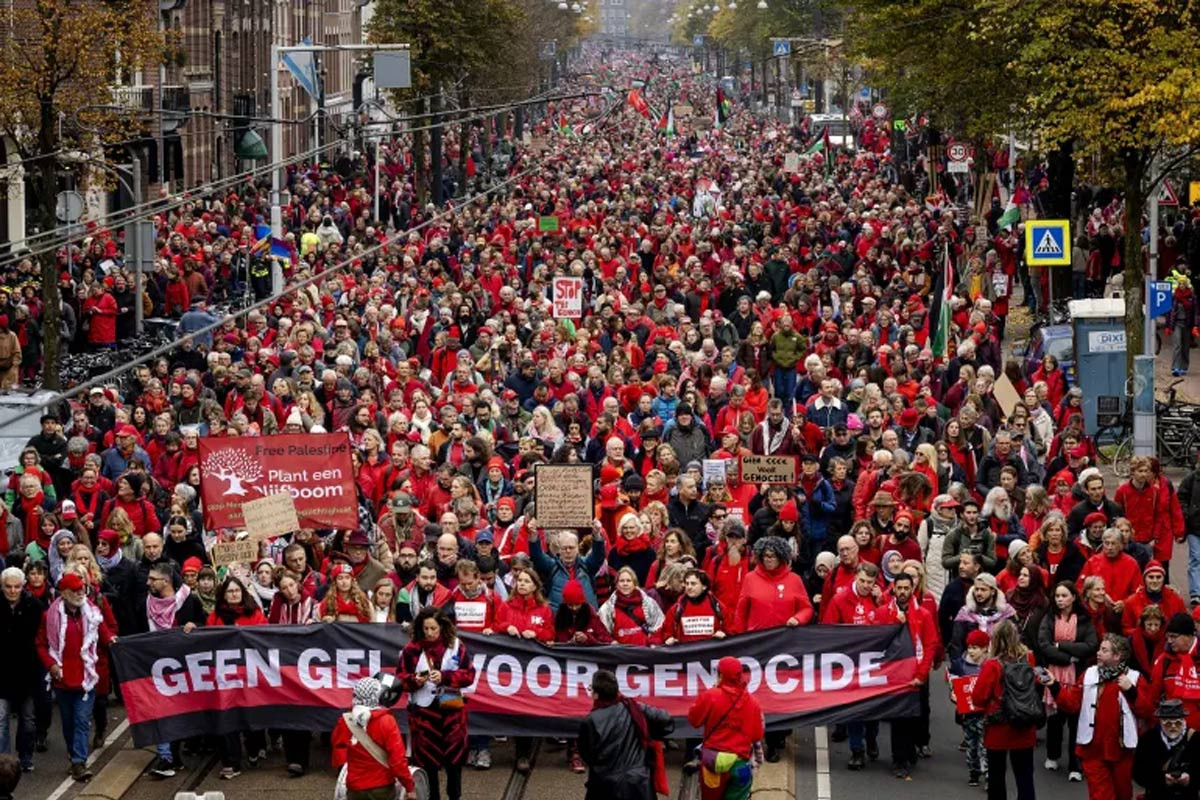
Hundreds of thousands protest against Israel in the Netherlands
6 hours ago
by Bangla Press

International
Netanyahu’s downfall or a new election: 5 scenarios facing Israel
14 hours ago
by Bangla Press
International
Trump announces launch of ‘Iron Gate’ operation to put pressure on Iran
14 hours ago
by Bangla Press
International
Israel has kept its possession of nuclear weapons a secret, and the United States has also failed to prevent this.
14 hours ago
by Bangla Press
International
Maduro is reading the Quran and the Bible in prison, and is also meeting with members of the clergy.
14 hours ago
by Bangla Press
Sangeet Academy