

Israel has kept its possession of nuclear weapons a secret, and the United States has also failed to prevent this.

Bangla Press
Published: 08 November 2026, 10:57 PM
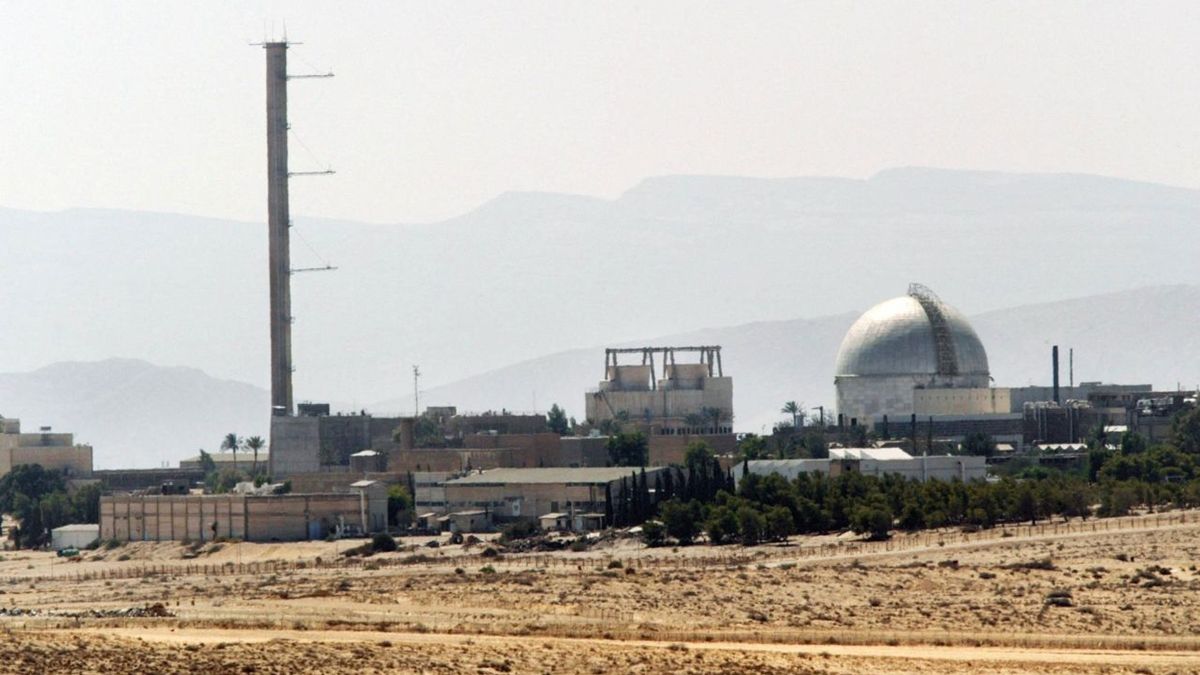
Bangla Press Desk: In the early 1960s, American diplomats were traveling in an Israeli helicopter when one of them noticed construction work taking place in the Negev Desert, about 20 miles west of the Dead Sea. The U.S. official asked Adi Cohen, an official from Israel’s Ministry of Finance, what it was.
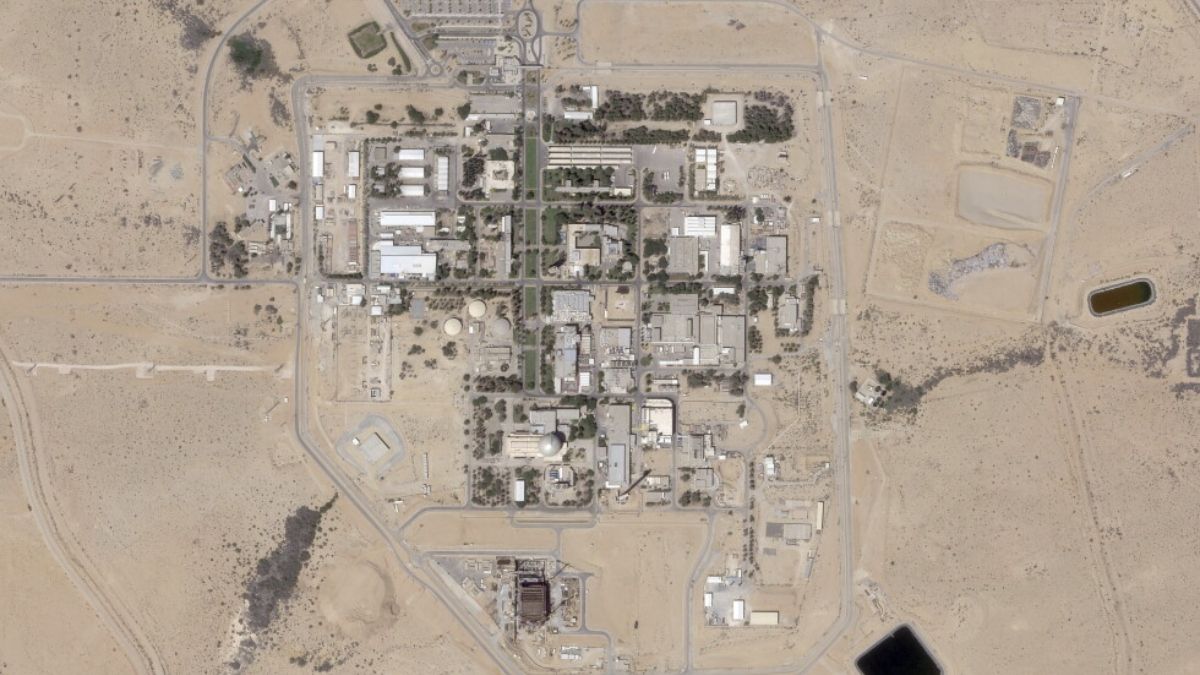
Cohen told Ogden Reid, the then-U.S. Ambassador to Israel, that it was a "textile factory." However, historical records reveal that the facility the American officials saw from the helicopter was actually the Dimona nuclear complex—known as the only nuclear arsenal in the Middle East.
Five years later, U.S. nuclear officials discovered that hundreds of pounds of weapons-grade enriched uranium had gone missing from a uranium plant in Pennsylvania. According to some U.S. intelligence sources and a recent documentary, this uranium had been diverted for use in Israel’s nuclear program.
For the past 60 years, both the United States and Israel have maintained a veil of secrecy over this issue; neither side has ever officially acknowledged the existence of Israel’s nuclear weapons.
As described by Israeli-American historian Avner Cohen, this has, over time, become the world’s "least-kept secret." The policy adopted by the U.S. and Israel has effectively created a state of ambiguity—while there have been frequent hints regarding Israel’s nuclear arsenal, it has never been officially confirmed.
This policy has served a dual purpose: it has enabled the United States to take action against other nations seeking to acquire nuclear weapons, while simultaneously shielding it from having to answer questions about how Israel itself obtained such weapons. Matthew Kroenig, a professor of political science at Georgetown University and a nuclear strategist, told CNN, "If Israel were to publicly declare itself a nuclear-armed state, it would increase pressure on other countries in the region to follow suit. An unchecked nuclear arms race in the Middle East would not be in the interest of U.S. policy."
Some experts explained to CNN that this policy of secrecy dates back to the Cold War era. The United States and Israel feared that an open admission could prompt Arab nations—backed by the Soviet Union—to launch their own nuclear weapons programs. Meanwhile, Israel worried that declaring itself a nuclear-armed state would lead to adverse diplomatic consequences.
Henry Kissinger visited Tel Aviv the same year that the disappearance of uranium from Pennsylvania was first discovered. He subsequently briefed senior officials at the U.S. Embassy on his discussions with the Israelis.
According to a memo containing a summary of these conversations—held in the National Security Archive—Kissinger was "firmly convinced that Israel had already initiated a nuclear weapons program," an effort that President John F. Kennedy had previously sought to halt.
In July 1969, Kissinger sent a memo to President Richard Nixon. An accompanying report concluded that Israel’s acquisition of nuclear weapons would "significantly increase the risk that nuclear weapons might be used in a fit of rage." In response, President Nixon threatened to cut off arms supplies to Israel.
However, Kissinger realized that even with the threat to halt arms shipments, it was likely no longer possible for the United States to stop Israel.
Furthermore, cutting off arms supplies to Israel while the nuclear program remained a secret risked provoking the U.S. Congress and triggering a crisis in American domestic politics. Furthermore, bringing Israel’s nuclear weapons program into the open—even as a means to exert diplomatic pressure—could have led the Soviet Union and Arab nations to accuse the United States of collusion.
As a solution to this dilemma, the United States opted for a policy of maintaining ambiguity regarding the matter. Meanwhile, Israel refused to sign the Treaty on the Non-Proliferation of Nuclear Weapons (NPT).
In his memo, Kissinger wrote, “What we essentially want is to ensure that the fact of Israel’s possession of nuclear weapons does not become an internationally established reality.”
However, in 1986, all international doubts on the subject were dispelled. That year, Mordechai Vanunu, a former reactor technician at the Dimona facility, revealed detailed information about Israel’s nuclear program. He also provided the British newspaper *The Sunday Times* with photographs of the clandestine facility.
[Bangla Press is a global platform for free thought. It provides impartial news, analysis, and commentary for independent-minded individuals. Our goal is to bring about positive change, which is more important today than ever before.]
YOU MAY ALSO LIKE

International
Hundreds of thousands protest against Israel in the Netherlands
5 hours ago
by Bangla Press

International
Netanyahu’s downfall or a new election: 5 scenarios facing Israel
13 hours ago
by Bangla Press
International
Trump announces launch of ‘Iron Gate’ operation to put pressure on Iran
13 hours ago
by Bangla Press
International
Maduro is reading the Quran and the Bible in prison, and is also meeting with members of the clergy.
13 hours ago
by Bangla Press
International
Israel has kept dangerous weapons hidden for 66 years under the guise of a ‘textile factory’
13 hours ago
by Bangla Press
Sangeet Academy