

Let rising gas prices be the spark of politics

Bangla Press
Published: 13 January 2026, 05:47 PM
Chhabed Sathee
In U.S politics, many issues come and go immigration, war, taxes, health care, unemployment. But there is one issue that strikes almost every voter directly in the nerves the price of gasoline.
Whether in the White House briefing room or on the campaign trail, President Trump has recently been repeating the same message: “American voters are extremely sensitive to gas prices.” In his words, people may tolerate many things, but when they stand at the pump and see prices rising, frustration builds and that anger is ultimately expressed at the ballot box.
This is not a new truth. In the United States, cars are not a luxury; they are a necessity. Going to work, taking children to school, grocery shopping, even weekend outings all depend on fuel. As a result, gas prices are directly tied to the cost of daily life. When prices rise, people don’t just pay more they feel uncertain about the future, anxious about the economy, and that anxiety inevitably spills into politics.
Political history shows that high fuel prices have cracked the popularity of many presidents. From the oil shocks of the 1970s to recent price spikes, voters have repeatedly placed pressure on those in power. Trump understands this reality well. That is why he openly acknowledges that voters do not want arguments, statistics, or diplomatic explanations when it comes to gas prices. They simply want to know whether the number at the pump is lower or higher.
.jpg)
Now, in the final stretch leading into the midterm elections, President Trump is pressuring U.S. oil companies to rush into Venezuela and boost production, hoping to increase global supply and push prices down. The goal is singular: lower gasoline prices and with them, win over voters. But multiple reports indicate that oil executives are far from enthusiastic. Their primary concern is corporate survival, not Trump’s political survival.
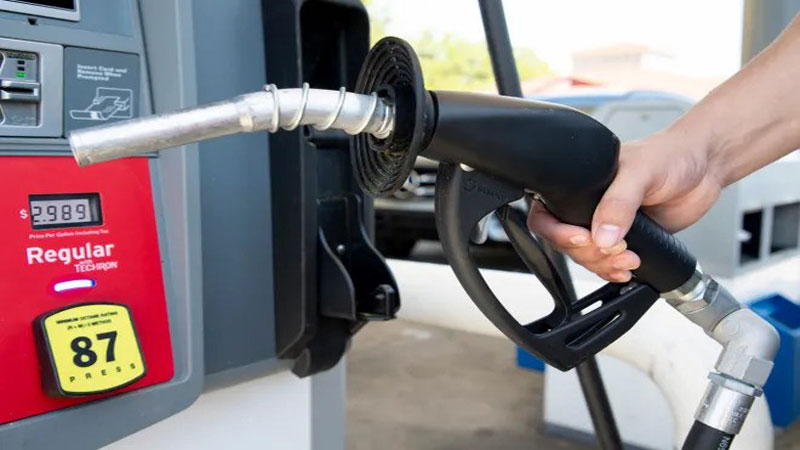
Gasoline prices have already fallen significantly since last summer. In June, the national average was $3.15 per gallon. Today it stands around $2.77 and even lower in some states. Trump knows voters are acutely sensitive to fuel prices. When prices rise, they punish politicians at the ballot box. But there is far less evidence that they reward leaders when prices fall.
Still, Trump is unwilling to take chances. It is becoming increasingly clear that his so-called 'law-enforcement operation' in Venezuela is focused less on drug trafficking and more on oil. He wants Venezuela to rapidly ramp up production to expand global supply and bring prices down potentially also easing inflation.
Trump has publicly stated that he wants crude oil at $50 a barrel. The problem is that this price sits well below the break-even point for most U.S. oil companies. Currently, West Texas Intermediate crude trades around $59 a barrel. Last June, it was about $73.80. Generally, companies operate comfortably above $70 a barrel. When prices dip below $60, financial pressure mounts.
Some older wells can operate at lower costs. But if prices remain depressed for long, production will not grow rigs will shut down.
As Fortune magazine notes, 'Energy analysts see $60 per barrel as the threshold at which producers begin to scale back activity and ultimately cut production.' Raymond James energy chief Marshall Adkins put it bluntly: At $60, the U.S. is going to slow down… but it won’t happen overnight.'
This does not mean oil prices can only fall they can rise too. Oil is among the most volatile commodities in the world. Weather events, global conflicts, economic shifts and political decisions all shape supply and prices worldwide.
Remember the COVID-19 pandemic. Lockdowns crushed travel, demand collapsed, stockpiles grew and prices plunged. By April 2020, oil had fallen to about $17 a barrel. Companies shut wells. A year later, prices rebounded above $60 and climbed higher, as producers kept output limited. Even when President Joe Biden urged companies to drill more, they resisted, knowing political pressure would later swing back toward climate restrictions.
Venezuela poses even greater risks. Politically, it is unstable and dangerous. Trump has left Maduro’s vice president and armed 'colectivo' groups in power. The U.S. government is urging its own citizens to leave the country. No responsible CEO would deploy a large workforce into such an environment.
The economic obstacles are equally severe. Oil executives know they would need to invest tens of billions of dollars over many years to rebuild infrastructure devastated under Hugo Chávez and Nicolás Maduro’s nationalist-socialist policies.
Even if rapid production increases were possible which they are not greater global supply would push prices lower and could keep them low for a long time. Trump’s pitch effectively translates to: spend more, earn less.
That is why ExxonMobil CEO Darren Woods has said Venezuela is not 'investable' without major legal and commercial reforms.
After Woods’ remark, Trump suggested excluding ExxonMobil from any Venezuela deal which would likely be a favor, not a punishment.
Trump claims companies are eager to invest $100 billion in Venezuela. Few believe that. In short, he wants oil companies to lose money so he can win an election. That is unlikely to happen certainly not before November.
This is why fuel has moved to the center of Trump’s rhetoric and strategy. He knows that for many voters, gas prices are more 'real' than the border, the courts, or foreign policy because they are visible every day, felt in every paycheck, and embedded in daily stress.
But the fundamental problem remains: energy markets are not controlled by any one country. Wars, global demand, weather, and production decisions all shape prices. No president can permanently command them. Still, in politics, perception often outweighs reality. If people believe the government cannot or will not lower prices, punishment follows at the ballot box.
Trump’s words are therefore more than rhetoric they are a confession about American voter psychology. Gas prices are not just an economic metric; they have become a symbol of governmental competence.
That is why so many wars may begin abroad but so many governments weaken at the neighborhood gas station.
(*This report is produced by Bangla Press. Republishing our content, images, or broadcasts in any other media outlet without permission is strictly prohibited.)
BP/SM
Chhabed Sathee: U.S based writer, journalist and American political analyst. Editor Bangla Press.
BP/SM
[Bangla Press is a global platform for free thought. It provides impartial news, analysis, and commentary for independent-minded individuals. Our goal is to bring about positive change, which is more important today than ever before.]
YOU MAY ALSO LIKE



Column
Twenty-Six Years Alongside FOBANA Through Its Joys and Challenges
2 months ago
by Bangla Press

Column
FOBANA's Historic Legacy Faces Uncertain Future Amid Growing Divisions
2 months ago
by Bangla Press

Column
Government is buying your widely scattered data without a warrant
6 months ago
by Bangla Press
Sangeet Academy