

New rules for charging battery-operated rickshaws; non-compliance will lead to penalties.

Bangla Press
Published: 29 October 2026, 12:51 PM
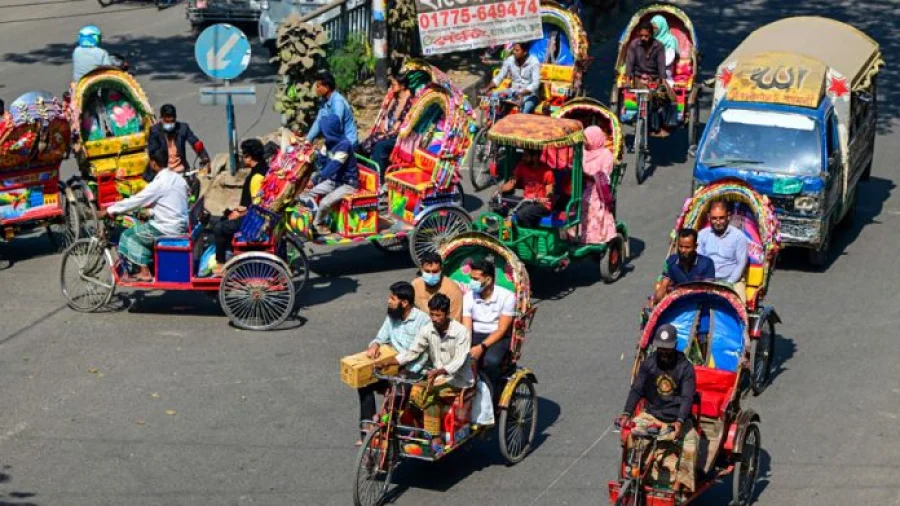
BanglaPress Desk: The government has introduced new regulations regarding the charging of batteries for battery-operated rickshaws (e-rickshaws) within city corporation areas. Under these new rules, batteries must be charged only at designated charging points or garages that have received official authorization and hold a license from the respective city corporation. Charging batteries using electricity obtained illegally will be subject to punitive action under existing laws.
These provisions are included in the "Regulations for the Operation of Three-Wheeled, Low-Speed Battery-Operated Rickshaws (E-rickshaws) in City Corporation Areas, 2026," issued by the Local Government Division on Thursday (October 29).
According to the regulations, the relevant authorities—in consultation with the traffic department, local electricity distribution companies, and other stakeholders—will take steps to establish authorized charging stations, garages, and battery-swapping centers. Such infrastructure may be developed through public-private partnerships or by the private sector. Official government approval must be obtained for the establishment of any charging station.
The regulations emphasize the increased use of renewable energy—specifically solar power—within the charging infrastructure. It is mandated that charging stations or garages must incorporate provisions for the use of solar energy. Efforts will be made to ensure that, over time, battery charging takes place exclusively at legally registered charging stations.
To facilitate this, the regulations allow for the integration of solar power with the national electricity grid through a "net metering" system. This enables the supply of solar-generated electricity to the grid during the day, while allowing for the use of grid electricity at night to charge the batteries.
The regulations also mandate the designation of an adequate number of parking areas in each ward or other suitable locations. Information regarding authorized charging stations and garages must be recorded in the e-rickshaw’s "blue book" (registration document).
Furthermore, the new regulations provide guidelines for the management of old or defunct batteries. To prevent environmental pollution, such batteries must not be discarded in open spaces, on the ground, in water bodies, or alongside general waste, nor should they be incinerated. When selling a new battery, a battery retailer must collect the old battery from the customer and ensure it is sent to an authorized recycling facility.
Furthermore, battery dismantling or smelting operations cannot be conducted without clearance from the Department of Environment. Used batteries must be handed over to authorized agents, dealers, or collectors.
The new regulations aim to establish control over the charging and parking of e-rickshaws, as well as the management of used batteries, within city corporation areas.
BP/KJ
[Bangla Press is a global platform for free thought. It provides impartial news, analysis, and commentary for independent-minded individuals. Our goal is to bring about positive change, which is more important today than ever before.]
YOU MAY ALSO LIKE





Bangladesh
Cyclone ‘Arnab’ also impacts Bangladesh; thundershowers forecast for Dhaka and all other divisions.
1 day ago
by Bangla Press
Sangeet Academy