
Protests in 220 locations across France; 70,000 security personnel deployed

Bangla Press
Published: 05 November 2026, 11:08 AM
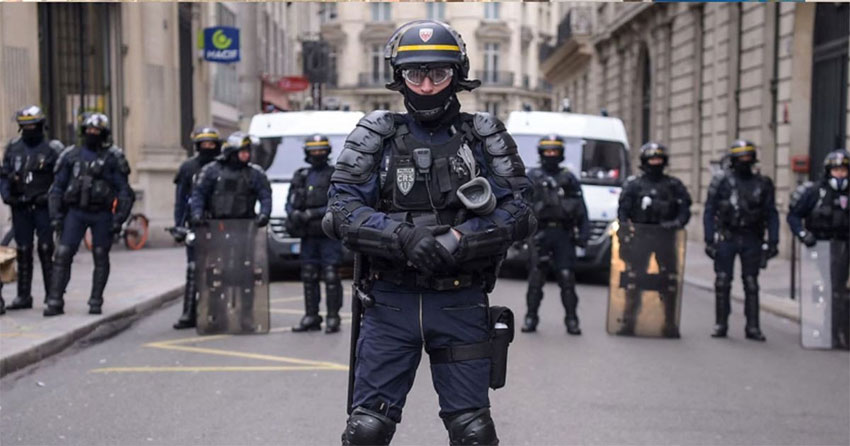
BanglaPress Desk: Protests have spread across France, fueled by rising living costs, low wages, and concerns over the quality of public services. The movement, which has been ongoing for several weeks, involves workers, students, and members of various labor unions. To maintain control, the government has deployed 70,000 police and security personnel across the country to oversee 220 separate protest events. There are concerns that the unrest could expand further and potentially spread to other European nations.
This information was reported by Reuters on Thursday. According to the report, the movement began in late September with student protests over funding shortages in the education sector and various issues within schools. It later evolved into a broader anti-government movement as grievances regarding the rising cost of living and the quality of public services were added to the mix. The unrest has also been marked by some of the most severe street violence and looting seen in the country in recent years.
During a nationwide protest on October 17, security forces struggled to contain the situation, as clashes and looting broke out in several locations. In an effort to prevent a recurrence, the government has now strengthened preemptive security measures.
Meanwhile, the government is considering an increase in the minimum wage to address the protesters' concerns about the cost of living. Following a 35-euro increase last June, the current monthly net minimum wage in France stands at 1,478 euros. However, the CFDT—the country’s largest labor union—has demanded a monthly wage increase of at least 100 euros.
Facing pressure to keep the budget deficit under control, the government remains hesitant to take major steps in response to the protesters' demands. On the other hand, authorities have pledged to hire approximately 3,000 trained teachers to address the crisis in the education sector. Furthermore, the government has announced plans to reduce class sizes, increase the number of teachers and staff next year, and provide 4 billion euros in funding for school renovations.
Despite these promises, there are no signs that the movement is subsiding. Some protest groups, along with several labor unions, are preparing to hold fresh demonstrations this coming Saturday. Such protests have been taking place every week since October 17. Furthermore, several labor unions and housing rights organizations have called for demonstrations across Europe from November 20 to 22.
The ongoing unrest in France has also impacted the nation's economy. According to official statistics, consumer confidence in the country fell to its lowest level since June 2013 last October. Business confidence has similarly declined. Economic pressure is further intensifying due to rising fuel prices linked to the conflict involving Iran.
Meanwhile, the minority government is facing significant challenges in passing the 2027 budget. If a consensus cannot be reached within a divided parliament regarding austerity measures, there is a risk that the government could collapse under pressure from opposition parties. Beyond political instability, there is growing concern among investors regarding France's economic future. Last month, the yield on the country’s 10-year government bonds climbed to 5.14 percent—the highest level since 2002.
Similar discontent is visible not only in France but also in several other European nations. Last Saturday, thousands of people in major German cities protested, demanding improvements in the education sector and a reduction in the cost of living. In Frankfurt, some protesters engaged in looting. Last month in Italy, clashes broke out between protesters and police over the quality of public services and the rising cost of living. Additionally, movements addressing housing crises are currently underway in Spain and Portugal.
This unrest in France could also influence the upcoming presidential election. President Emmanuel Macron, who has been in power for nearly a decade, is set to step down ahead of the 2027 election. Public opinion polls indicate that, amidst this situation, the popularity of right-wing candidate Marine Le Pen is on the rise. Le Pen, who advocates for a hardline stance on law and order, has emerged as a frontrunner among potential successors.
On the other hand, support for left-wing leader Jean-Luc Mélenchon has also grown. He has garnered attention by backing the protesters' demands and criticizing the government's handling of the crisis. However, he has also faced criticism from the government for failing to explicitly condemn the acts of violence that occurred during the protests. Mélenchon asserts that Macron should either yield to the protesters' demands or resign.
Meanwhile, Édouard Philippe—a former prime minister under Macron and a center-right presidential candidate—is trailing both Le Pen and Mélenchon in opinion polls. Unless he can regain his popularity, he may struggle to secure a spot in the final round of the election next May. Consequently, the protests—sparked by concerns over the cost of living and crises in the education sector—have introduced new uncertainties into France’s economy and politics. Source: Reuters.
[Bangla Press is a global platform for free thought. It provides impartial news, analysis, and commentary for independent-minded individuals. Our goal is to bring about positive change, which is more important today than ever before.]
YOU MAY ALSO LIKE


International
Two major train accidents in one year; Spanish minister announces resignation
1 day ago
by Bangla Press

International
Deb Haaland, the first Indigenous woman to serve as a governor in the United States
1 day ago
by Bangla Press

International
What message did Mojtaba Khamenei send to the United States?
1 day ago
by Bangla Press

International
Democrats take control of the US Senate, ousting Republicans
1 day ago
by Bangla Press
Sangeet Academy