

UN Warns 1.5°C Warming Threshold Is Now Unavoidable

Bangla Press
Published: 05 September 2026, 11:19 AM
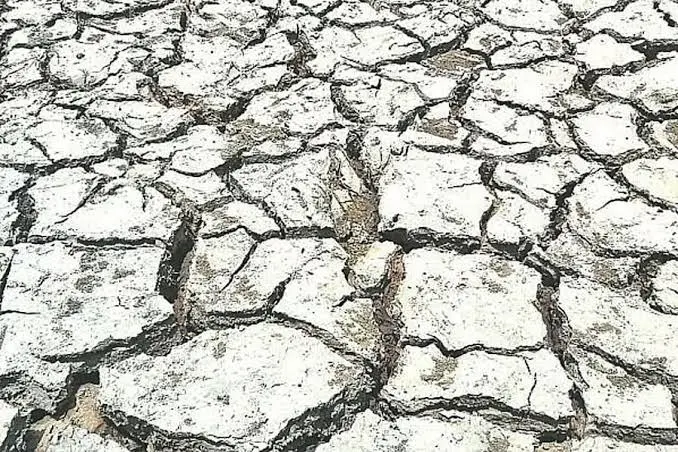
The world is now expected to breach the 1.5C global warming threshold within the next few years and remain above it for decades, according to a new United Nations report that says the focus must increasingly turn to limiting the scale and duration of the overshoot.
The report by the United Nations Environment Programme, released on Wednesday, says warming driven by the burning of coal, oil and gas will push global temperatures beyond the 1.5C limit set under the 2015 Paris Agreement.
Even under the most optimistic scenario, warming is now expected to peak at around 1.8C by mid-century, while current government policies could put the world on course for about 2.6C of warming by 2100.
“Humanity is speeding past the limit to avoid climate catastrophe,” UN Secretary-General António Guterres said.
UN officials and scientists stressed, however, that 1.5C remains the goal.
Rather than treating the threshold as a point beyond which further action no longer matters, they say countries must now work to limit how far temperatures rise above it and how long the overshoot lasts.
That would require faster cuts in fossil fuel use alongside technologies capable of removing carbon dioxide from the atmosphere.
“Let’s be very clear, the 1.5 target is still the goal. But now we need to approach it differently from above,” UNEP Executive Director Inger Andersen said.
The world is currently around 1.4C warmer than pre-industrial levels on a 20-year average.
Report co-author Richard Betts, a climate scientist at the University of Exeter, said temperatures were likely to cross 1.5C within the next few years and remain above the threshold for “many, many decades”.
“It’s a reality check. We have to live with this warmer world,” Betts said.
“But there’s still a lot we can do to limit warming.”
The report warns that every additional fraction of a degree will bring greater risks.
Joeri Rogelj of Imperial College London, another report co-author, said every five years of delay in cutting emissions would add at least 0.1C to peak warming.
Andrew Weaver, a climate scientist at the University of Victoria who was not involved in the report, cautioned against treating 1.5C as a definitive point of failure.
“Every tenth of a degree we avoid still means less damage,” he said.
What Overshoot Could Mean
During a prolonged overshoot, the report warns, more people could die or fall ill because of extreme weather, food production could decline, water shortages could worsen and ecosystems such as coral reefs could face further losses.
It also highlights the growing danger of climate “tipping points” that could trigger irreversible changes, including major ice-sheet loss in West Antarctica and Greenland, severe damage to the Amazon rainforest and disruption to Atlantic Ocean circulation.
“Some locations might become more or less uninsurable or even uninhabitable,” the report said.
Betts also linked the broader warning to recent extreme-weather disasters.
Referring to the deadly flooding in Nepal, he said the causes of individual events were complex but added: “Unfortunately we do expect to see more of such things and this is exactly why we need to limit peak warming.”
Elisabeth Gilmore, an associate professor of environmental engineering at Carleton University and a contributing author to the report, said Canada was warming at about twice the global average rate, with even faster warming in the Arctic.
“Every additional fraction is going to mean escalating risks that we are going to have to manage,” she said.
Can Temperatures Be Brought Back Down?
The report says restoring temperatures below 1.5C would require deep emissions cuts as well as large-scale carbon removal.
Tree planting alone could reduce warming by only around 0.1C, it said, meaning more ambitious carbon-removal methods would probably be needed.
Some scientists remain sceptical about how realistic that would be.
“We were unable to stop the runaway train of global emissions to avoid 1.5C of warming,” said Stanford University climate scientist Rob Jackson, who was not involved in the report.
“Now overshoot scenarios require us to stop the train quickly and to back it up. Is it our best hope? Absolutely. Is it likely? Absolutely not.”
Weaver described the report as one of the most sobering UN climate assessments he had read, marked by urgency and frustration, but not resignation.
[Bangla Press is a global platform for free thought. It provides impartial news, analysis, and commentary for independent-minded individuals. Our goal is to bring about positive change, which is more important today than ever before.]
YOU MAY ALSO LIKE
International
Washington Investigates Wedding Strike After Iran Hits US Targets
1 day ago
by Bangla Press
International
Iran Conflict Not a War, Vance Says, Declining to Predict Its End
1 day ago
by Bangla Press
Sangeet Academy