
Jamaat offers unconditional apology for past mistakes

Bangla Press
Published: 24 October 2025, 01:57 AM
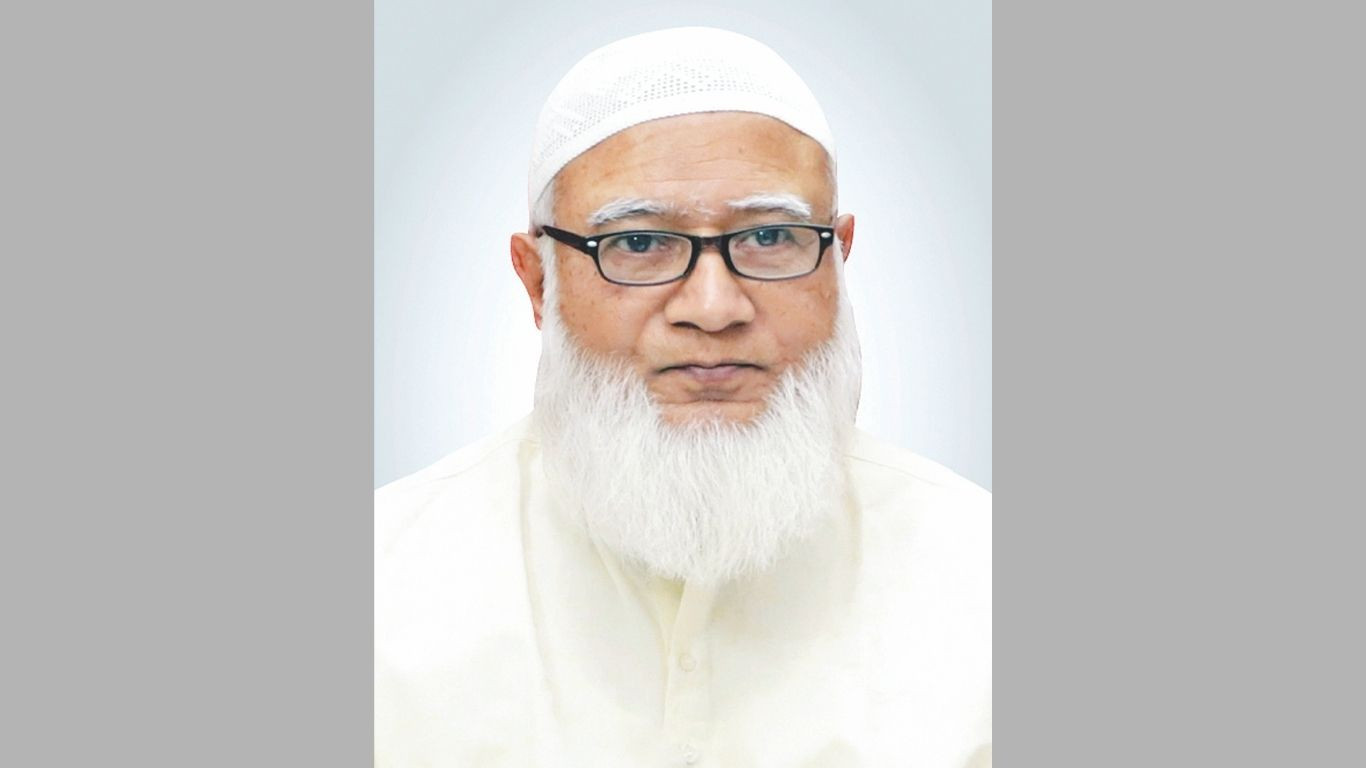
Bangla Press Desk: Bangladesh Jamaat-e-Islami Ameer Dr Shafiqur Rahman, now visiting New York of the US, has once again stated that his party offers unconditional apology for any mistakes committed from the Partition of 1947 to the present, including its controversial role in 1971.
Speaking to reporters in New York on Wednesday, he emphasised that the party does not claim to be above mistakes and is committed to acknowledging past wrongdoings while clarifying its current political stance and principles.
The Jamaat chief said, “A few days ago, when ATM Azharul Islam was released from jail, I said ‘not just for 1971, but from 1947 onwards, if anyone has suffered or been harmed in any way because of Jamaat-e-Islami, on behalf of all individuals and the organisation, I unconditionally ask for your forgiveness.’”
He said the Jamaat leadership should have respected the people’s aspirations for freedom of the country in 1971. “But I am not the right person to comment on why they did not do it as I was not present at that time.”
Shafiqur Rahman said, “How can I claim that we have made no mistakes to this day? We are human, and our organisation is also a human one. Out of a hundred decisions, 99 may be correct, but one can be wrong. If that one wrong decision causes harm to my nation, then why should I hesitate to offer an apology?” he said.
After the political changeover on 5 August last year, Jamaat sought unconditional forgiveness for the first time on 27 May this year after the release of Azharul Islam over war crimes.
Shafiqur Rahman acknowledged his party’s mistakes in 1971, saying Jamaat then felt that Pakistan needed to remain united. “Even then, many leaders of the Awami League were employed under the Pakistan government and received salaries.
In fact, several members of Awami League leaders’ families received rations and other benefits from the then Pakistan government,” he said.
He claimed that the Pakistan flags were flying in nearly 90% of places in Bangladesh until 14 December 1971. “Within the next two days, the flags were taken down, and the jobs were also stopped.”
“Until then, whoever worked in East Pakistan did so acknowledging Pakistan. Now you could say this was against popular expectation- the people wanted the rulers of Pakistan to leave and for Bangladesh to become independent. Why did not Jamaat respect this? That is a legitimate question. It would have been better if they had, it should have been done. I have no disagreement on this matter,” the Jamaat chief said.
He claimed that they offered apology at least three times- first by Prof Ghulam Azam, then by Maulana Matiur Rahman and finally he himself.
“Today, I publicly reiterate that from 1971 up to 22 October 2025, to anyone who has suffered or been hurt because of us, we unconditionally ask for forgiveness. Whether it is the entire nation or an individual, we seek their pardon. There is no difficulty doing so,” the Jamaat ameer said.
The discussion session was organised by the Coalition of Bangladeshi American Associations (COBA).
Replying to journalists’ questions, the Jamaat ameer said if they get the opportunity to govern the country, they will run it as Bangladesh. “It will not be like Afghanistan, Iran, Indonesia, Lebanon, or Pakistan.”
Asked about what will be their ties with India if Jamaat comes to power, he said, “A person can shift his or her place, but you cannot change your neighbours. We want to respect our neighbours. Likewise, we expect the same from them. This must be based on mutual respect.”
About Jamaat’s strained ties with its once ally BNP, Shafiqur Rahman said, “We are two separate parties. We were together for a long time for the sake of national necessity. Now the context has changed. They present their agenda to the people, we present ours. We do not target any party, we speak on principles. After the 5 August changeover, we met with allied organisations and emphasised responsible action, avoiding moves that could harm the nation.”
“We will fully support good actions from opposition seats, but will act if the nation is harmed. We initially communicate privately; if changes are not made, we will take to the streets. This is our policy. Speaking out is not about targeting names; in politics, criticism must be tolerated. This is the beauty of democracy- respecting others’ views and listening to their perspective is essential,” the Jamaat ameer concluded.
BP/SP
[Bangla Press is a global platform for free thought. It provides impartial news, analysis, and commentary for independent-minded individuals. Our goal is to bring about positive change, which is more important today than ever before.]
YOU MAY ALSO LIKE
Politics
Ensure there is no trace of fascism in your conduct—Rizvi to leaders and activists.
1 day ago
by Bangla Press
Politics
I haven't engaged in even a single taka's worth of corruption since taking the oath: Amir Hamza.
2 days ago
by Bangla Press
Sangeet Academy