
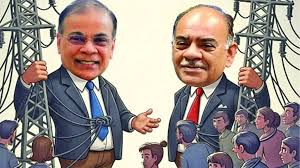
 Bangla Press Desk: Bangladesh’s power sector has become heavily dependent on Summit Group, leaving the country virtually hostage to its control. Under the autocratic Awami League government, the sector was made dependent and exposed to serious risks. To grant Summit Group unchecked dominance, the fallen regime jeopardised national interests, allowing the company to plunder the sector freely.
During Sheikh Hasina’s tenure, not only did the regime itself engage in looting, but it also cultivated a corrupt clique around the power industry. Being close and trusted by Sheikh Hasina, Summit Group informally became the central authority in power-sector decision-making. Decisions on who would receive quick rental projects and from whom electricity would be purchased were made by Summit. The state minister and secretaries of the power division primarily served to collect bribes, channel commissions abroad, and launder illicit funds. Policy decisions in the power sector were dictated by Summit.
Investigations revealed that Summit Group Chairman Muhammad Aziz Khan and his daughter Ayesha Aziz Khan were personally close to Sheikh Hasina and her son Sajeeb Wazed Joy. Although Aziz Khan held no government position, he received VVIP protocol upon arriving in Bangladesh and could meet the prime minister without an appointment. Joy frequently traveled to Singapore and stayed at Aziz Khan’s residence. Exploiting these personal ties, Summit Group allegedly looted the sector with impunity.
In 2010, taking advantage of the national power shortage, the government passed the Special Act on Quick Electricity and Energy Supply, allowing projects to be awarded without tender. The government then approved a series of expensive projects based on unrealistic power demand forecasts — many allegedly awarded on political grounds rather than necessity. Sheikh Hasina’s private industry and investment adviser Salman F Rahman, former MP Nahim Razzaq, and about two dozen other lawmakers secured contracts for solar and other projects. Summit, United Power, BanglaCAT, Mohammadi Group, Doreen, Baraka, Sinha and others built numerous power plants, many of which experts deemed unnecessary. These plants earned hundreds of crores in “capacity payments” despite producing little or no electricity.
Bangla Press Desk: Bangladesh’s power sector has become heavily dependent on Summit Group, leaving the country virtually hostage to its control. Under the autocratic Awami League government, the sector was made dependent and exposed to serious risks. To grant Summit Group unchecked dominance, the fallen regime jeopardised national interests, allowing the company to plunder the sector freely.
During Sheikh Hasina’s tenure, not only did the regime itself engage in looting, but it also cultivated a corrupt clique around the power industry. Being close and trusted by Sheikh Hasina, Summit Group informally became the central authority in power-sector decision-making. Decisions on who would receive quick rental projects and from whom electricity would be purchased were made by Summit. The state minister and secretaries of the power division primarily served to collect bribes, channel commissions abroad, and launder illicit funds. Policy decisions in the power sector were dictated by Summit.
Investigations revealed that Summit Group Chairman Muhammad Aziz Khan and his daughter Ayesha Aziz Khan were personally close to Sheikh Hasina and her son Sajeeb Wazed Joy. Although Aziz Khan held no government position, he received VVIP protocol upon arriving in Bangladesh and could meet the prime minister without an appointment. Joy frequently traveled to Singapore and stayed at Aziz Khan’s residence. Exploiting these personal ties, Summit Group allegedly looted the sector with impunity.
In 2010, taking advantage of the national power shortage, the government passed the Special Act on Quick Electricity and Energy Supply, allowing projects to be awarded without tender. The government then approved a series of expensive projects based on unrealistic power demand forecasts — many allegedly awarded on political grounds rather than necessity. Sheikh Hasina’s private industry and investment adviser Salman F Rahman, former MP Nahim Razzaq, and about two dozen other lawmakers secured contracts for solar and other projects. Summit, United Power, BanglaCAT, Mohammadi Group, Doreen, Baraka, Sinha and others built numerous power plants, many of which experts deemed unnecessary. These plants earned hundreds of crores in “capacity payments” despite producing little or no electricity.
Mafia-style looting in the power sector

Banglapress
Published: 23 September 2025, 10:26 AM
 Bangla Press Desk: Bangladesh’s power sector has become heavily dependent on Summit Group, leaving the country virtually hostage to its control. Under the autocratic Awami League government, the sector was made dependent and exposed to serious risks. To grant Summit Group unchecked dominance, the fallen regime jeopardised national interests, allowing the company to plunder the sector freely.
During Sheikh Hasina’s tenure, not only did the regime itself engage in looting, but it also cultivated a corrupt clique around the power industry. Being close and trusted by Sheikh Hasina, Summit Group informally became the central authority in power-sector decision-making. Decisions on who would receive quick rental projects and from whom electricity would be purchased were made by Summit. The state minister and secretaries of the power division primarily served to collect bribes, channel commissions abroad, and launder illicit funds. Policy decisions in the power sector were dictated by Summit.
Investigations revealed that Summit Group Chairman Muhammad Aziz Khan and his daughter Ayesha Aziz Khan were personally close to Sheikh Hasina and her son Sajeeb Wazed Joy. Although Aziz Khan held no government position, he received VVIP protocol upon arriving in Bangladesh and could meet the prime minister without an appointment. Joy frequently traveled to Singapore and stayed at Aziz Khan’s residence. Exploiting these personal ties, Summit Group allegedly looted the sector with impunity.
In 2010, taking advantage of the national power shortage, the government passed the Special Act on Quick Electricity and Energy Supply, allowing projects to be awarded without tender. The government then approved a series of expensive projects based on unrealistic power demand forecasts — many allegedly awarded on political grounds rather than necessity. Sheikh Hasina’s private industry and investment adviser Salman F Rahman, former MP Nahim Razzaq, and about two dozen other lawmakers secured contracts for solar and other projects. Summit, United Power, BanglaCAT, Mohammadi Group, Doreen, Baraka, Sinha and others built numerous power plants, many of which experts deemed unnecessary. These plants earned hundreds of crores in “capacity payments” despite producing little or no electricity.
Bangla Press Desk: Bangladesh’s power sector has become heavily dependent on Summit Group, leaving the country virtually hostage to its control. Under the autocratic Awami League government, the sector was made dependent and exposed to serious risks. To grant Summit Group unchecked dominance, the fallen regime jeopardised national interests, allowing the company to plunder the sector freely.
During Sheikh Hasina’s tenure, not only did the regime itself engage in looting, but it also cultivated a corrupt clique around the power industry. Being close and trusted by Sheikh Hasina, Summit Group informally became the central authority in power-sector decision-making. Decisions on who would receive quick rental projects and from whom electricity would be purchased were made by Summit. The state minister and secretaries of the power division primarily served to collect bribes, channel commissions abroad, and launder illicit funds. Policy decisions in the power sector were dictated by Summit.
Investigations revealed that Summit Group Chairman Muhammad Aziz Khan and his daughter Ayesha Aziz Khan were personally close to Sheikh Hasina and her son Sajeeb Wazed Joy. Although Aziz Khan held no government position, he received VVIP protocol upon arriving in Bangladesh and could meet the prime minister without an appointment. Joy frequently traveled to Singapore and stayed at Aziz Khan’s residence. Exploiting these personal ties, Summit Group allegedly looted the sector with impunity.
In 2010, taking advantage of the national power shortage, the government passed the Special Act on Quick Electricity and Energy Supply, allowing projects to be awarded without tender. The government then approved a series of expensive projects based on unrealistic power demand forecasts — many allegedly awarded on political grounds rather than necessity. Sheikh Hasina’s private industry and investment adviser Salman F Rahman, former MP Nahim Razzaq, and about two dozen other lawmakers secured contracts for solar and other projects. Summit, United Power, BanglaCAT, Mohammadi Group, Doreen, Baraka, Sinha and others built numerous power plants, many of which experts deemed unnecessary. These plants earned hundreds of crores in “capacity payments” despite producing little or no electricity.
[Bangla Press is a global platform for free thought. It provides impartial news, analysis, and commentary for independent-minded individuals. Our goal is to bring about positive change, which is more important today than ever before.]
YOU MAY ALSO LIKE
Bangladesh
The Constitution is obligated to ensure the security of followers of all religions: Home Minister
13 hours ago
by Bangla Press
.jpg)
Bangladesh
Bangladesh to seek the return of Sheikh Hasina during talks with India
13 hours ago
by Bangla Press
.jpg)
.jpg)
Bangladesh
Celebrate the festival with peace of mind and in safety: Prime Minister
13 hours ago
by Bangla Press
.jpg)
Bangladesh
107 flights canceled on Dhaka-Saudi route, more than 16 thousand passengers suffer
13 hours ago
by Bangla Press
Bangladesh
Saleh Shibli claims 410 pieces of misinformation were spread against the Prime Minister over 9 months.
14 hours ago
by Bangla Press
Sangeet Academy