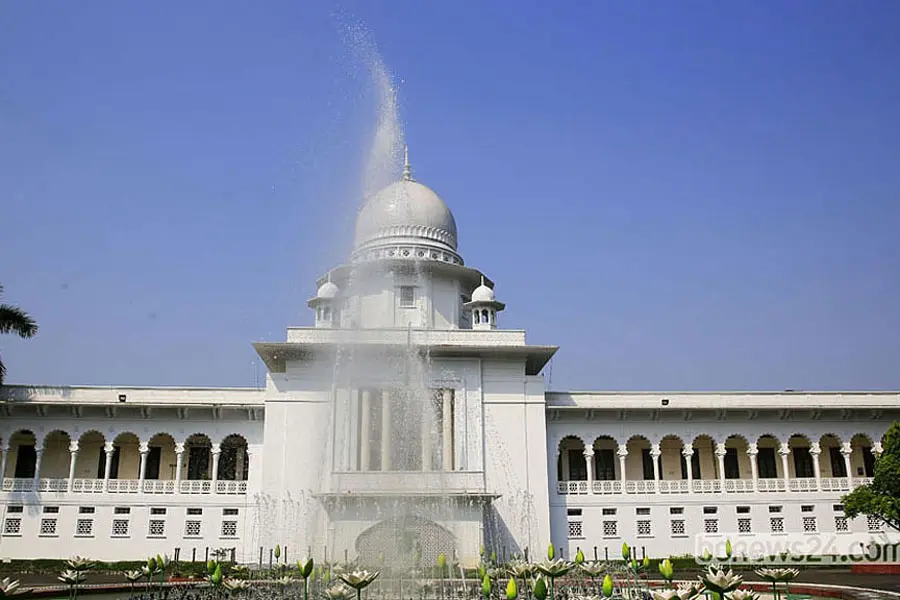
Bangla Press Desk: The backlog of cases in Bangladesh's Supreme Court has started to fall this year, with the Appellate and High Court divisions disposing of nearly 99,000 cases in the first eight months.
According to data from the apex court's public relations department, 700,800 cases were pending at the beginning of the year. By Aug 31, the number had fallen to 685,830.
During the eight-month period, 83,746 new cases were filed, while 98,732 were disposed of.
The Appellate Division began the year with 41,551 pending cases.
It received 9,139 new cases during the first eight months and disposed of 11,136, bringing the number of pending cases down to 39,554 by Aug 31.
The division disposed of an average of about 84 cases a day over 132 working days during the period, according to the public relations department.
It had previously disposed of an average of 6,096 cases a year between 2021 and 2025.
The 11,136 cases cleared in the first eight months of this year are therefore substantially higher than its annual average over the previous five years.
The High Court Division had 659,256 pending cases at the beginning of the year.
It received 74,607 new cases during the first eight months and disposed of 87,596, leaving 646,276 pending by Aug 31.
The number of cases disposed of by the High Court in the first eight months was 31,840 higher than the 55,756 cases it cleared throughout 2025.
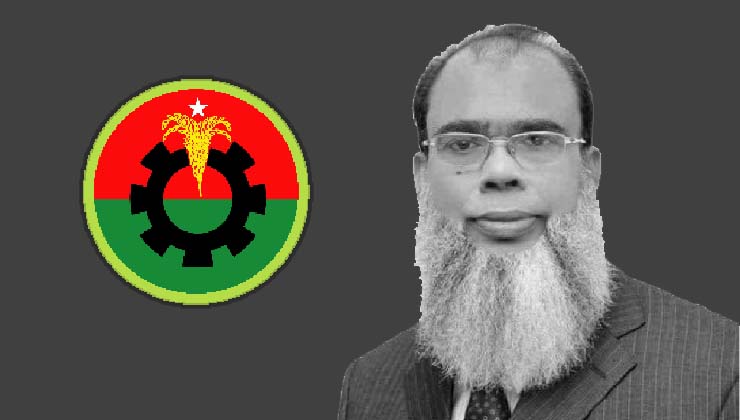
Attorney General Ruhul Quddus Kazal told bdnews24.com that although it was not possible to fully meet expectations, there had been significant progress in case disposal at the Supreme Court over the past six months.
He attributed some of the faster disposal to the formation of special benches to expedite appeals involving death-sentenced convicts and death references in cases of violence against women and children.
Chief Justice Zubayer Rahman Chowdhury formed a special division bench in June to prioritise cases involving violence against women and children.
Since its formation, the bench has disposed of 22 death-reference cases.
Kazal, the government's chief law officer, said forming special benches for specific types of cases could help reduce the backlog despite differences in judges' skills and capabilities.
However, he proposed several measures for a lasting reduction in the backlog, including preventing false and baseless cases, encouraging settlements outside court and creating a legal framework to allow a portion of the total value of disputed property in family and property disputes to be forfeited in favour of the state.
Partial Forfeiture to State Proposed
Attorney General Kazal believes cases involving family and property disputes among “a handful of wealthy people” in the Supreme Court are obstructing ordinary people’s access to justice.
Noting that disputes between spouses or siblings over property can remain pending in the Supreme Court for years, he said: “A legal framework should be created to forfeit a portion of the total value of disputed assets in favour of the state in such cases. This would encourage the parties to seek a settlement.”
Kazal also stressed the need to promote settlements outside court and alternative dispute resolution, or mediation, to reduce the backlog of civil cases.
He also suggested expanding the jurisdiction of village courts so that minor disputes can be settled there.
Baseless Cases and Indiscriminate Naming of Suspects
Kazal said there were several reasons behind the case backlog, noting that unreasonable, baseless or false petitions waste valuable court time.
As examples, he cited a writ petition challenging Article 70 of the Constitution and another seeking a stay on the president’s schedule.
He also referred to several writ petitions concerning the cancellation of Ad-Din Hospital’s licence.
“Ensuring constitutional rights when they are violated is the responsibility of the state. But the judicial process should not be obstructed by false, rumour-based or evidence-free petitions,” the attorney general said.
He said state law officers had been instructed to remain vigilant in such matters.
Kazal also stressed the need to stop the practice of naming large numbers of people as suspects in criminal cases instead of identifying those actually involved in an offence.
“When many innocent people are accused in a single incident, the processes of bail, trial and sentencing is prolonged. This puts additional pressure on the courts,” he said.
Only those involved in an offence should be brought to book, he said.
For minor offences, the state could also consider granting relief in some cases where a suspect has already served the prescribed sentence, Kazal said.
Expedited Justice and Judicial Independence
Kazal said speedy justice was a constitutional right of the people, adding that the state was not allowing cases to be delayed or unnecessary time to be taken in the Appellate Division or chamber court.
On judicial independence, the attorney general claimed there had been no interference by the state or government in the judiciary since Aug 5, 2024.
He said that as the government’s chief law officer, he would be the first to protest against any “deviation” from judicial independence.
[Bangla Press is a global platform for free thought. It provides impartial news, analysis, and commentary for independent-minded individuals. Our goal is to bring about positive change, which is more important today than ever before.]

 E-paper
.jpg)

.jpg)