Bangla Press Desk: A fresh sense of political calm is emerging as major parties show rare signs of restraint and cooperation following the death of three-time prime minister and BNP Chairperson Begum Khaleda Zia. Leaders from across the political divide have rallied around BNP Acting Chairman Tarique Rahman, offering condolences while also opening channels of dialogue on collaboration ahead of the forthcoming national election and the post-poll government formation process.
Political analysts and members of the public have viewed this growing interaction among parties as a positive development. They note that in the past, political rivalry often turned into deep-seated animosity, with leaders avoiding even basic social interactions. The current atmosphere, marked by dialogue and mutual respect, is being seen as an encouraging signal for national politics.
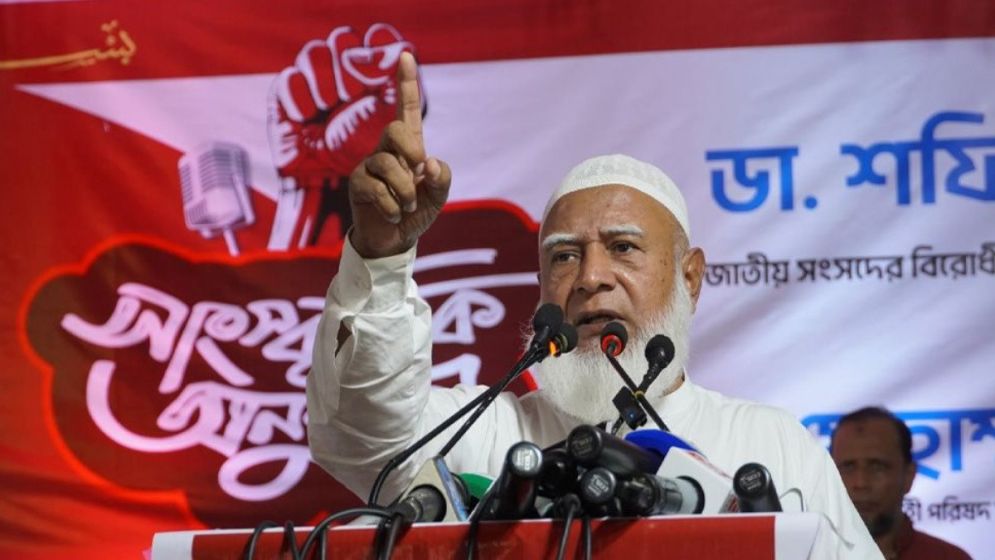
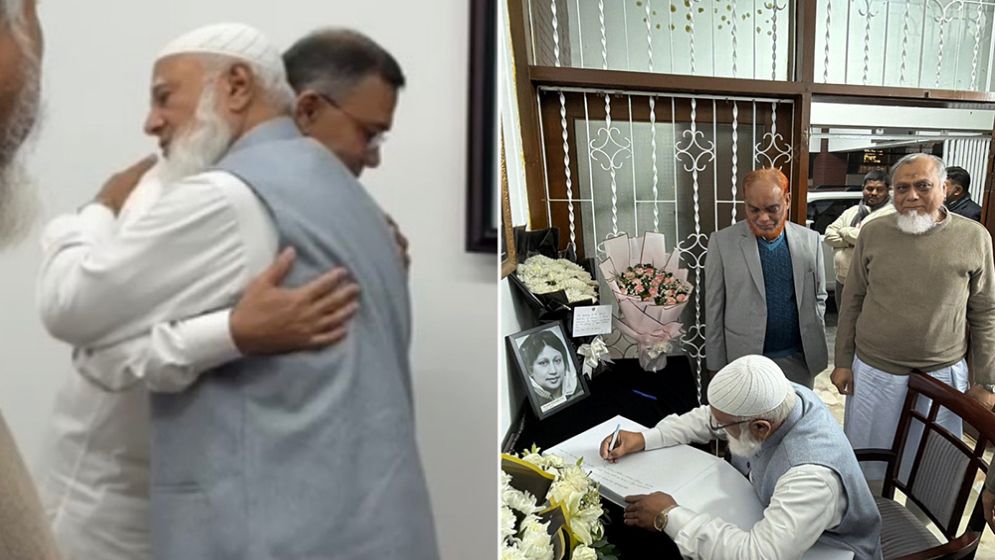
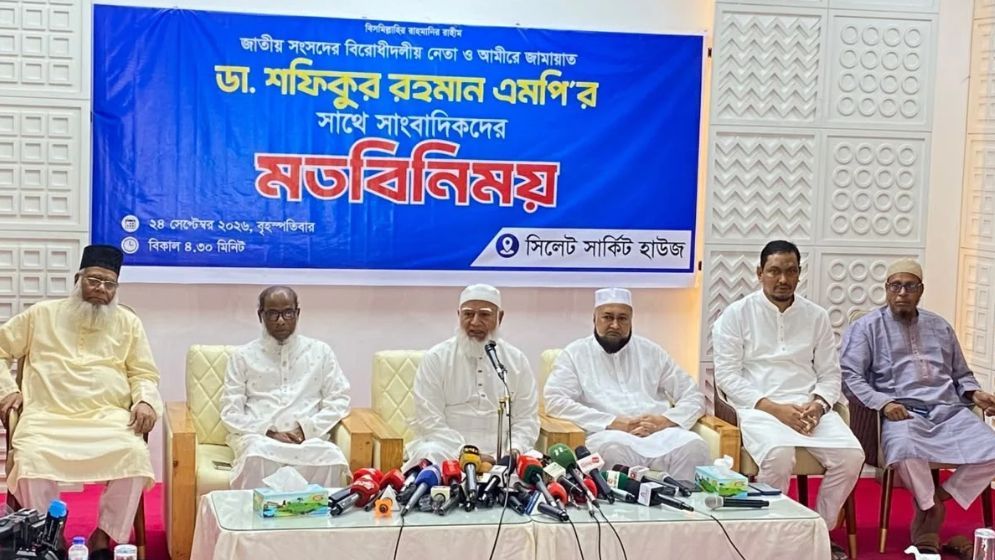
On Thursday, Jamaat-e-Islami Ameer Dr Shafiqur Rahman met Tarique Rahman at the BNP Chairperson’s political office in Gulshan. During the meeting, the Jamaat chief expressed his party’s willingness to work together in the national interest and conveyed condolences to Tarique Rahman and his bereaved family. He also expressed hope for further discussions with BNP ahead of government formation after the election.
Addressing Tarique Rahman, Dr Shafiqur Rahman said the country is at a crucial juncture, with a national election and a referendum scheduled on the same day—one aimed at reforms and the other at forming a government. He expressed hope that the December 12 polls would be held in a peaceful, fair and acceptable manner. Recalling past cooperation, he said that Jamaat and BNP had worked together for the country’s interest before and would continue to do so in the future.
BNP leaders present at the meeting echoed similar sentiments, stressing the importance of restoring a healthy political environment for the sake of national stability over the next five years. Although the two parties remain political rivals, both sides have so far maintained cordial relations, given their long history of working together in movements, struggles and governance.
On the same day, a five-member delegation led by former DUCSU vice-president Sadik Qayem also met Tarique Rahman in Gulshan. The meeting focused on the country’s current political situation and the role of students. Tarique Rahman provided what participants described as important guidance for the student community, emphasising unity among all anti-fascist forces in the post-July uprising period.
Sadik Qayem later said Tarique Rahman had stressed that differences of opinion are a democratic norm, but unity is essential when it comes to Bangladesh and the spirit of the July movement. He called on all anti-fascist political parties, including BNP and Jamaat, as well as student organisations such as Chhatra Dal and Chhatra Shibir, to work shoulder to shoulder.
Observers say it is not only Jamaat or student leaders, but almost all major political parties that have now come forward to stand beside Tarique Rahman. There appears to be a shared consensus on working together to build a self-reliant Bangladesh, a development that has been widely welcomed by political analysts and the general public.
BNP Secretary General Mirza Fakhrul Islam Alamgir said the return of Tarique Rahman has brought a “fresh breeze” to national politics. He said positive changes are visible and that a long-standing political stagnation has begun to ease, creating renewed hope among the people.
Political analyst Professor Dr Mahbub Ullah, however, cautioned against overinterpretation, saying political leaders visiting Tarique Rahman to offer condolences should primarily be seen as an act of courtesy and decency.
Meanwhile, Professor Kazi Mohammad Mahbubur Rahman of Dhaka University’s Department of Political Science said Tarique Rahman’s leadership from abroad in removing what he termed a fascist government was a rare example in Bangladesh’s political history. He noted that Tarique Rahman’s return to the country is likely to have a significant impact on public mindset and political behaviour, easing instability and creating an opportunity for him to demonstrate inclusive and stabilising leadership in a new political chapter for Bangladesh.
BP/SP
[Bangla Press is a global platform for free thought. It provides impartial news, analysis, and commentary for independent-minded individuals. Our goal is to bring about positive change, which is more important today than ever before.]

 E-paper
-6ab3842955219.webp)