 Bangla Press Desk: In politics, it is hard to say when a friend will turn into a foe, or when an enemy will become an ally. Once close partners now stand opposed. Although there was unity during the July uprising, divisions are now visible among many. With the 13th National Parliamentary Election approaching, political polarization has reached its peak. As the government-declared election schedule (February) draws nearer, political tensions continue to rise.
Despite long discussions, political parties have failed to agree on the implementation of the July Charter. The BNP supports resolving the constitutional issues of the Charter through the next parliament, while Jamaat-e-Islami, Islami Andolon, and several others want the Charter to be given legal recognition and for the national election to be held on that basis. Differences also remain between BNP and other parties over issues like proportional representation (PR) voting, banning Jatiya Party, and prohibiting the 14-party alliance.
As a result, seven parties including Jamaat and Islami Andolon have launched a three-day street program pressing for elections in February under the July Charter. This has raised concerns and unease over the electoral atmosphere. Meanwhile, BNP is keeping a close watch on these movements, determined not to fall into any trap that could disrupt the election.
Seven Parties in Action, Including Jamaat
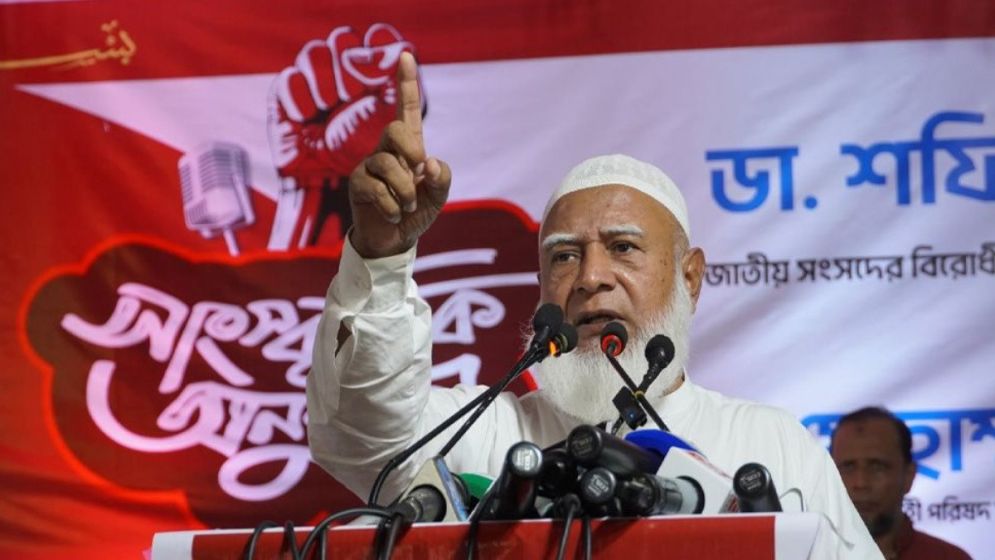
The National Consensus Commission, formed to restructure the state system, has been holding dialogues with political parties since March. Despite multiple meetings—both formal and informal—no solution emerged on implementation methods. Under these circumstances, seven parties began a three-day program on Thursday, demanding elections in February based on the July Charter. The parties are: Jamaat-e-Islami, Islami Andolon, Bangladesh Khelafat Majlish, Khelafat Majlish, Nezame Islam Party, Khelafat Andolon, and Jatiya Ganatantrik Party (JAGPA).
Bangla Press Desk: In politics, it is hard to say when a friend will turn into a foe, or when an enemy will become an ally. Once close partners now stand opposed. Although there was unity during the July uprising, divisions are now visible among many. With the 13th National Parliamentary Election approaching, political polarization has reached its peak. As the government-declared election schedule (February) draws nearer, political tensions continue to rise.
Despite long discussions, political parties have failed to agree on the implementation of the July Charter. The BNP supports resolving the constitutional issues of the Charter through the next parliament, while Jamaat-e-Islami, Islami Andolon, and several others want the Charter to be given legal recognition and for the national election to be held on that basis. Differences also remain between BNP and other parties over issues like proportional representation (PR) voting, banning Jatiya Party, and prohibiting the 14-party alliance.
As a result, seven parties including Jamaat and Islami Andolon have launched a three-day street program pressing for elections in February under the July Charter. This has raised concerns and unease over the electoral atmosphere. Meanwhile, BNP is keeping a close watch on these movements, determined not to fall into any trap that could disrupt the election.
Seven Parties in Action, Including Jamaat
The National Consensus Commission, formed to restructure the state system, has been holding dialogues with political parties since March. Despite multiple meetings—both formal and informal—no solution emerged on implementation methods. Under these circumstances, seven parties began a three-day program on Thursday, demanding elections in February based on the July Charter. The parties are: Jamaat-e-Islami, Islami Andolon, Bangladesh Khelafat Majlish, Khelafat Majlish, Nezame Islam Party, Khelafat Andolon, and Jatiya Ganatantrik Party (JAGPA).
Political division at its peak ahead of election

Banglapress
Published: 23 September 2025, 10:26 AM
 Bangla Press Desk: In politics, it is hard to say when a friend will turn into a foe, or when an enemy will become an ally. Once close partners now stand opposed. Although there was unity during the July uprising, divisions are now visible among many. With the 13th National Parliamentary Election approaching, political polarization has reached its peak. As the government-declared election schedule (February) draws nearer, political tensions continue to rise.
Despite long discussions, political parties have failed to agree on the implementation of the July Charter. The BNP supports resolving the constitutional issues of the Charter through the next parliament, while Jamaat-e-Islami, Islami Andolon, and several others want the Charter to be given legal recognition and for the national election to be held on that basis. Differences also remain between BNP and other parties over issues like proportional representation (PR) voting, banning Jatiya Party, and prohibiting the 14-party alliance.
As a result, seven parties including Jamaat and Islami Andolon have launched a three-day street program pressing for elections in February under the July Charter. This has raised concerns and unease over the electoral atmosphere. Meanwhile, BNP is keeping a close watch on these movements, determined not to fall into any trap that could disrupt the election.
Seven Parties in Action, Including Jamaat
The National Consensus Commission, formed to restructure the state system, has been holding dialogues with political parties since March. Despite multiple meetings—both formal and informal—no solution emerged on implementation methods. Under these circumstances, seven parties began a three-day program on Thursday, demanding elections in February based on the July Charter. The parties are: Jamaat-e-Islami, Islami Andolon, Bangladesh Khelafat Majlish, Khelafat Majlish, Nezame Islam Party, Khelafat Andolon, and Jatiya Ganatantrik Party (JAGPA).
Bangla Press Desk: In politics, it is hard to say when a friend will turn into a foe, or when an enemy will become an ally. Once close partners now stand opposed. Although there was unity during the July uprising, divisions are now visible among many. With the 13th National Parliamentary Election approaching, political polarization has reached its peak. As the government-declared election schedule (February) draws nearer, political tensions continue to rise.
Despite long discussions, political parties have failed to agree on the implementation of the July Charter. The BNP supports resolving the constitutional issues of the Charter through the next parliament, while Jamaat-e-Islami, Islami Andolon, and several others want the Charter to be given legal recognition and for the national election to be held on that basis. Differences also remain between BNP and other parties over issues like proportional representation (PR) voting, banning Jatiya Party, and prohibiting the 14-party alliance.
As a result, seven parties including Jamaat and Islami Andolon have launched a three-day street program pressing for elections in February under the July Charter. This has raised concerns and unease over the electoral atmosphere. Meanwhile, BNP is keeping a close watch on these movements, determined not to fall into any trap that could disrupt the election.
Seven Parties in Action, Including Jamaat
The National Consensus Commission, formed to restructure the state system, has been holding dialogues with political parties since March. Despite multiple meetings—both formal and informal—no solution emerged on implementation methods. Under these circumstances, seven parties began a three-day program on Thursday, demanding elections in February based on the July Charter. The parties are: Jamaat-e-Islami, Islami Andolon, Bangladesh Khelafat Majlish, Khelafat Majlish, Nezame Islam Party, Khelafat Andolon, and Jatiya Ganatantrik Party (JAGPA).
[Bangla Press is a global platform for free thought. It provides impartial news, analysis, and commentary for independent-minded individuals. Our goal is to bring about positive change, which is more important today than ever before.]
YOU MAY ALSO LIKE
Politics
From BCS Cadre Officer to Home Minister: Salahuddin Ahmed’s Political Journey and His Family’s Path to Success
2 days ago
by Bangla Press
-6ab3842955219.webp)
Politics
"Bring your admit card after passing the written test; I’ll make the necessary calls."
6 days ago
by Bangla Press
Politics
11-Party Alliance’s Eight Demands Serve People’s Interests, Says Shafiqur
1 week ago
by Bangla Press

Politics
DRU has played a significant role in achieving the country's democracy: Rizvi
2 weeks ago
by Bangla Press
Sangeet Academy