Bangla Press Desk: Heavy investment, vast employment generation and substantial contributions to government revenue notwithstanding, the country’s leading industrial groups are reportedly failing to receive support from banks in times of distress. Even decisions taken on the basis of tripartite consultations are allegedly not being implemented. Instead, it is claimed that central bank directives are being disregarded, pushing major groups towards collapse, putting hundreds of thousands of workers at risk of losing their jobs.
Such an unprecedented situation is said to be unfolding at Social Islami Bank Limited (SIBL), a private sector bank. To reduce non-performing loans and stabilise the bank, Bangladesh Bank had earlier appointed an administrator. However, numerous allegations suggest that the administrator’s actions are now worsening the situation.According to documents reviewed and discussions with officials from Bangladesh Bank and various business groups, the central bank had instructed banks to assist struggling large groups by allowing loan rescheduling with a 2 percent down payment. Yet, the administrator at SIBL is accused of not adhering to this directive, while selectively extending benefits to certain entities and denying others.
The BNP-led government, now in power, has prioritised reviving the economy and stimulating private sector growth. Prime Minister Tarique Rahman has emphasised boosting investment and employment. However, insiders claim that developments within the banking sector are undermining these efforts.
Several large industrial groups—badly affected by the Covid-19 pandemic, the Russia–Ukraine war and subsequent political instability—became inadvertent defaulters but are reportedly striving to recover. Bangladesh Bank had sought to support such groups through policy flexibility, including loan rescheduling facilities over extended periods with a grace period.
SIBL, itself under financial strain due to indiscriminate lending, is in the process of being merged with other weak banks into a proposed entity named Sammilito Islami Bank PLC (United Islami Bank). An administrator and four assistant administrators were appointed on 5 November last year to oversee its operations and improve its financial condition.
However, allegations have emerged that the bank’s board, under the administrator, has acted arbitrarily towards some large clients. Despite central bank guidance to support non-wilful defaulters, austere conditions are reportedly being imposed instead of assistance. In some cases, businesses are allegedly asked to repay entire loans or transfer liabilities to other banks, contrary to the 2 per cent down payment facility.
Major groups including Orion, Thermex, Rupayan and Joy Group are among those said to have faced difficulties in securing the facilities, despite applying under the central bank’s policy. Business leaders argue that such selective treatment is unfair and counterproductive.
Bangladesh Bank officials maintain that the policy aims to protect investment, safeguard employment and ensure continued loan recovery. A central committee had earlier reviewed cases and supported assistance for non-wilful defaulters before responsibility was transferred to individual banks.
Bangladesh Bank spokesperson Arif Hossain Khan said banks now have the discretion to reschedule loans based on banker-customer relationships, adding that policy support remains in place.
He further said that when the policy support committee was formed under the supervision of Bangladesh Bank, a total of around 1,500 applications had been submitted, of which about 400 cases were settled. Responsibility was later delegated to the respective banks.
A senior executive of a large business group, speaking on condition of anonymity, alleged that the appointed administrator is selectively implementing Bangladesh Bank’s decisions—favouring those who can offer him benefits while ignoring others. He claimed the administrator lacks an understanding of ground realities and has little knowledge of how industrial groups operate.
He added that the economy remains sluggish, people are losing jobs and the government is facing a significant revenue shortfall, yet the administrator appears either unaware of or indifferent to these issues. The executive also said the administrator is not reflecting the new government’s priority of revitalising the economy and is instead acting contrary to that spirit.
“As a result, neither the banks, nor the business groups, nor the people, nor the government are benefiting,” he said, adding that all parties are effectively being held hostage to individual interests and are suffering as a consequence.
On 5 February, one of the country’s leading business groups submitted a letter to Bangladesh Bank stating that, in line with the central bank’s directive, it had deposited a 2 percent down payment to reschedule its loan. However, the application was rejected by Social Islami Bank Limited (SIBL), which instead asked the group to repay the full amount or transfer the loan to another bank.
An official of the group said, “Had we been able to repay the entire amount, there would have been no need for a tripartite meeting mediated by Bangladesh Bank, nor for the central bank to issue instructions for compliance. The very reason Bangladesh Bank responded positively is because our capacity has weakened. But the situation has now become akin to putting an axe in the hands of the blind—rather than keeping industries operational, it is increasing the risk of them shutting down.”
Attempts to contact Abdul Kadir Molla, chairman of Thermex Group—one of the country’s leading exporters and a major client of SIBL—were unsuccessful. However, a senior official of the group, speaking anonymously, said, “We have made substantial investments in export-oriented industries and employ a large workforce. Despite Bangladesh Bank providing policy support, the SIBL administrator is granting benefits selectively. If groups like ours were given the same opportunity, factories could remain operational, workers would retain their jobs and banks would also benefit. Such bias ultimately harms the country.”
Officials from several major groups, including Thermex, Orion and Rupayan, said they are facing severe business difficulties due to the actions of the bank’s administrator.
Former SIBL chairman Major (retd) Dr Rezaul Haque said that the bank had been unfairly pushed towards a merger and that the appointment of an administrator had resulted in unjust treatment. “We are victims of injustice. We hope to protect the bank from this through legal means. We have already received a rule nisi from the court and will soon brief the nation in detail through a press conference,” he said.
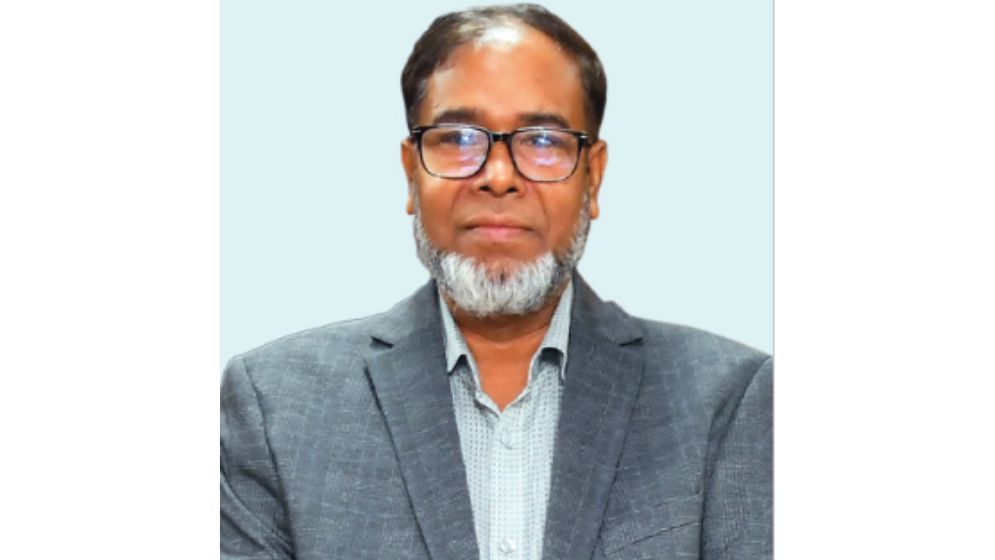
Meanwhile, SIBL’s administrator Md Salah Uddin has denied allegations of bias, stating that all actions are being taken in line with Bangladesh Bank guidelines. He said the process is ongoing and decisions are being made after assessing the actual conditions of the business groups, expressing hope that pending matters will be resolved by June.
Industry representatives, however, warn that inconsistent implementation of policy support could deepen financial distress, harming not only businesses and banks but also employment and government revenue.
[Bangla Press is a global platform for free thought. It provides impartial news, analysis, and commentary for independent-minded individuals. Our goal is to bring about positive change, which is more important today than ever before.]
 E-paper

.jpg)

.jpg)