

Dissolution of Supreme Court Secretariat Undermines Judicial Independence: Shishir Manir

Bangla Press
Published: 22 May 2026, 02:21 AM

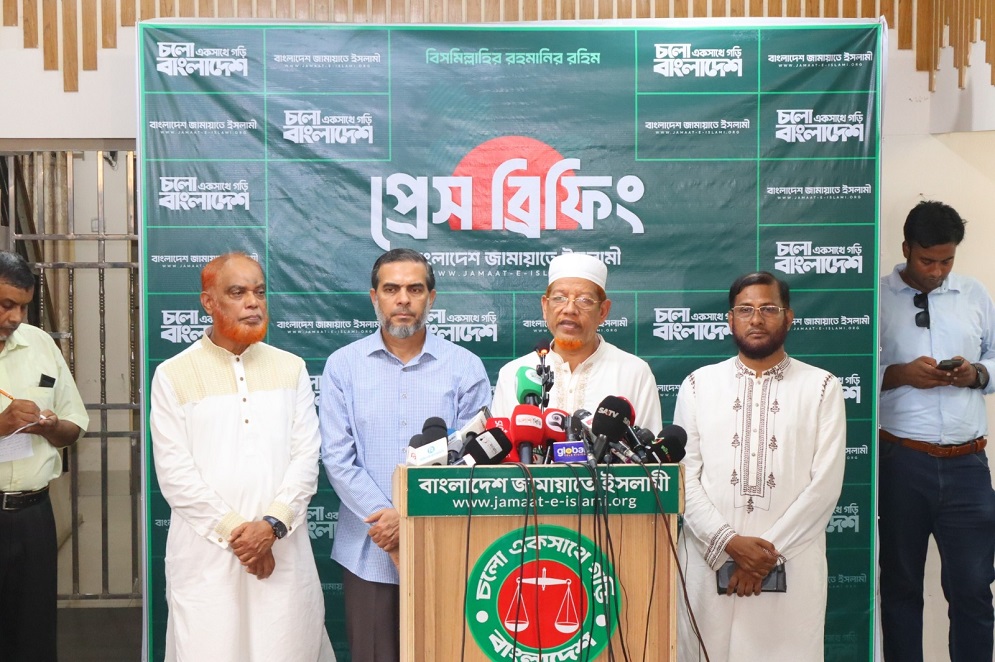
Bangla Press Desk: Jamaat-e-Islami leader and Senior Advocate Shishir Monir on Thursday said that the abolition of the Supreme Court Secretariat was essentially “a slap in the face” of the judiciary, and its independence.
“Through this move, the trust and confidence that had been built nationally were destroyed,” he said at a press conference held at the party headquarters to condemn the BNP government’s move.
At the press conference, Jamaat Assistant Secretary General Hamidur Rahman Azad alleged that BNP wants to re-establish authoritarian rule in state affairs and the desire is reflected in the ruling party’s abolition of the Supreme Court Secretariat.
Jamaat will remain uncompromising to secure the rights of the people and would take to the streets demanding independence for the judiciary, Hamidur Rahman Azad warned.
“This is a black day for the independence of judiciary,” Shishir Manir said referring to Tuesday, when an official gazette notification announced the secretariat as obscure.
He said that since independence, various initiatives had been taken to make the judiciary independent. However, due to BAKSAL and military rule, the judiciary could not achieve that independence.
Finally, in 1999, through the Masdar Hossain case, the higher court issued a 12-point directive on judicial independence.
He said that in 2007, the Bangladesh Judicial Service Commission (BJS) was established for the appointment of lower court judges, and a separate pay structure was introduced for them. Later, in 2025, following a writ petition filed by them, the High Court Division delivered a verdict. The verdict, issued on 2 September 2025, stated that a separate judicial secretariat must be established within 90 days.
Accordingly, on 30 November 2025, the government promulgated an ordinance establishing the separate judicial secretariat. Subsequently, on 11 December 2025, the then Chief Justice Syed Refaat Ahmed formally inaugurated the judicial secretariat.
Later, on 10 April 2026, three days after the full verdict was published, the newly-elected BNP government annulled the judicial secretariat ordinance.
Advocate Shishir Monir said that in response to the government’s decision, they filed another writ petition on 19 April. While the writ was pending, they issued a contempt of court notice on 5 May. Then, on 19 May, 15 officials, including the senior secretary of the judiciary, were placed under the Law Ministry. In other words, the final nail was officially driven into the coffin of the judicial secretariat once again, Shishir Manir said.
He said that the biggest problem in this context is that among the three organs of the state, the judiciary is responsible for judicial functions. The judiciary has two parts — the higher court and the lower court. There are specific constitutional provisions for the appointment of higher court judges. Meanwhile, lower court judges were once appointed through the BCS examination. Later, a separate independent system called the Bangladesh Judicial Service (BJS) was introduced. This process is conducted under the leadership of a judge from the Appellate Division and is carried out transparently. However, leave, transfers, promotions, and disciplinary matters of lower court judges remained under the control of the Law Ministry. As a result, if judges issued orders against the Law Ministry, they could be transferred, denied promotions, or face disciplinary allegations.
Advocate Shishir Monir further said that for the first time, an independent secretariat under the Chief Justice had been established to properly handle these four matters — leave, transfer, promotion, and discipline. Fifteen judicial officials had also been appointed there.
Shishir Monir said that in their view, if the judiciary is independent, they have no objection regardless of whose favor the verdict goes in. They would have no objection even if they themselves had to stand trial as accused persons, provided justice was ensured through proper legal process. A civilized society cannot be built if the judiciary is not allowed to function independently.
He said that if the government takes any decision that is not constitutional or lawful, judges will review it and deliver verdicts accordingly. If a cabinet member is dissatisfied with a verdict, he will file an appeal. But now the cabinet member, while representing either the government or his own interests, has additional and more “painful” measures at disposal.
Now he, through the Law Ministry, can chose to transfer judges, deny them promotions, or send them to remote areas like the Sundarbans or Bandarban. This cannot be the character of an independent judiciary, Shisir Manir said.
He said that if a court order goes against the government, the government should file an appeal. Why should judges be transferred? Why should promotions be withheld? Judges should receive promotions when due. If they are not guilty and have not violated discipline, they should be allowed to work according to the law.
Advocate Shishir Monir said that Bangladesh Jamaat-e-Islami has always supported an independent judiciary. They have no objection to judges conducting judicial proceedings independently. They believe that transfers, leave, and promotions should not remain under the Law Ministry, but entirely under the Supreme Court. If this principle is violated, lower court judges will not be able to work independently. He alleged that only those wishing to hold court at night or in the evening and punish whomever they desire would want these powers to remain with the Law Ministry. Otherwise, the Supreme Court should control the judges. According to him, the Law Ministry and the government should have no role in this matter.
Alleging government control over judges, he said that a control mechanism is being kept under the Law Ministry so authorities can target judges if they do not deliver favorable verdicts — and that mechanism is called the secretariat. In other words, decisions regarding transfers, promotions, and leave would be made by the secretariat, while disciplinary matters would be controlled by the Law Ministry. He said this provision had originally been formulated under a special committee led by the Prime Minister to establish an independent judiciary free from the control of the Law Ministry.
Shishir Monir said that the law granting the Chief Justice the authority to independently approve a budget of Tk 50 crore had also been repealed. That power has been taken away as well. Around 2,000 lower court judges in Bangladesh are struggling to perform their duties. Bangladesh has only one judge for every 78,000 people, which he described as rare in world history. The Supreme Court had taken steps to increase the number of judges for those 78,000 people, but that authority has also been taken away. Now the Law Ministry may decide whether to recruit more judges or increase or reduce their number at will. The Chief Justice no longer has any authority in this regard. He said they believe that restoring the separate judicial secretariat is extremely important to ensure judicial independence and justice for the people.
Later, the organization’s Assistant Secretary General and former AHM Hamidur Rahman Azad answered journalists’ questions on various political issues.
BP/TD
[Bangla Press is a global platform for free thought. It provides impartial news, analysis, and commentary for independent-minded individuals. Our goal is to bring about positive change, which is more important today than ever before.]
YOU MAY ALSO LIKE
Politics
11-Party Alliance’s Eight Demands Serve People’s Interests, Says Shafiqur
1 day ago
by Bangla Press

Politics
DRU has played a significant role in achieving the country's democracy: Rizvi
1 week ago
by Bangla Press
Politics
Prince Says Opposition’s December Movement Threat Echoes Past Events
2 weeks ago
by Bangla Press

Sangeet Academy